Commercial Real Estate Returns to Top of Investor Preference Survey – Commercial Observer
SitusAMC is a commercial real estate services company that helps lenders and investors originate, transact, manage and value real estate assets throughout the full life cycle of a loan or property.
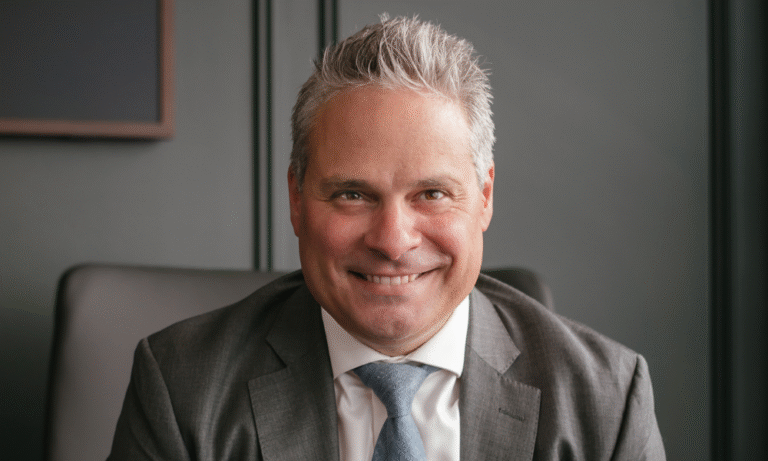
Peter Muoio, PhD, is the senior director of SitusAMC Insights, which provides research and data on all aspects of commercial real estate. Muoio recently hosted a webinar under their ValTrends research label titled “CRE Sentiment Improves, but Activity Remains in Check.”
Commercial Observer Partner Insights spoke with Muoio to get an overview of the webinar’s findings regarding investor attitudes toward commercial real estate, and reasons for both caution and optimism within. Download the full ValTrends 2Q 2026 Real Estate Report here.
Commercial Observer: The latest ValTrends report notes that commercial real estate has returned to the top of the company’s quarterly investor preference survey. Why do you think this is, and how strong an indicator is this for the health of commercial real estate investing going forward?
Peter Muoio: It’s because investors view commercial real estate (CRE) as stable in turbulent times relative to other asset types, amid circumstances like tariffs, the war in Iran and heightened uncertainty. Cash has generally been strong for similar reasons as opposed to the stock and bond markets, which can exhibit wide fluctuations.
This tells us that capital is not shying away from commercial real estate.
What does it say about all this that within CRE, the preference to sell matched the preference to buy in the most recent quarter?
In the aftermath of the Fed tightening of 2022, CRE buying and selling, which had been relatively in sync with each other, gapped, and hold became dominant. That is still the case. What I find interesting is that the two of them met in this quarter for the first time in several years, which suggests a potential meeting of the minds between buyers and sellers in terms of where things stand. If people’s perceptions of the state of the market are becoming more in line, that can indicate a growing potential for more transactions to take place.
Talk about the impact of your findings regarding the availability of capital on commercial real estate investors.
The fundamental story is that the discipline of both equity capital and debt capital remains relatively constrained compared to history due to the uncertainty caused by the factors we’ve already mentioned.
One noteworthy thing we hear from our clients is that for both equity and debt, the analytics are becoming much more property- and micro-area-specific, so you can’t paint with a very broad brush. You have to be very selective in your lending and your equity investing. As a result, the overall story is one of more selectivity, because we’ve seen a higher variation in returns from property to property than we’ve seen historically, and that reflects things like the changes taking place technology-wise in terms of how we use office, industrial, and retail space.
Which asset classes are investors most interested in at the moment?
Recently, investors have taken a much more balanced view of the different asset classes.
Over the past several years, multifamily has been the most favored by far, and by a significantly high percentage. From time to time, you’d see big numbers for industrial, owing to the rapid growth in AI and data centers.
In the fourth quarter 2025 data, we saw a jump in the percentage of investors that named office as the preferred asset class from a range of zero to 1 or 2 percent, which had been persistent over the past several years, to 22 percent. That’s a tremendous jump.
For the second quarter data, that number was 11 percent, which was still a significantly higher number than we’ve seen of late.
There are several things happening there. There have been significant reductions in pricing for offices and an increase in conversions of offices to multifamily space, which makes that an interesting investment option. There are also many maturities that are changing hands and creating new interest within the segment.
And retail’s interest was 21 percent for the quarter, as opposed to a year ago, when it was at 9 percent.
The takeaway is that people are looking more broadly across commercial real estate than they recently have, which is a positive indication going forward.
What needs to happen for the industry to open up transaction activity?
We need less uncertainty and lower interest rates, both of which are intertwined.
There’s a very good metric that’s published by economists called the Uncertainty Index. World events like a stock market crash, a financial crisis or a war show increases in uncertainty. Over the past several years, the announcement of the tariffs saw uncertainty rise to its highest level ever, and similarly with the start of the war in Iran.
When this happens, investors move to the sidelines and delay decisions causing delayed investment, which in turn delays hiring, buying, etc.
That said, over the past few weeks, the 10-year treasury was at 4.7 percent, which is higher than we’ve seen in the past few years. If uncertainty and interest rates would begin to ease, it would let the spigot of transactions, refinancings and investments begin to open back up.
Talk about what’s happening with employment growth, and how this looks to affect commercial real estate.
We’ve seen a significant slowdown in the rate of job growth, but at the same time, unemployment remains very low. However, this reflects a shrinking labor force, not something positive about the labor market..
The job growth figures have not only diminished in recent months, but were negative in the most recent report. The weakness in the labor market is troubling, because job growth helps develop demand for retail, housing and office space.
What is your take on current inflationary trends and how they’re affecting CRE?
The inflationary trends have been driven by what’s happening in the Middle East, and have pushed interest rates up to levels we haven’t seen in some time.
Since the Fed pushed interest rates up in June 2022, we’ve had about $42 billion per month of transaction flow deal activity on average. If you look at the year prior to that, the average was $192 billion. So we’ve been in this significantly lower deal flow environment for four years as a result of the interest rate/inflation axis.
What does all of this mean for the overall health of commercial real estate investment for the remainder of 2026?
The bad news is that higher interest rates will continue inhibiting the CRE investment space. The good news is that investors, lenders, buyers and sellers are starting to see more eye-to-eye on where things stand, which puts commercial real estate in a prime spot for when interest rates start to come down, allowing things to take off.