Warren Buffett Has Offered the Same Investing Advice for Decades. History Says He’s Never Been Wrong (So Far).
There isn’t a single investor whose wisdom has the sway that Warren Buffett’s does. The investing legend, who was the longtime CEO of Berkshire Hathaway (BRKA -0.13%) (BRKB -0.24%), has an unbelievable track record managing capital. But his recommendation for the average investor couldn’t be any simpler.
The Oracle of Omaha has offered the same investing advice for decades. History says he’s never been wrong.
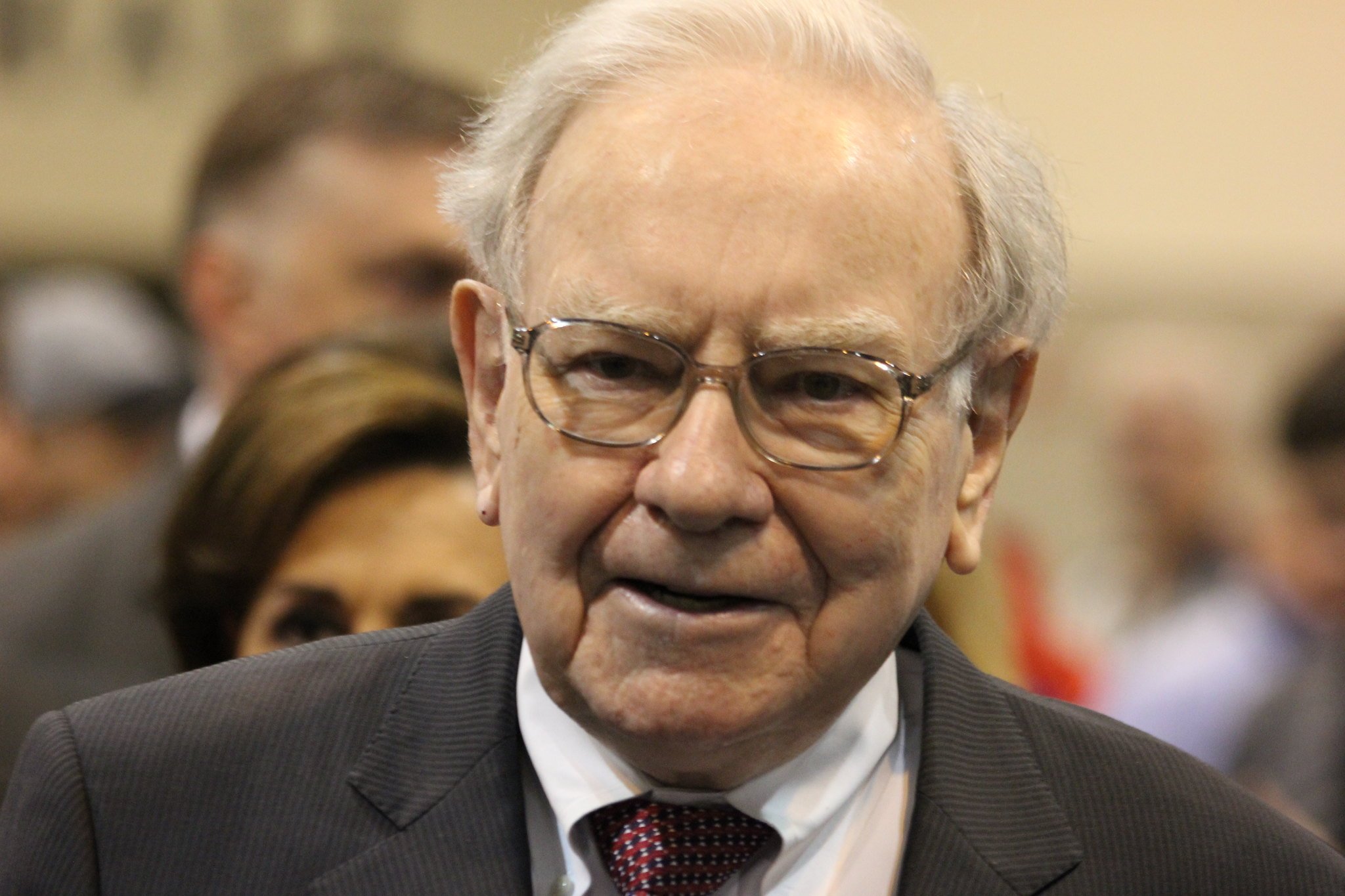
Image source: The Motley Fool.
Buy the S&P 500
“By periodically investing in an index fund, for example, the know-nothing investor can actually outperform most investment professionals,” Warren Buffett wrote in Berkshire Hathaway’s 1993 shareholder letter.
In 2008, he famously made a bet that five hedge funds-of-funds could not outperform a low-cost S&P 500 index (^GSPC +0.72%) fund over a 10-year stretch. Buffett easily won that bet.
He wrote in Berkshire Hathaway’s 2013 shareholder letter that 90% of the money left for his wife after his death be invested in an S&P 500 index fund. “I suggest Vanguard’s,” he added.
It’s clear that Warren Buffett has long favored the Vanguard S&P 500 ETF (VOO +0.65%). One of the main reasons why is the cost. This exchange-traded fund (ETF) has an expense ratio of just 0.03%. This presents an extremely attractive proposition when viewed next to the high fees typically charged by active managers, the vast majority of which underperform the market in the long run.
Since the S&P 500 index was created in its current form in 1957, the benchmark has generated an average annualized total return of 10%. A starting $10,000 investment would be worth over $174,000 after 30 years based on this performance.
In the last decade, though, investors have been rewarded with a better showing. The S&P 500 index has produced a total return of 315% (15% on a yearly basis) since late August 2016 (as of Aug. 25).
Buffett’s overarching view is to never bet against America. In other words, he has always been bullish on the inventiveness and entrepreneurial spirit that make up the fabric of this country. And the S&P 500 index is a great way to bet on that.
As the name suggests, there are 500 or so large and profitable U.S. companies in the index that span every sector of the economy. But there is concentration to be mindful of. The information technology sector makes up almost 37% of the entire ETF. The financials sector is a distant second, representing 12.5%.

Today’s Change
(0.65%) $4.55
Current Price
$708.75
Key Data Points
AUM
$1.7T
Dividend Yield
1.04%
Expense Ratio
0.03%
Top Holdings
NVDA
7.55%
AAPL
7.05%
MSFT
5.36%
Why Buffett could be wrong in the future
History tells us that Warren Buffett has never been wrong when it comes to this recommendation. The S&P 500 index has done a fantastic job at building wealth for long-term investors.
However, a proper analytical exercise isn’t complete without at least considering how the legendary former CEO of Berkshire Hathaway might be wrong going forward. Investors will come away with a comprehensive understanding of what the future might bring.
One of the most obvious reasons the S&P 500 index could disappoint investors over the coming decade is its current valuation. The benchmark’s CAPE ratio is currently 41.8. The data is clear about what can happen when this multiple is so high. In the past, the S&P 500 index produced a negative annualized total return over the decade following a starting CAPE ratio above 40.
To be fair, though, the market today is dominated by technology enterprises, as alluded to earlier. These businesses generally have significant growth potential, huge profits, wide economic moats, unmatched talent density, and global customer bases. This supports ongoing investing returns, even though the overall S&P 500’s performance is impacted greatly by a small number of businesses.
Looking at the historical data, it’s very difficult to argue with Warren Buffett’s perspective. This means that the Vanguard S&P 500 ETF is an excellent choice for investors.