How NYC’s Pied-á-terre tax is Changing High-end Rental Market
New York City’s high-end rental market is popular with luxury clients for a reason.
A wealthy client could have money tied up elsewhere, maybe they don’t want to pay New York City property or income tax, or maybe they just aren’t ready to commit to the city. But for nearly every renter who inks a lease instead of a co-op board application or townhouse renovation plans, there’s one clear benefit: it’s easy.
Leases can be tied up in a matter of weeks, not months, and all a landlord really cares about is that the rent can be paid on time and the place doesn’t get destroyed.
But now, the city’s impending pied-à-terre tax, targeting single-family homes valued at $5 million or more, as well as co-ops and condos valued at $1 million or more, means the business of high-end rentals is getting a little more complicated.
Several brokers told The Real Deal that owners of homes that could qualify for the tax are passing on the paperwork and potential costs to renters.
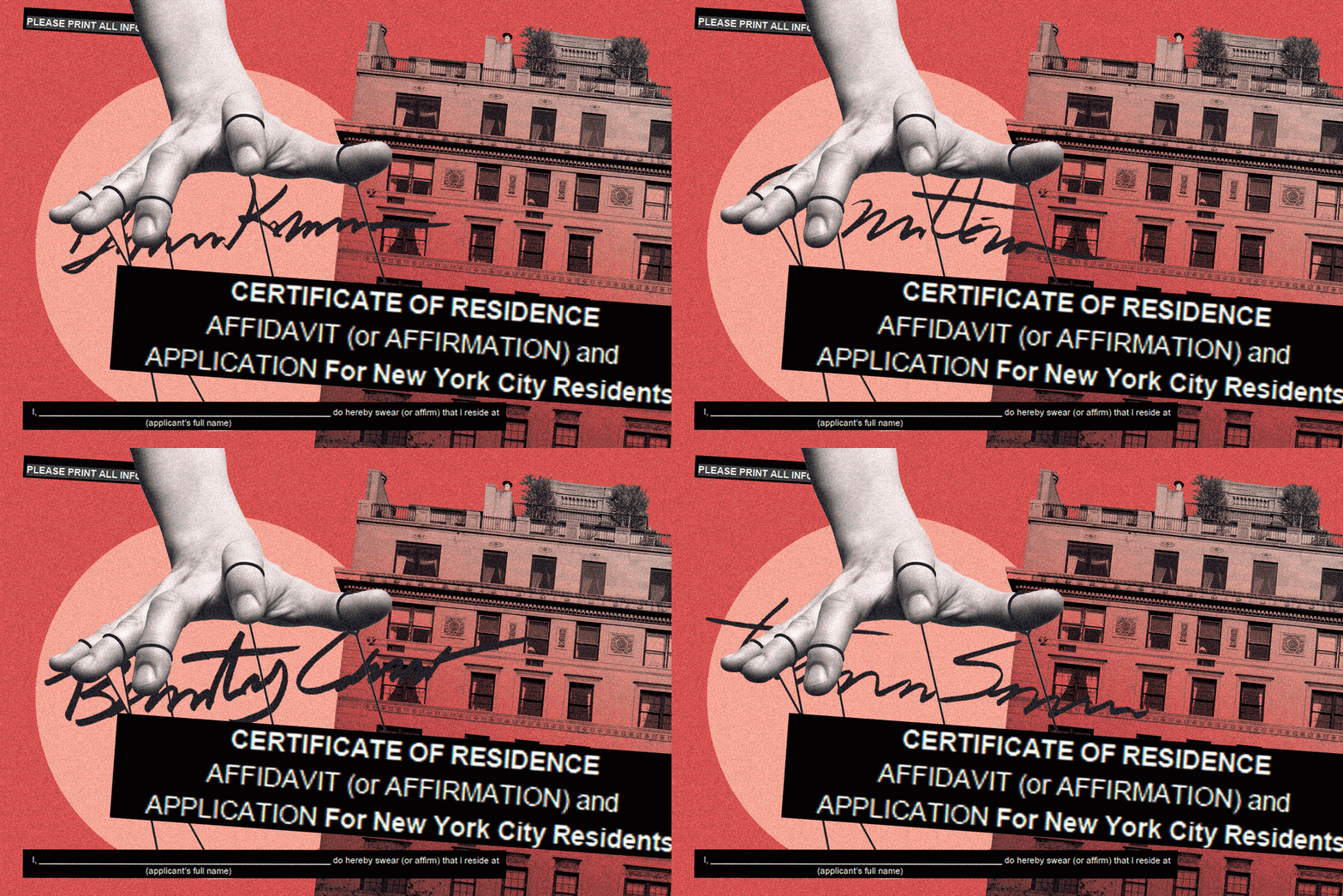
Having a full-time tenant in place would exempt owners of qualifying homes in the city, and wealthy tenants are now being asked to sign on the dotted line to certify they’re going to live in the city for the duration of the lease. Some tenants are even being asked to provide documents like W-2s or tax returns tied to apartments they already rent as many of their landlords appeal their pied-à-terre tax notice.
“All of a sudden, accountants are getting very involved in leases,” said Sotheby’s International Realty’s Jeremy Stein. Tenants, many of whom actively don’t claim a home in New York City as their primary residence to avoid pricey city income taxes, are now weighing their tax bill with what they can get on the rental market.
“The interests of the landlord and tenant are diametrically opposed because they’re both trying to do the same thing: avoid taxes,” Stein said.
The fine print
Romer Debbas founding partner Pierre Debbas said he’s advising landlord clients to include provisions in leases that require tenants to indemnify them if they are charged a pied-à-terre tax because the tenant doesn’t stick around. He’s also advised to include a clause that has tenants covering their landlord’s legal fees if legal action has to be taken.
“That way, it’s not cost-prohibitive for you to pursue legal action against the tenant,” he said.
The tax can be a huge swing in carrying costs for a landlord.
Corcoran’s Ryan Kaplan has an owner who rents out his place downtown for over $50,000 per month, and calculated that paying the tax would eat up roughly four months of rental revenue. The landlord updated the lease with their existing tenant to include a rider stipulating the tenant would be a full-time resident.
“Landlords are going to prioritize full-time residents in their units, but that begs the question of how deep is the well of the ultra-wealthy tenant base willing to be tax-paying residents,” Kaplan said.
Some tenants are already finding workarounds.
A tenant-client of Kaplan’s was hit with an 11th-hour rider before signing a lease at another $50,000-ish place downtown. In that case, the tenant, who has a business and kids outside the city, had their partner, who will be in the apartment full-time, sign the lease instead.
“The law gives tenants who are able to claim their home as a primary residence a competitive edge,” said the Agency’s Mike Fabbri. Fabbri pointed to a client working in artificial intelligence who is in the city part-time, and was rejected by the owner of $30,000-a-month apartment who told them that they’re looking for a full-time tenant following the tax being enacted.
“This is all very new,” Fabbri said. “I’m having these conversations live.”
The tax’s rollout comes at a time when high-end rental units are already scarce in the city. For renters that can’t claim full-time residence, the competition may become even stiffer — or prices that much higher.
“I’m expecting to see two numbers — one if you’re local, one if you’re not,” said Douglas Elliman’s Heather Domi. Domi also has a client looking to come over from London on a work visa whose tax attorneys are scrambling to see if they can claim residency in the city because “landlords are definitely not taking people who are not full-time residents,” she said.
Agents are still waiting to see the tax’s full effects on the luxury housing market, but some owners of multi-million-dollar homes that now have to pay hundreds of thousands a year in taxes could opt to sell rather than find a renter, Kaplan said.
“If all these properties are going to have a [net operating income] less than before, is that going to start impacting the value of all this real estate?” he asked.
Of course, the state has given second homeowners other potential workarounds — like sticking their college-aged children in their home, which Debbas said seems like the ultimate win-win.
“You’ll definitely have some parents saying, ‘You’re leaving the dorm room and living in our fancy condo,’” he said. “I mean, good for the kid, right?”
Read more

Policy Pro: City rejects buyer protections for pied-à-terre tax, Council seeks rental benefit boost

Homeowners get short reprieve after chaotic pied-à-terre tax rollout

NY Dirt: Owners have a lot of pied-à-terre questions