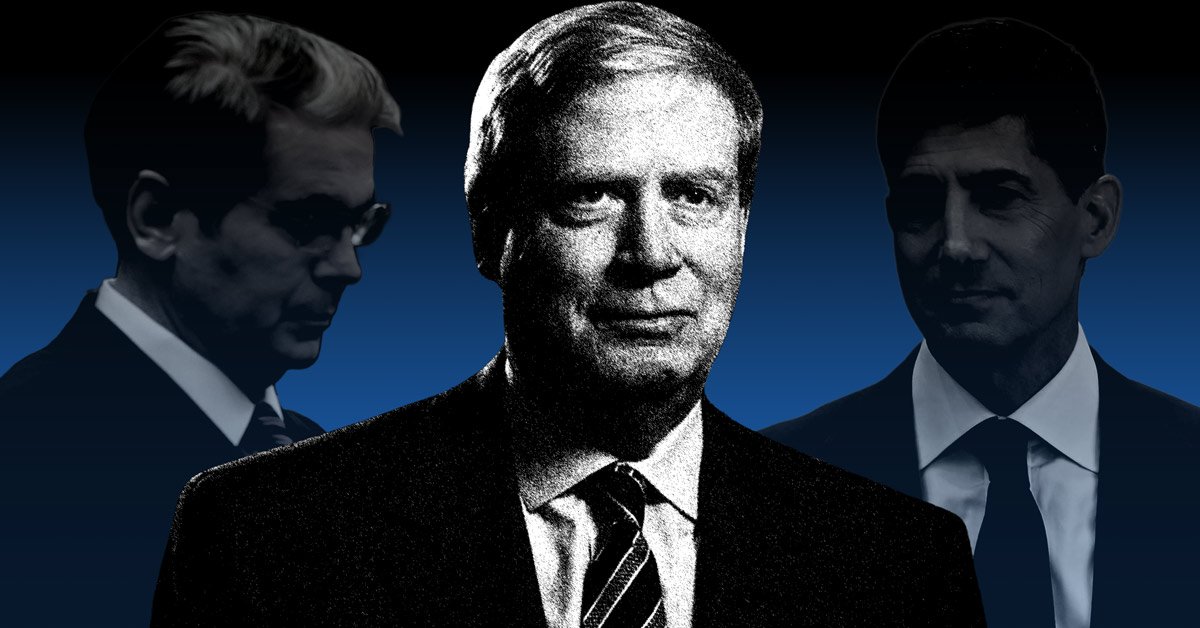
Fed chair in dicey spot as his mentor wades into the Treasury buyback debate
“Don’t fight the Fed” is a phrase investor Martin Zweig coined in the 1970s to underscore the risk financial market participants assume when they downplay or bet against the massive economic heft of the U.S. central bank.
On Monday, famed hedge fund guru Stanley Druckenmiller had a similar message for Treasury Secretary Scott Bessent: Don’t fight the bond market.
“The long-term Treasury yield is the most important price in the world. It is also the only fiscal disciplinarian the U.S. has left,” Druckenmiller stated in an opinion piece at least partially written by artificial intelligence and published by The Wall Street Journal.
Advertisement

The chairman and CEO of investment firm Duquesne Family Office LLC unabashedly admitted to using AI tools to pen the op-ed, telling NOTUS in an interview, “I write everything using AI now for the same reason I use a calculator when I do math problems.”
But he stood by the writing’s intellectual thrust, which took Bessent to task for the Treasury Department’s Aug. 19 announcement that it was doubling the size of longer-dated government debt buybacks — from $2 billion to at least $4 billion per operation — in an attempt to staunch a bond market sell-off.
“The market’s verdict was swift and correct,” Druckenmiller contended, referring to the spike in Treasury yields the day after the announcement. “This wasn’t liquidity management, it was price management — and a mistake far larger than $4 billion suggests.”
The op-ed continued: “Buying back long bonds while funding the purchases with bills shifts duration, or long-term interest-rate risk, out of public hands — economically, a small dose of quantitative easing run out of the Treasury rather than the Fed, easing financial conditions while inflation sits above target.”
Speaking volumes
Aside from the controversy of Druckenmiller letting AI do the talking in a piece titled “Let the Bond Market Speak,” his opinion carries added weight because of his role as a mentor to both Bessent and Federal Reserve Chairman Kevin Warsh.
Bessent and Druckenmiller worked together at Soros Fund Management in the 1990s, while Warsh served as a partner at Duquesne in the gap between his first stint on the Fed’s board from 2006 to 2011 and his current term as central bank chair.
Treasury described the buyback strategy as reflecting its “desire to provide greater liquidity support in longer-dated nominal sectors where there is consistent strong sponsorship from market participants, as evidenced by the significant volume of high-quality offers Treasury routinely receives in longer-dated buyback operations.”
Druckenmiller questioned the timing of the buyback announcement, with midterm elections looming in the fall. He also suggested the administration should instead tackle the mammoth $40 trillion federal deficit that continues to pressure bond yields.
“If the 30-year must trade at 5.5% to clear, that isn’t a crisis. It is an invoice,” the op-ed stated. “Then do the only thing that durably lowers long-term yields: address the primary deficit.”
Warsh is set to deliver the most significant speech of his young tenure as Fed chair on Friday at the Jackson Hole Economic Policy Symposium in Wyoming.
Whether he will address Treasury’s bond market intervention is a continued topic of speculation, but the interjection of his mentor and former boss into the public debate only ups the stakes for Warsh to clearly communicate the Fed’s reaction function amid ongoing economic and market volatility.