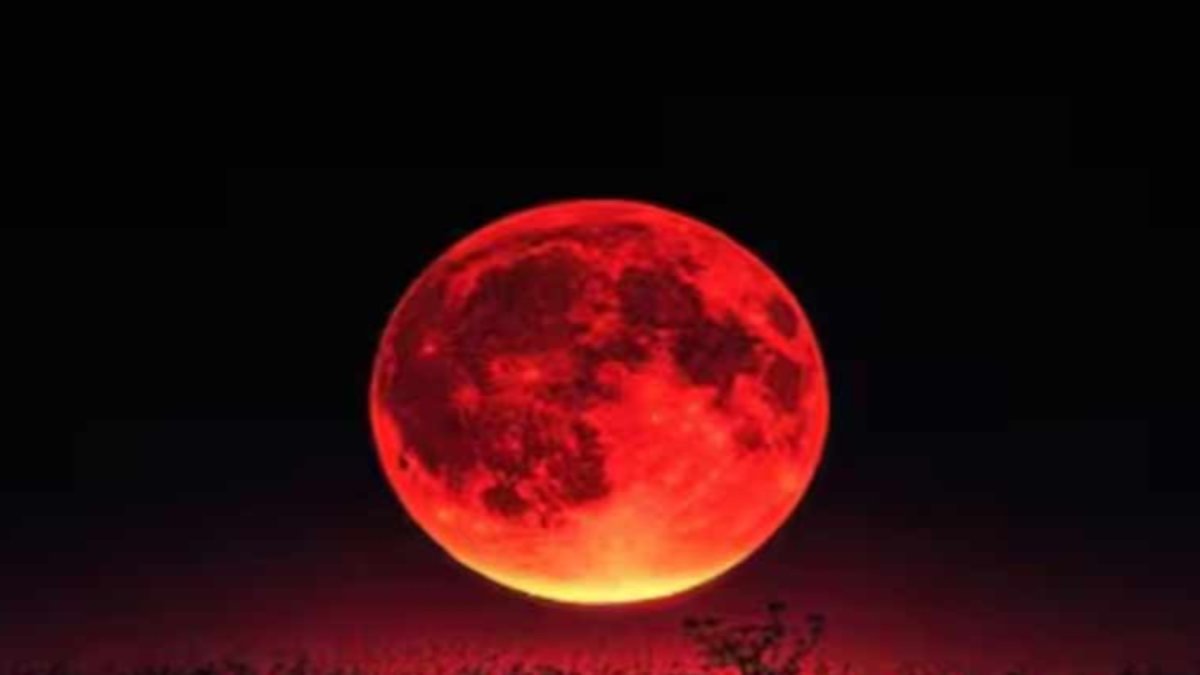
Chandra Grahan in August 2026: When is Last Lunar Eclipse? Check Date, Timings. Visibility in India, Sutak & More
The last lunar eclipse of 2026, or Chandra Grahan, will occur on Friday coinciding with Raksha Bandhan. The celestial event has attracted attention because it falls on the same day as the Hindu festival, raising questions about whether the eclipse will affect Rakhi celebrations, auspicious timings and Sutak Kaal in India.
However, there is an important point for Indian skywatchers: the eclipse will not be visible from India because the Moon will be below the horizon during the eclipse.
Chandra Grahan 2026: Will Lunar Eclipse Be Visible in India? Check Date, Timings, Sutak Kaal & More
The August 28 event will be a partial lunar eclipse, meaning only a portion of the Moon will pass through Earth’s dark umbral shadow. The eclipse will be visible from several regions across the Americas, Europe and Africa, while visibility in parts of western Asia will depend on the local Moon position.
/img/2026/08/chandragrahanlunareclipse3-12711787758413.jpg "Chandra Grahan")
Here is everything to know about Chandra Grahan 2026, including its date, timings, visibility, Sutak Kaal and its connection with Raksha Bandhan.
Chandra Grahan 2026 Date: When Is Last Lunar Eclipse of 2026?
The last lunar eclipse of 2026 will take place on Friday, August 28. It will be a partial lunar eclipse and will occur on the same day as Raksha Bandhan in India.
According to NASA’s eclipse information, the August 28 event is classified as a partial lunar eclipse. During a partial eclipse, the Moon does not completely enter Earth’s darkest shadow, or umbra. Instead, only a portion of its surface moves into the umbra, creating the appearance of a dark section on the Moon.
The coincidence of Chandra Grahan and Raksha Bandhan has led to considerable interest in the eclipse, particularly around the question of whether the celestial event will change the usual Rakhi rituals in India.
Chandra Grahan 2026 Time in India: Check Partial Lunar Eclipse Timings
The lunar eclipse will begin with the penumbral phase at around 6:54 am IST on August 28. The partial phase will begin at approximately 8:04 am, while the maximum eclipse will occur at around 9:43 am IST.
The partial phase will end at about 11:22 am, followed by the end of the penumbral phase at approximately 12:32 pm IST.
Penumbral eclipse begins at 6:54 am
Partial eclipse begins at 8:04 am
Maximum eclipse: 9:43 am
Partial eclipse ends at 11:22 am
Penumbral eclipse ends at 12:32 pm
The entire eclipse, including the penumbral stages, will therefore last around 5 hours and 38 minutes. However, these are the timings of the astronomical event converted to Indian Standard Time and should not be interpreted as viewing timings for Indian observers.
Chandra Grahan in August 2026 Visiblility in India
The August 28, 2026 lunar eclipse will not be visible from India. The eclipse phases occur when the Moon is below the horizon for observers in India. This means people across Indian cities will not be able to watch the partial lunar eclipse from their locations.
This distinction is particularly important because the eclipse is taking place on the same date as Raksha Bandhan. While the astronomical event will occur during Indian daytime hours, the Moon will already have set, making the eclipse unobservable from India.
NASA lists the August 28 partial lunar eclipse as visible across regions including the Americas, Europe and Africa.
Will Sutak Kaal Apply on 28 August Chandra Grahan?
The non-visibility of the eclipse in India is also important from the traditional religious perspective. Sutak Kaal is traditionally associated with the period before an eclipse and is observed by many households when the eclipse is visible in their region. Since the August 28 lunar eclipse will not be visible from India, Sutak restrictions are generally not considered applicable in India.
As a result, there is no need to change routine activities, worship or Raksha Bandhan rituals solely because of this lunar eclipse. Families who follow specific regional traditions or their family priest’s guidance may, however, choose to follow their local Panchang and customs.
Disclaimer: The views and recommendations expressed are solely those of the individual analysts or entities and do not reflect the views of Goodreturns.in or Greynium Information Technologies Private Limited (together referred as “we”). We do not guarantee, endorse or take responsibility for the accuracy, completeness or reliability of any content, nor do we provide any investment advice or solicit the purchase or sale of securities. All information is provided for informational and educational purposes only and should be independently verified from licensed financial advisors before making any investment decisions.