₹100 now costs 2.1 million Iranian rials: Here’s what it can buy in Tehran
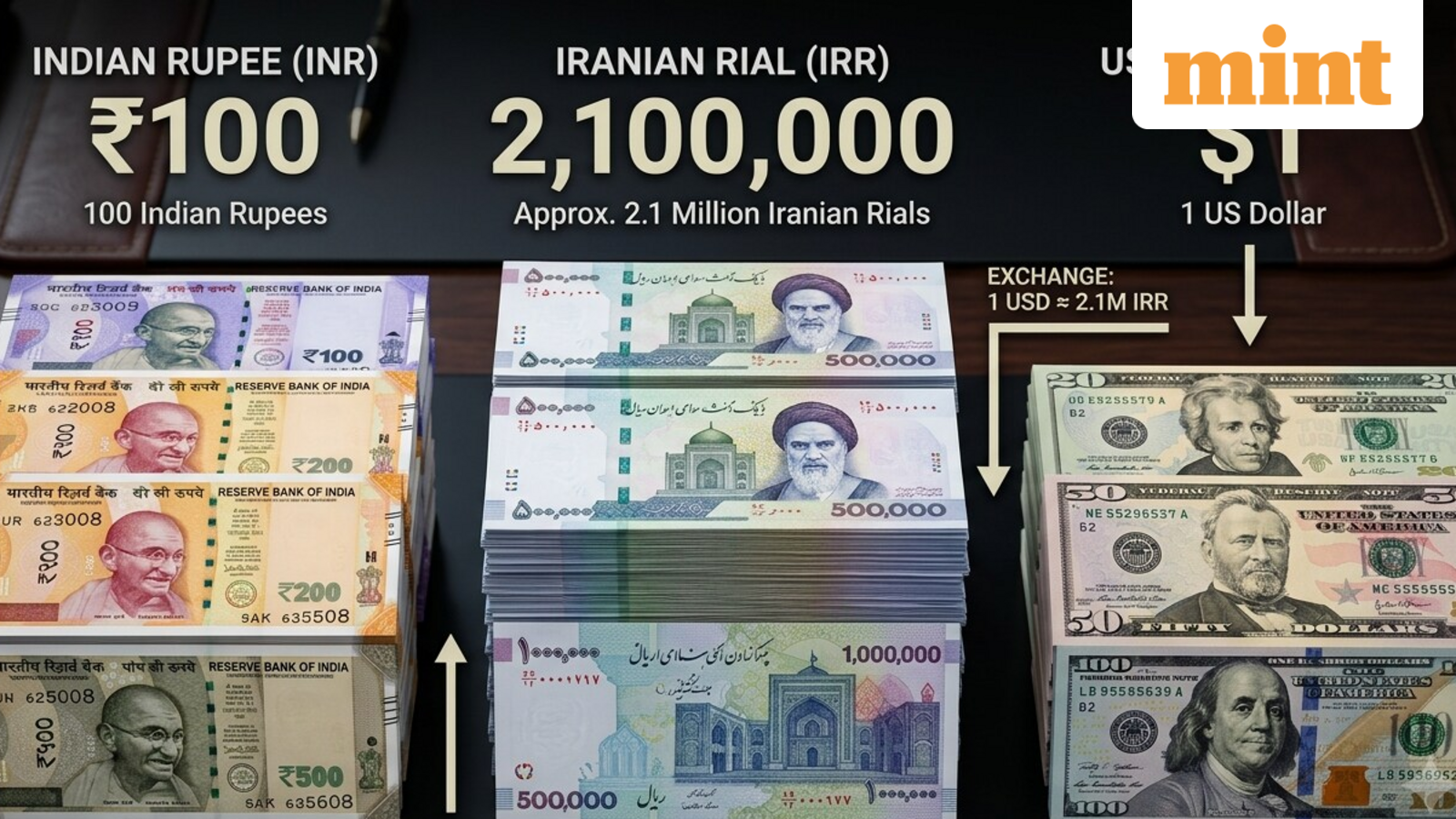
The Iranian rial has fallen to a new low as Washington has launched its toughest sanctions yet to cripple Tehran’s economy. As of today, $1 costs more than 2 million rials on the free market. And at a dollar rate of around ₹95, that means ₹100 is worth roughly 2.1 million Iranian rials.
Iran’s economy was already struggling under decades of US and international sanctions over its nuclear programme. Now, the Iran-Israel war has pushed the rial into a deeper crisis, with prices soaring and squeezing household budgets.
To understand how purchasing power has fallen sharply in Iran, we look at what everyday items now cost and what 2.1 million Iranian rials can buy.
According to an Al Jazeera analysis of prices in Tehran, 2 million rials — roughly equivalent to $1, or about ₹95 — could buy around 4 kg of tomatoes, half a kilogram of chicken and slightly less than a litre of cooking oil before the war. Today, the same amount can get you half of this.
What can ₹100 buy in Iran?
So, with ₹100, or about 2.1 million rials, you can now buy 2 kg of tomatoes and around a quarter of a kilogram of chicken, and less than half a litre of cooking oil.
Due to a steep rise in everyday prices, the average price of tomatoes has risen 71%, chicken has become 74% more expensive, and cooking oil has surged 177%, according to data shared by Al Jazeera.
The impact sits heavily on medicines, too.
The price of insulin has jumped 642%, while paracetamol has become 93% more expensive. Baby formula, much of which is subsidised by the government, has also risen 95%.
Millions of rials, but shrinking purchasing power
Despite the weakening of the rial, the authorities have failed to keep wages in line with prices.
Iran’s government-approved minimum wage is currently 166 million rials, equivalent to about $82 ( ₹7,820) at the exchange rate cited by Al Jazeera. With government assistance and benefits, the figure comes to less than 220 million rials or around $108 ( ₹10,298).
Comparing the average monthly salary with the rising cost of essentials such as food, clothing and medicines shows just how little an Iranian household can afford.
Afsaneh, a 35-year-old woman, told Al Jazeera her family’s weekly grocery bill has increased by 20 to 30%.
“Before the war, we could think about what we wanted to do three or six months down the road, but now our only concern is making it to the end of the month with the income we have,” Afsaneh said.
Iran’s economic situation was already and the war has deepened the crisis. For millions of Iranians, the real question is no longer how high prices have climbed, but how far a monthly salary can stretch across food, housing and other essentials.