investingLive Asia-Pacific market news: Gold down, Bitcoin up
Summary:
- A tanker was struck by a projectile off Oman while transiting a US-protected lane, according to UKMTO, even as Pakistan’s Interior Minister Mohsin Naqvi reported significant progress in talks with Iranian leadership; oil eked out a small gain on the session
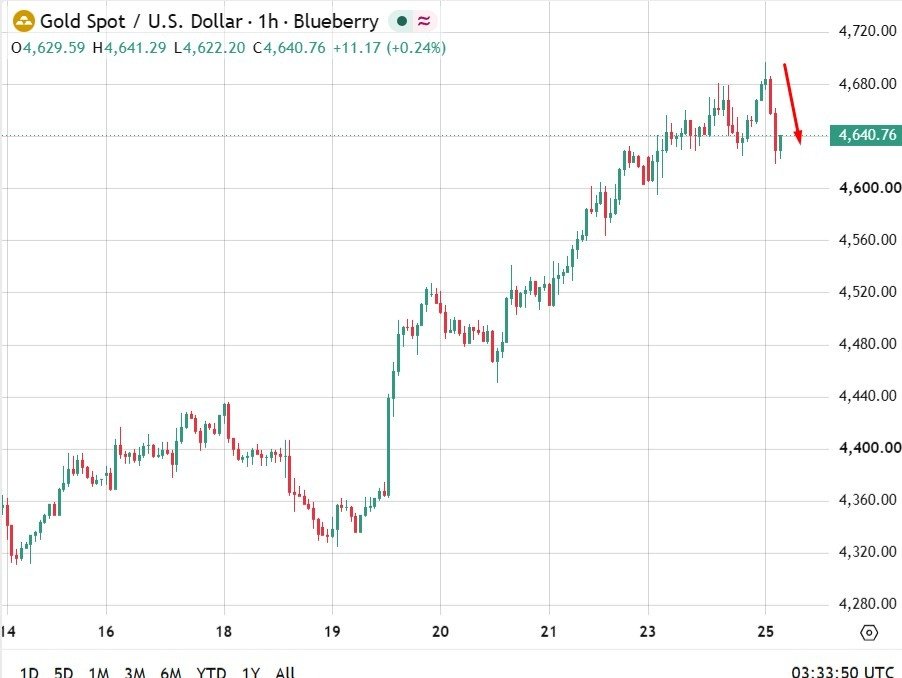
- Gold pushed above $4,690, approaching resistance near the $4,700 round number, before dropping sharply to below $4,640 with no clear catalyst identified for the reversal
- Stanley Druckenmiller, described as a mentor to both Treasury Secretary Scott Bessent and Fed Chair Kevin Warsh, wrote in the Wall Street Journal criticising Treasury’s recent bond buyback push to suppress long-term yields
- The RBA minutes confirmed the board held rates unanimously at 4.35% in August, judging policy already restrictive enough for now while flagging upside inflation risks and readiness to hike again if needed
- Former BOJ board member Seiji Adachi told Bloomberg the BOJ will likely hike next month and again as early as January, warning a hold could reignite yen weakness and faster import-driven inflation
- MUFG said September BOJ hike odds have climbed to around 80% without generating yen buying, arguing the move reflects market pressure on the BOJ rather than its own guidance
- The PBOC set its yuan midpoint 633 pips weaker than a Reuters estimate, the largest weak side deviation since February 27, with the Australian dollar among the currencies to weaken in response
- Canadian government ministers are due to announce a response to US tariffs at 1100 US Eastern time, 1500 GMT, on Tuesday
Oil edged marginally higher on the session, supported by a mix of geopolitical developments that offered no clear net direction. UKMTO reported a tanker had been struck by a projectile off Oman while transiting a US-protected lane, keeping shipping security risk in focus. Offsetting that, Pakistan’s Interior Minister Mohsin Naqvi said talks with Iranian leadership had made significant progress, a development that, if it holds, would point toward de-escalation rather than further disruption.
Gold had a volatile session, briefly pushing above $4,690 an ounce and approaching resistance at the $4,700 round number before reversing sharply to trade below $4,640, with no clear catalyst identified for the move. The broader rally that has taken gold to its highest level since mid-May remains intact, with the metal continuing to draw support from renewed fiscal sustainability concerns following the apparent failure of the Treasury’s bond market intervention to durably lower yields, a dynamic that has reinforced demand for bullion as an alternative store of value even as the day’s price action showed how quickly sentiment can swing without an obvious trigger.
That fiscal debate found a prominent voice in Stanley Druckenmiller, who wrote in the Wall Street Journal criticising the Treasury’s recent moves to suppress long-term bond yields. Druckenmiller, who has mentored both Treasury Secretary Scott Bessent and Federal Reserve Chair Kevin Warsh, argued the approach amounted to price management rather than genuine liquidity support. His view reflects a broader institutional debate over whether such intervention is sustainable, with proponents of that reading arguing it points toward a continuation of the dollar debasement trade and further upward pressure on yields should Treasury persist with the strategy.
Central bank developments were a significant feature of the session. Minutes from the Reserve Bank of Australia’s August meeting confirmed the board held the cash rate unchanged at 4.35%, judging that policy already sat at a sufficiently restrictive level while explicitly flagging that risks to the inflation outlook remain skewed to the upside and that it stands ready to hike further if those risks materialise.
In Japan, former Bank of Japan board member Seiji Adachi told Bloomberg he expects the BOJ to raise rates next month and again as early as January, warning that a decision to hold steady could reignite yen weakness and add to import-driven inflation pressure. MUFG offered a related but distinct read, noting that market pricing for a September hike has climbed to around 80% without generating corresponding yen buying, a disconnect the bank said suggests the shift reflects pressure on the BOJ from the market rather than a result of the central bank’s own communication, leaving near-term yen risk skewed to the downside.
Elsewhere in Asia, the People’s Bank of China set its yuan midpoint 633 pips weaker than a Reuters estimate, the largest weak side deviation from market expectations since February 27. The Australian dollar was among the currencies to weaken in reaction, consistent with its tendency to trade as a proxy for shifts in Chinese currency and growth sentiment.
Looking ahead, attention turns to Canada, where government ministers are scheduled to announce a response to US tariffs at 1100 US Eastern time, or 1500 GMT, on Tuesday, a development likely to add a fresh trade policy dimension to the session ahead.
—