Bank SMS fraud alert! 3 tips to spot scam messages — How to identify fake texts before they can trick you
An SEBI Registered Investment Adviser shared a video recently to alert bank customers against fraudulent messages. Describing how the scam operates, he warned users and illustrated how one can spot fake texts from scamsters.
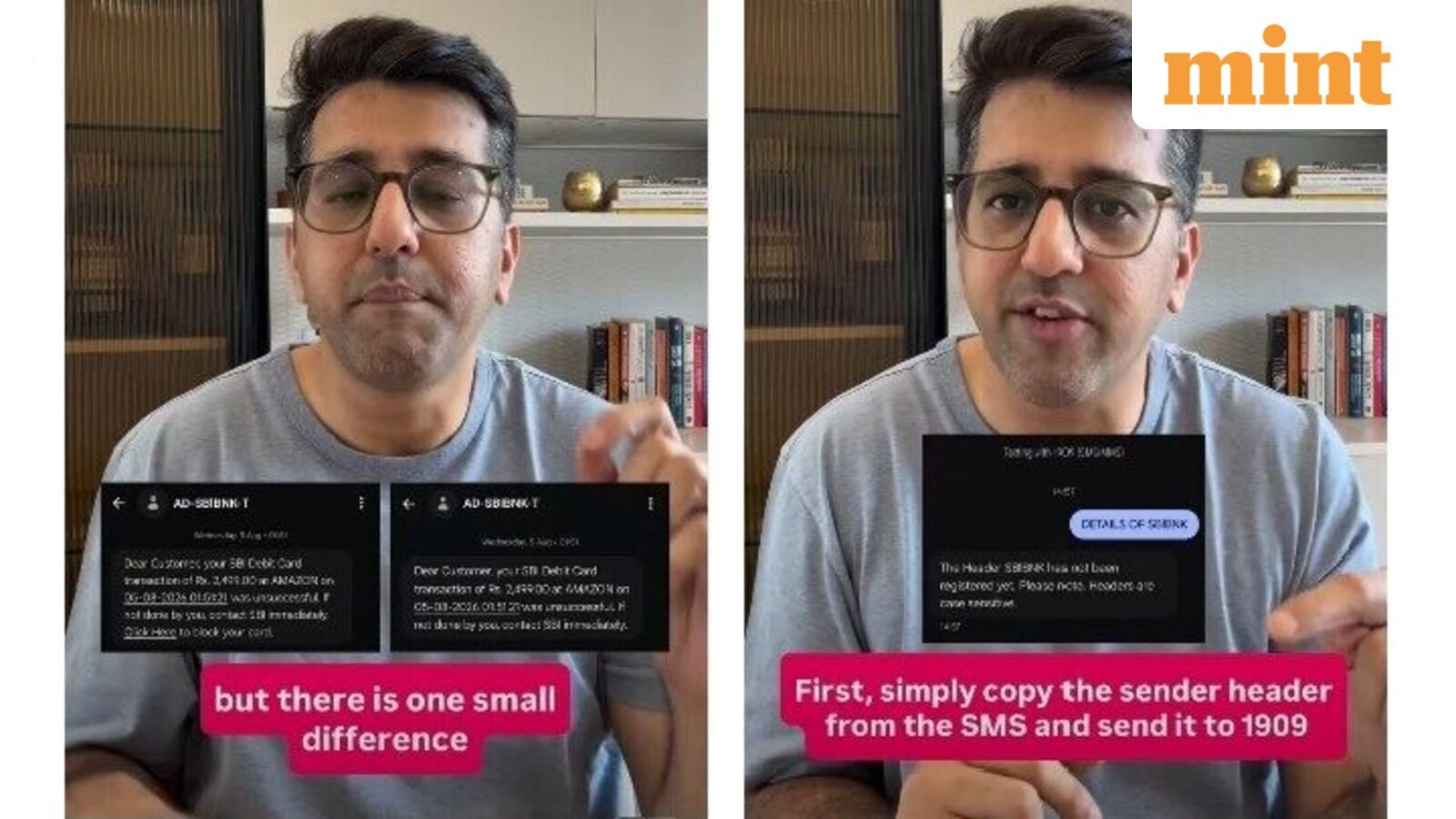
The Delhi University Finance Professor named Vinny Arora posted the video on Instagram on Saturday in which he revealed that he received two identical messages from SBI bank with “Same message. Same style. Same branding. Even the sender name” looked similar. Although both seemed genuine, but a closer examination revealed that they differed significantly.
The description with the post states, “Scammers are getting smarter—and sometimes the difference is just one tiny character that’s easy to miss.”
Vinny Arora cautioned against clicking on any message link before verifying whether an SMS sender is genuine.
In the video, the professor explained how one can check registration status of the sender. He can be heard saying, “First, simply copy the sender header from the SMS and send it to 1909 and you will get a reply if the sender is registered with TRAI or not.” He added, “If it is unregistered, don’t trust the message or click any links in it.”
Moving to the second tip, the professor discussed how one can use TRAI SMS Header portal to verify the authenticity of the sender and find out whether the sender is registered with Telecom Regulatory Authority of India (TRAI). “Visit website smsheader.trai.gov.in and enter the required details to know if the number is registered to a genuine company or not,” Vinny Arora said.
According to the Investment Adviser, it is important to insect the sender’s name as scammers often replace a character with something that looks almost identical. For instance, a lowercase “i” is placed instead of an uppercase “I”. Elaborating with an example, he said, “Look at the name of the sender again carefully. One of them has a lowercase letter which is a fraud sender.”
Concluding the post, he reiterated, “So next time an SMS looks genuine, don’t just trust the sender name, check the header before you click.” As a standard rule to avert scams, the first move should be to verify the sender before clicking any link or sharing any OTP, PIN, password or banking details.
Social media reaction
A user mentioned a fourth pointer to identify scam SMS and wrote, “One has “Click here” link button and that’s a scam.” Another user stated, “So I have to do that each time?? I mean I can check the balance if it’s deducted or I can go to the yono sbi app. You’re just telling complex ways of doing simple things.”
A third comment read, “Other than these 3 the very easy one is “click here to block the card” that link itself says it’s a scam.” A fourth user remarked, “you can really tell the difference! A real bank text will always tell you to get in touch with them directly and they’ll never include those “click here” links.”