Why India’s Unified Payments Interface needs reform, and not US pressure | Finance News
By Andy Mukherjee and Ruth Pollard
US entanglement in India’s regulatory weeds is becoming a prickly political issue for New Delhi.
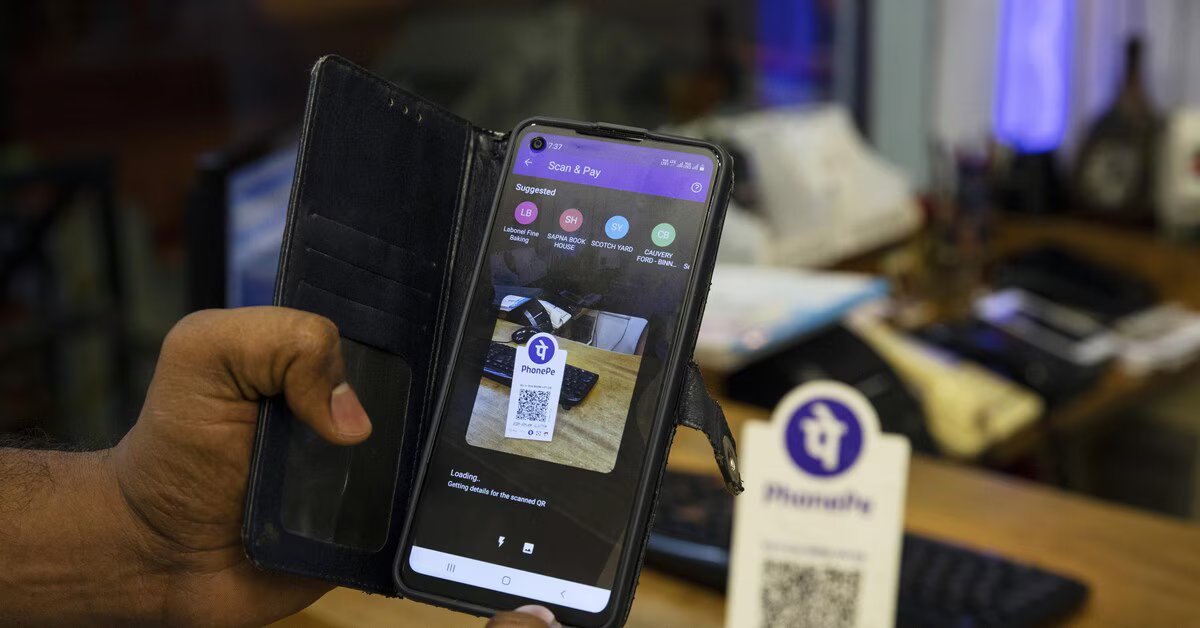
At stake is India’s 10-year-old Unified Payments Interface, which facilitates transfers via phone numbers or merchant QR codes, moving money instantaneously from one bank account to another. PhonePe, a Walmart Inc.-owned app, and Alphabet Inc.’s Google Pay control 80 per cent of transactions.
Prime Minister Narendra Modi’s government is doing the right thing with its recent efforts to prevent this $4 trillion-a-year industry from choking on its own high-volume, zero-profit success. But because the fix involves charging for some transactions that are currently free, the opposition has branded it as anti-consumer — and a surrender of financial sovereignty to the Trump administration, at the behest of Visa Inc. and Mastercard Inc.
The reason for that connection isn’t hard to see. The US Trade Representative’s 2026 report on foreign trade barriers singles out UPI over concerns that American electronic services suppliers cannot participate in it on a level playing field. UPI is operated by the National Payments Corporation of India, a quasi-government entity. It has its own RuPay cards that enjoy much wider acceptance than Visa and Mastercard, putting the American networks’ lucrative credit-card business at a disadvantage.
Deep-pocketed Walmart and Google drove UPI’s expansion, gaining invaluable spending data on 1.4 billion Indians. But they came to the equation from the consumer’s side. Earning nothing while moving nearly $1 trillion annually is unsustainable for the intermediaries enabling round-the-clock merchant checkouts.
Processing over 20 billion monthly transactions requires heavy investment in servers, compliance, and cybersecurity. Fraud is rampant, and consumers expect banks or fintech firms to cover losses. Shrinking government subsidies currently cushion these infrastructure costs, but a fiscally constrained New Delhi cannot pick up the tab forever.
To the industry’s relief, the Modi government has secured parliament’s approval to change the law, though it has promised not to burden the consumer or small businesses with fees.
Brazil’s experience can provide a useful template. In 2020, the central bank launched Pix, an instant account-to-account payment network. Like UPI, it was made free for transactions between individuals. However, Brazil didn’t restrict intermediaries from charging merchants. Fast growth hasn’t been hindered by low, market-based fees averaging between 0.22 per cent and 0.33 per cent.
The lesson for New Delhi: Keep peer-to-peer and mom-and-pop transactions free, but let large commercial platforms pay, say, 0.5 per cent. Unlikely to pass such tiny costs onto buyers, big businesses will generate the revenue banks and fintech firms need to maintain infrastructure.
For Washington, the takeaway is equally obvious. Even before UPI, Indians didn’t really flash their Visa or Mastercard debit cards to pay shopkeepers. The use of American plastic was either for credit — or at the ATM.
Siding with legacy card networks to accuse India of “creating a non-level playing field” is going to stand in the way of genuine reform by making even a pragmatic fix hard to defend, especially if it gets played up as a capitulation to US interests.
Disclaimer: This is a Bloomberg Opinion piece, and these are the personal opinions of the writer. They do not reflect the views of www.business-standard.com or the Business Standard newspaper