What It’s Like to Use Elon Musk’s Starlink WiFi on Board a Flight
Elon Musk’s Starlink is evolving from a niche perk to a necessity for high fliers.
The venture capitalist Jason Calacanis said he chooses flights based on whether they offer Starlink, regardless of price or journey length. Rick Ross said he spent $700,000 putting it on his private jet. And in the first earnings call after its IPO, SpaceX President Gwynne Shotwell said one airline reported some customers were choosing unnecessary layovers to ensure they were on a flight with Starlink.
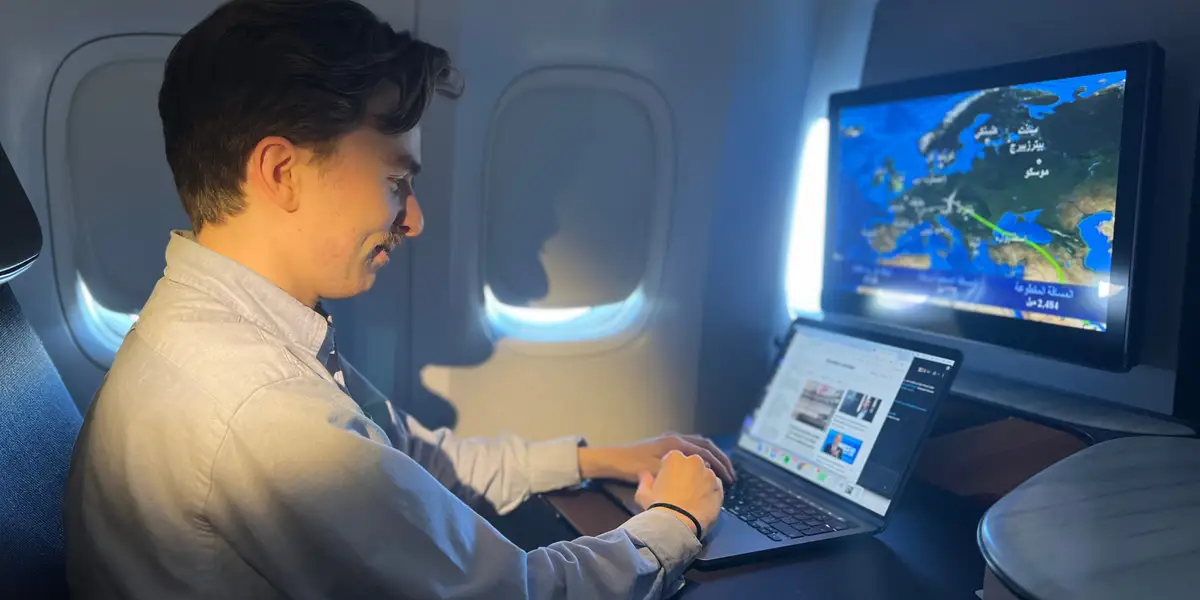
Back in October 2024, Business Insider was invited to try it out on Qatar Airways’ first flight featuring the high-speed WiFi service.
At the time, just eight airlines had announced deals to install Starlink. Nearly two years later, another 35 airlines have followed suit, including American Airlines, Emirates, and Southwest Airlines.
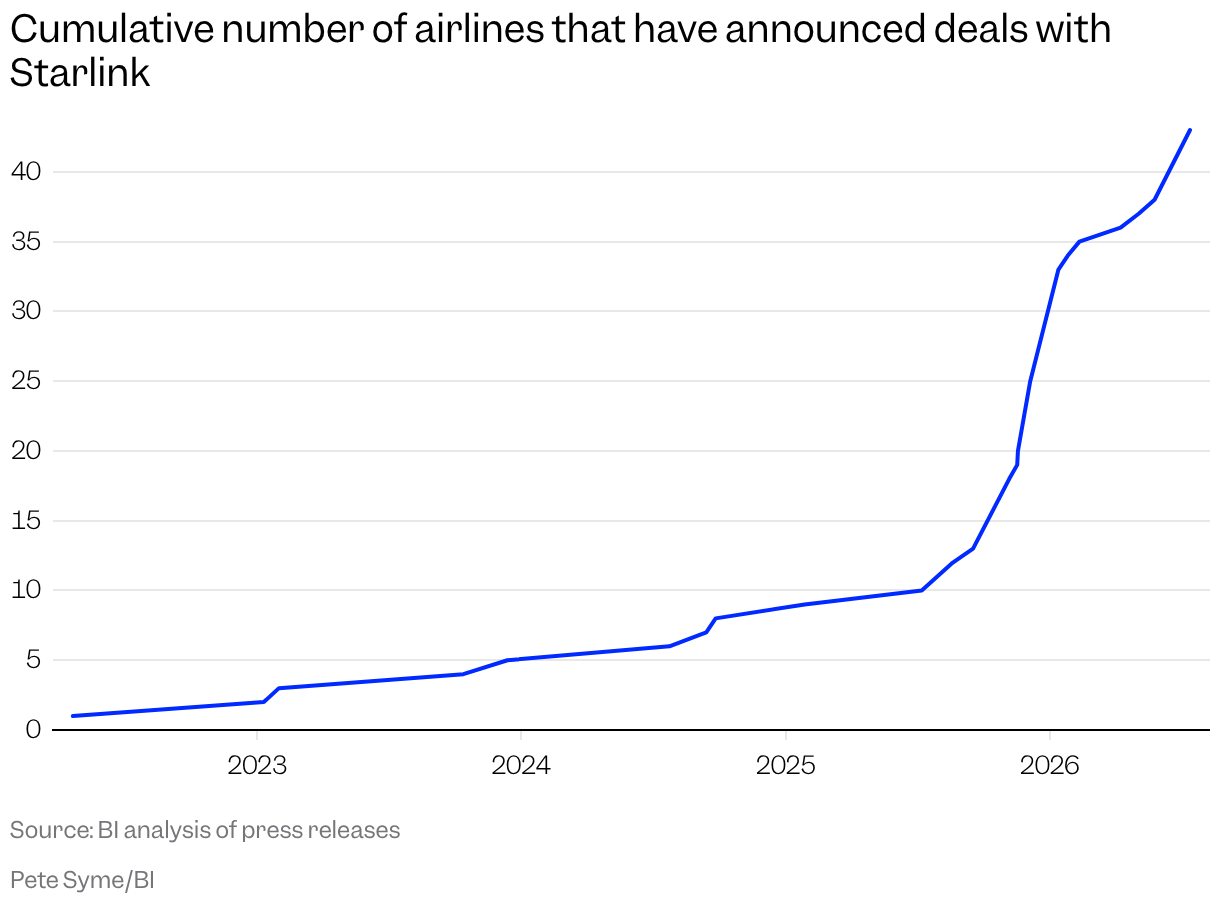
It will take years for them to have all installed Starlink across their fleets, with timelines varying due to the complications of taking airplanes out of service for installation.
But with connection speeds better than many home broadband services, let alone other in-flight internet providers, Starlink is becoming a must-have for airlines.
Qatar Airways’ first flight with Starlink
Approaching the gate at Doha’s Hamad International Airport, animated archways celebrated the new partnership. On board, a promotional video followed the safety briefing, and Starlink cupcakes were handed out to passengers.
Having connected to the airline’s regular WiFi service on another flight the day before, I was impressed that my phone automatically connected on the Starlink flight.
Even if it were your first time flying with Qatar, you would only have to select the “OryxComms” WiFi network without the fuss of entering your email or paying for access.
Pete Syme/Business Insider
One of the flight attendants I spoke to during the flight said this could reduce their workload, as there would be fewer passengers asking for help connecting or complaining about the spotty connection.
I was flying in the QSuite business class for this media event, but Starlink WiFi is free for passengers in every cabin.
On my flight from London to Qatar with the same airline, I paid $10 for in-flight WiFi, which typically had a download speed of around 5 megabits per second. I could watch some YouTube videos in 360p and stream music, but I had to be patient with buffering.
By contrast, the Starlink WiFi was as high as 215 megabits — faster than most home internet speeds. However, I saw it dip as low as 11 Mbps as we flew over the Black Sea, before returning to three figures over central Europe.
I managed to catch up with my favorite quiz show, “University Challenge,” watching it in high definition with no buffering, plus I could stream music without a hitch.
Several influencers and YouTubers were on board the launch flight, too, and I saw them livestream on Instagram from the air.
Pete Syme/Business Insider
However, I think business travelers would most appreciate the benefits of speedy in-flight internet. Crucially, there’s almost no downtime as Starlink operates gate-to-gate, while standard in-flight WiFi is only activated at cruising altitude.
I didn’t have any work meetings scheduled, but I did video call several people on WhatsApp, starting with a fellow journalist, Simple Flying’s Tom Boon, who was also on the flight. I also called my parents and my friend Thom, who was at home in west London. He said the video quality looked just as good as on the ground.
However, many airlines won’t let you make calls with Starlink, including United Airlines and Lufthansa.
Even so, the reliability of the connection still makes it a game changer — especially for businesspeople who need to keep up to date with what’s happening on the ground.
That’s especially notable given that Qatar prides itself on its business-class offering, named the world’s best by Skytrax.
Some executives laud private jets for the time saved during boarding, plus better WiFi services, but Starlink’s top connectivity should make commercial flights almost as appealing, particularly as it rolls out across more and more airlines.
Pete Syme/Business Insider
At 36,000 feet above the Persian Gulf, I was able to write and file a story about the event for Business Insider with no problems — something I hadn’t been able to accomplish with poor WiFi on a previous train ride.
It did mean there was nowhere to hide when colleagues and my editor messaged me with work queries, highlighting what may be seen as the negative side of better connectivity.
Thanks to their usually erratic WiFi, planes are perhaps one of the last bunkers to keep away from work, decompress, and forget about the world outside. Consider, for example, the whimsical TikTok trend of “raw-dogging” flights — flying without any in-flight entertainment.
That’s much less likely if you can easily scroll Twitter or Instagram on your phone — or be invited to join a Zoom meeting.
Editor’s Note: This story was originally published in October 2024. It was updated in August 2026.