Shifting Fortunes for L.A.’s Ports Boost Surrounding Industrial Real Estate – Commercial Observer
Ports are meant to offer protection from storms or rough seas.
But nothing has been able to protect the ports of Los Angeles and Long Beach from the uncertainty and fluctuation of trade policy during President Donald Trump’s second term.
“It’s like the quote from ‘The Morning Show,’” said Gregg Healy, executive vice president and head of Savills Industrial Services. “Chaos is the new cocaine. I do think we will have more turbulent times ahead.”
So it’s been a welcome surprise that the tariff turbulence has seemed to benefit industrial real estate near or tied to the waterfront. From Liberation Day in April 2025, when Trump announced his first round of sweeping tariffs, to the current war with Iran, the ebbs and flows of global trade have been massive and disruptive, but new shipping volume is helping port-adjacent and port-dependent submarkets. Amid a boom and bust cycle that’s dominated the last few years, and pushing warehouse vacancy to a recent peak of 7 percent this year, Los Angeles’ industrial side may be poised for an upswing.
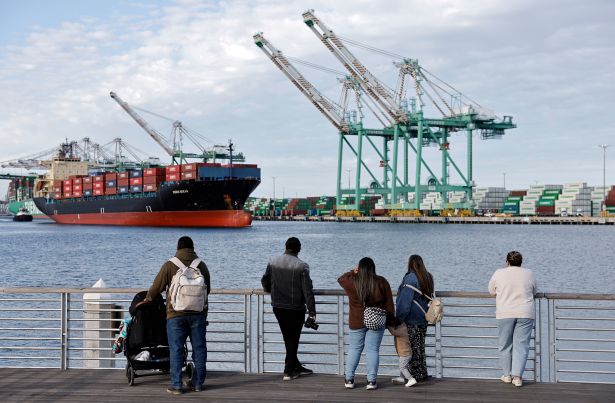
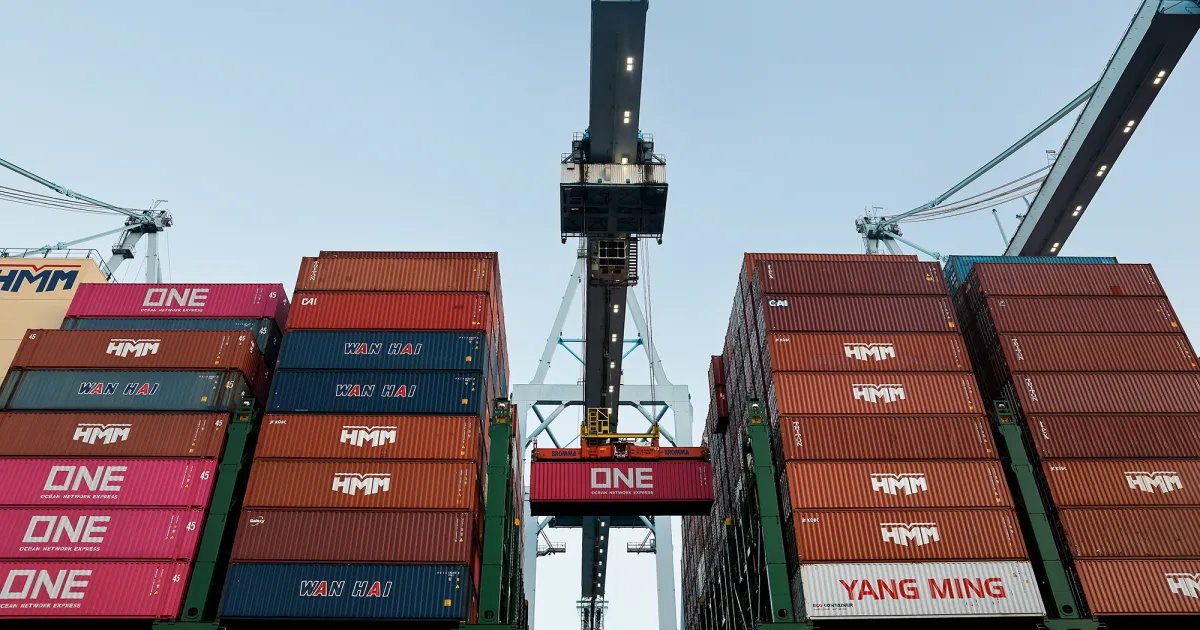
Shipping volume at the ports of Los Angeles and Long Beach is up 1.8 percent this year. After topping 1 million container units in June, the Port of Los Angeles nearly hit that mark in July, making it the second-busiest July on record.
“Businesses continue to move cargo when they see windows of opportunity amid an evolving trade environment, while resilient consumer demand is helping keep imports at historically strong levels,” said Port of Los Angeles Executive Director Gene Seroka in a recent statement.
The region’s industrial market saw its highest leasing levels in five years during the second quarter of 2026, according to Cushman & Wakefield data, driven by its centrality to larger logistics networks. According to a recent Marcus & Millichap analysis, a steadier flow of goods has helped stabilize the market. And Kidder Mathews found strong leasing activity across Los Angeles, with 6.2 million square feet during the second quarter.
There was an industrial market transformation taking place in the second quarter, said Healy.
“People started saying, ‘I’ve got to get in there, I’ve got to get a building now,’” he said.
These shifts have led shipping traffic to ping-pong between ports of call, with the East Coast getting more volume last year, and West Coast ports making a comeback in 2026.
That translates into spikes in warehouse rents, said Healy. While industrial rents have been declining since the middle of 2023, viewed on a longer term timeline, the same rents are actually still up 25 percent versus the start of 2020. So, overall, there’s minor improvement amid the vast fluctuations.
Shippers are trying their best to game out supply and tariffs policy, Healy said. Right now, he said, there may be a golden window to move products and stack up for the holidays before Trump places more duties on foreign goods. Instead of the typical pull by consumers to move more goods across seas, there’s a push by suppliers and retailers seeking to get products to port when costs are relatively low.
A radical shift in the region’s economy has also buoyed industrial real estate near L.A.’s ports. That shift favors advanced manufacturing. Healy sees demand from high-tech tenants in defense and space, as well as third-party logistics providers (3PLs), transportation providers and port-centric activities, driving future growth.
The logistics space has shown grown. According to Kidder Mathews, Watson Land Company signed a pair of new logistics leases last quarter totaling 150,000 square feet, and two new Rexford properties on Voyager Street in Torrance are expected to be fully spoken for by the time they finish construction in September.
But advanced manufacturing, especially for space- and defense-aligned firms, is taking any slack left in the regional warehouse market.
“What’s changing about port-centric Southern California real estate is you have this very trade-dependent market, but now you have this overlay of aerospace, defense, and advanced manufacturing being a primary driver of absorption,” said Healy. “That’s pushing rents up for Class A buildings, whereas your 3PL customer is really a cost-conscious investor or client.”
Take the South Bay market, which has seen a striking amount of new absorption this year —1.8 million square feet for aerospace and defense tenants alone during the first quarter. The largest such deal of the year so far was for Valar Atomics, a nuclear startup, which signed for half a million square feet in Torrance. The second-largest deal, for Divergent Technologies, which leased 415,000 square feet in Long Beach to expand its effort to 3D print weapons and missile parts for the U.S. military, wasn’t far behind.
Southern California has a unique ecosystem of legacy firms and talent that supports these industries, and as funding and growth have improved nationally and regionally, the industrial market has benefitted.
At the same time, that growth hasn’t led to a wave of speculative construction. There’s only about 1.2 million square feet of new construction in the South Bay right now, roughly the size of two Valer Atomics leases, and forecasts only call for increased venture capital funding and investment in defense firms. As the broader industrial market rebounds from a supply glut, the more disciplined development pipeline means owners will likely see plateauing or rising rents and revenues in the near term.
Healy is seeing a layering effect on the market. It’s always been good to be by the ports to reduce drayage costs. Now, the ceiling is getting higher as more high-tech tenants take over Class A warehouse space near the waterfront.
Despite the positive signs of increased activity, not all coastal real estate sectors have seen the tide roll in.
The former working waterfront of San Pedro has seen a boom in mixed-use projects and apartment construction. In March the 281-unit Jules San Pedro broke ground, and local officials greenlighted the massive Rancho San Pedro redevelopment effort, a joint venture between Richman Group, National CORE, Century Housing and the Housing Authority of the City of Los Angeles that will triple the density of a former public housing development with more than 1,500 units and commercial space.
At the same time, areas like downtown Long Beach have suffered, even as the rest of the city has seen a boost from aeronautics and advanced tech tenants.
When the Port of Long Beach finalized the $36 million purchase of an office building at 100 Oceangate in downtown on Aug. 6, it made headlines as part of the city’s effort to provide a jolt to the moribund business district, which suffers from 35 percent vacancy. Port of Long Beach CEO Noel Hacegaba told Commercial Observer the organization envisions creating a destination where maritime trade businesses can generate new workforce opportunities and build a stronger, more vibrant Downtown Long Beach.
As part of the city’s encouragement of international shippers, Hacegaba hopes manufacturers and other maritime trade businesses locate their offices in the newly acquired building, which has roughly 225,000-square feet of rentable space. He said some existing port tenants have already expressed an interest, including shipping lines, trucking operators and maritime consultants. The building will also provide space for workforce development initiatives and “Port U,” the Port of Long Beach’s internal training and career development program.
“This is part of the port’s effort to amplify our impact on spurring economic activity for local businesses and extending the benefits of trade beyond our waterfront,” Hacegaba said.
In effect, Hacegaba’s team is trying to make the port a destination for more of the shipping, logistics and business ecosystem. As far as he can tell, it’s the first time a port has acquired a commercial office space building to create a maritime hub and use this to help revitalize a city’s downtown. It remains to be seen whether such an effort can succeed amid a very stormy macroeconomic forecast.