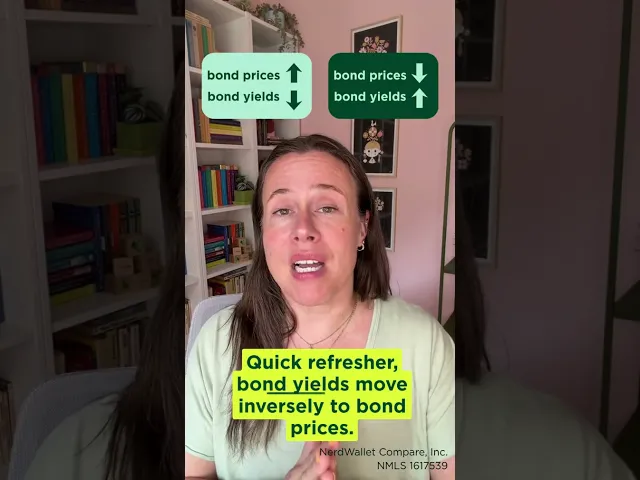
Mortgage rates are higher this morning as markets have fully shrugged off Wednesday’s surprise Treasury announcement. The move was certainly intended to bring down longer-term bond yields — and borrowing costs, like mortgage rates — but it’s not enough to overcome the larger forces at work. The Iran war, Fed anxiety, even (but also, of course) the rise of A.I. all play into what’s been happening with the bond market.
The average interest rate on a 30-year, fixed-rate mortgage rose to 6.55% APR, according to rates provided to NerdWallet by Zillow. This is four basis points higher than yesterday and two basis points higher than a week ago. (See our chart below for more specifics.) A basis point is one one-hundredth of a percentage point.
For more — a LOT more — on why the Treasury’s big move isn’t likely to be a game changer, keep reading below the chart.
P.S.: While the economy never sleeps, markets are closed on the weekends. The rates you see Friday are unlikely to change much (if at all) until Monday.
Average mortgage rates, last 30 days
🤓 Kate on Rates: August 20, 2026
📈 What influences mortgage rates?
Mortgage rates are constantly changing, since a major part of how rates are set depends on reactions to new inflation reports, job numbers, Fed meetings, global news … you name it. For example, even tiny changes in the bond market can shift mortgage pricing.
On Wednesday, the Department of the Treasury announced it would at least double the scale of its buybacks for longer-term bonds, from $2 billion to $4 billion. The idea is to try to lower bond yields by increasing demand, which theoretically should lower prices.
Quick explainer for how bonds work. A bond investor is essentially lending money to the bond’s issuer. In exchange, the issuer gives the investor regular interest payouts, and the investor gets their principal back when the bond reaches maturity. The interest is more commonly referred to as the bond’s yield.
But that’s assuming the investor buys the bond from the issuer and retains the bond for its entire lifespan. In reality, most of the action in the bond market is bonds being resold. That means investors are buying them at today’s price, not at their issued price.
Regardless of what price the investor’s paying, the interest payout from the issuer remains the same. So if you’re paying more than the face value, your interest a.k.a. the yield is going to be lower relative to the price you paid. If you pay less than the bond cost when it was issued, your yield will be higher. That’s been happening an awful lot lately as the yields on longer-term Treasury bonds, like the 10-, 20- and 30-year, have been riding high.
Here’s where it all ties back to mortgage rates: Lenders benchmark 30-year mortgage rates against the yield on the 10-year Treasury note. When Treasury yields rise, mortgage rates rise, too. The yield on the 10-year T-note has been going up for months, and mortgage interest rates have been right there with it.
This is the supply-and-demand dynamic the Treasury’s trying to influence with the increased buybacks. If there’s more demand for these longer-term bonds, sellers should be able to ask for higher prices — and when those bonds sell at higher prices, they’ll have lower yields.
Apparently, $4 billion doesn’t go as far as it used to, because the market quickly shrugged off the Treasury announcement. But that’s not the whole story.
The Treasury’s move adds a big buyer to the mix, but it doesn’t disrupt the larger forces that have been driving up yields for months. There’s a lot, including shifting foreign investments, A.I. companies’ endless need for cash and the Iran war.
One key element, which we talk about a lot, is the Federal Reserve. The Fed doesn’t set mortgage rates, but its actions have significant consequences for the entire economy, including the bond market and borrowing costs.
The Fed began a new era last spring as Chair Kevin Warsh entered the chat. Not literally, though, because Warsh made clear from his first meeting onward that he believes Federal Reserve officials should be a lot quieter about their opinions. He slashed the size of the Fed’s post-meeting statements and removed forward guidance, which is a fancy way of saying he axed anything predictive about the Fed’s next moves.
Warsh’s reticence has actually been a big factor in bond yields’ run-up, though we need to rewind a little further to see why. The Iran war (which began in earnest in March; Warsh didn’t take over at the Fed until May) quickly stoked inflation fears. Inflation makes bonds a lot less desirable, because that fixed interest doesn’t go as far if the dollar itself is worth less. So inflation anxiety has had investors selling off bonds, bringing us lower prices and higher yields. (And again, higher yields = higher mortgage rates.)
When Warsh does choose to speak, he has a lot of tough talk for inflation. But Warsh’s Fed hasn’t taken action on inflation — and without forward guidance, no one really knows if or when it will. Generally, the Federal Reserve raises the federal funds rate (that’s the short-term borrowing rate the central bankers actually control) to try to slow inflation.
At Warsh’s first two meetings, the Fed maintained the funds rate at its current level. Markets had anticipated rate hikes from the Fed this year, but as time’s gone on, those predictions keep being pushed (and scaled) back. And so long as potential bond investors think the Fed’s going to just let inflation do its thing … we’re probably going to keep seeing higher bond yields, and thus higher mortgage rates.
Next week we’ll get July’s Personal Consumption Expenditures Price Index, which is the Fed’s preferred measure of inflation. Forecasters currently predict PCE will also show inflation slowing, but just barely. If PCE surprises in either direction, though, that could change markets’ expectations around the Fed.
Refinancing might make sense if today’s rates are at least 0.5 to 0.75 of a percentage point lower than your current rate (and if you plan to stay in your home long enough to break even on closing costs).
With rates where they are right now, you might start considering a refi if your current rate is around 7.05% or higher.
Also consider your goals: Are you trying to lower your monthly payment, shorten your loan term or turn home equity into cash? For example, you might be more comfortable with paying a higher rate for a cash-out refinancethan you would for a rate-and-term refinance, so long as the overall costs are lower than if you kept your original mortgage and added a HELOC or home equity loan.
If you’re looking for a lower rate, use NerdWallet’s refinance calculator to estimate savings and understand how long it would take to break even on the costs of refinancing.
🏡 Should I start shopping for a home?
There is no universal “right” time to start shopping — what matters is whether you can comfortably afford a mortgage now at today’s rates.
If the answer is yes, don’t get too hung up on whether you could be missing out on lower rates later; you can refinance down the road. Focus on getting preapproved, comparing lender offers, and understanding what monthly payment works for your budget.
NerdWallet’s affordability calculator can help you estimate your potential monthly payment. If a new home isn’t in the cards right now, there are still things you can do to strengthen your buyer profile. Take this time to pay down existing debts and build your down payment savings. Not only will this free up more cash flow for a future mortgage payment, it can also get you a better interest rate when you’re ready to buy.
🔒 Should I lock my rate?
If you already have a quote you’re happy with, you should consider locking your mortgage rate, especially if your lender offers a float-down option. A float-down lets you take advantage of a better rate if the market drops during your lock period.
Rate locks protect you from increases while your loan is processed, and with the market forever bouncing around, that peace of mind can be worth it.
🤓 Nerdy Reminder: Rates can change daily, and even hourly. If you’re happy with the deal you have, it’s okay to commit.
🧐 Why is the rate I saw online different from the quote I got?
The rate you see advertised is a sample rate — usually for a borrower with perfect credit, making a big down payment, and paying for mortgage points. That won’t match every buyer’s circumstances.
In addition to market factors outside of your control, your customized quote depends on your:
Even two people with similar credit scores might get different rates, depending on their overall financial profiles.
👀 If I apply now, can I get the rate I saw today?
Maybe — but even personalized rate quotes can change until you lock. That’s because lenders adjust pricing multiple times a day in response to market changes.
A Redditor recently shared that even on a salary of $88,000 at age 29, they are struggling to pay their bills. Between a mortgage on a “starter home,” supporting a wife and baby at home, and everyday expenses, this Redditor doesn’t feel like they can get a handle on their cash flow and asked for…
The investing information provided on this page is for educational purposes only. NerdWallet, Inc. does not offer advisory or brokerage services, nor does it recommend or advise investors to buy or sell particular stocks, securities or other investments. Maybe you chose the gig life. Think freelancer, rideshare driver, Instacart shopper, consultant, career coach, musician, tutor,…
The investing information provided on this page is for educational purposes only. NerdWallet, Inc. does not offer advisory or brokerage services, nor does it recommend or advise investors to buy or sell particular stocks, securities or other investments. Each week, we answer money questions from around the web on the NerdWallet app. Here are three…
The 2008 housing crash was the result of a perfect storm, fueled by reckless lending and blind market confidence. Today, we have stricter underwriting and tempered attitudes, yet 60% of Americans believe we’ll enter a recession in the next year, according to NerdWallet’s Consumer Financial Resilience Index. That fear isn’t entirely unfounded. On average, economic…
A Redditor recently asked how to handle a friend who asks for financial help. In this case, the friend was between jobs and asked to borrow $5,000. The problem? The Redditor said the friend was continuing to make bad financial decisions amid the struggle. While the Redditor’s initial instinct was to say “no,” they felt…
Sara Rathner writes for NerdWallet. Email: srathner@nerdwallet.com. The article Yes, Travel Credit Card APRs Are High — but the Lowest Doesn’t Always Win originally appeared on NerdWallet.