Global Market Today: Asian shares advance; oil rises on Middle East concerns
Global benchmark Brent edged higher to $91.15 a barrel after President Donald Trump said he wasn’t interested in extending the expiring agreement with Iran and fighting flared anew in Lebanon.
Attention is on the bond market after 30-year Treasury yields climbed to their highest since 2007 during the US session. That reflected investor angst over surging government spending, a flood of long-dated debt sales and inflation that’s been stuck above the Federal Reserve’s target for the past five years.
The 10-year Treasury yield rose three basis points to 4.72% on Monday, while Australian and New Zealand sovereign debt tracked those moves in early Tuesday trading. Yields on Japan’s 10-year bond extended their gains after hitting multi-decade highs in the last session.
Read more: Sebi chair rules out CAS rollback; assures commitment to resolving ongoing issues

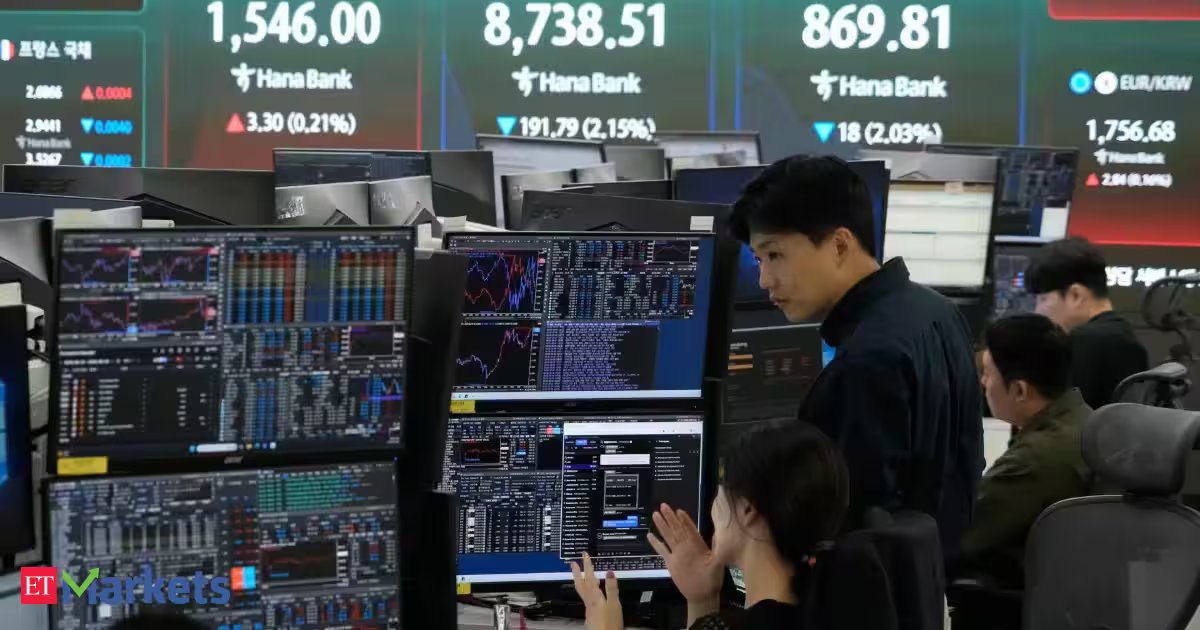
Elsewhere, Asian stocks advanced with the MSCI Asia Pacific Index rising 0.3%. Shares in South Korea climbed 1.9% as traders returned after a holiday on Monday. Earlier, chipmakers notched gains in US trading as details of Anthropic’s surging sales growth stoked bullish sentiment around AI, even as the broader market declined.
Renewed tensions in the Middle East and the recent rally in oil prices are reviving inflation concerns even after two US readings pointed to benign price pressures. With global stocks hovering near a record high amid a revival in the artificial intelligence trade, investors are turning their attention to rising bond yields.“The situation in the Middle East is unsettling, and the yield on the US 10-year note has pushed back above 4.7%,” Matt Maley, chief market strategist at Miller Tabak + Co., said. “With long-term yields remaining elevated even after last week’s benign inflation data, it is something that is creating some headwinds for investors.”
Asked whether he would seek an extension of the memorandum of understanding signed in June — which technically expires Monday — Trump told reporters, “No.” That truce was meant to give Washington and Tehran a window to reach a more lasting peace deal within 60 days.
Given the rise in oil prices and the lack of progress on the US-Iran diplomatic front, the Middle East remains a risk factor, according to Chris Larkin at E*Trade from Morgan Stanley.
In other corners of the market, a Bloomberg gauge of the dollar fell to its weakest since May.
Gold extended a two-week advance as easing expectations for Fed rate hikes put downward pressure on the dollar, making bullion cheaper for most buyers. Gold traded around $4,415 an ounce.
Attention now turns to the health of the US consumer, with Walmart Inc., Home Depot Inc. and Target Corp. due to report earnings this week. The results take on added significance after US retail sales last week posted their biggest decline in more than a year.
The Fed’s latest meeting minutes, also due this week, may provide another catalyst, giving investors a chance “to get a better understanding of the Fed’s behavior in a lower communication environment,” JPMorgan strategists wrote Monday.
Beyond the minutes, the relatively light macro data week could mean the “positive tech inertia” may continue into Nvidia Corp.’s earnings next week, according to the strategists.
Still, elevated long-term Treasury yields remain a source of anxiety. Investors are grappling with heavy government spending, a wave of long-dated debt issuance and inflation that has remained above the Fed’s target for much of the past five years.
“Investors are increasingly focused and concerned about the growing amount of US debt and America’s lack of fiscal discipline,” said Anthony Saglimbene at Ameriprise. “It will be increasingly important for corporate fundamentals and AI momentum to continue meeting expectations if the equity market is to keep looking past a higher-for-longer rate environment.”