Dollar Falls as US Retail Sales Unexpectedly Decline in July
US Dollar Drops on Unexpected July Retail Sales Decline and Market Response
Market Reactions and Economic Indicators
By Karen Brettell
US Retail Sales and Dollar Movement
NEW YORK, Aug 14 (Reuters) – The dollar fell on Friday after data showed U.S. retail sales unexpectedly declined in July, helping send the euro and sterling to multi-month highs, as traders weighed Federal Reserve policy.
Retail sales dropped 0.6% last month after an unrevised 0.2% gain in June. Economists polled by Reuters had forecast retail sales, which are mostly goods and are not adjusted for inflation, edging up 0.1%.
Expert Commentary on Consumption
“We are clearly having signs of poor consumption,” said Juan Perez, director of trading at Monex USA in Washington. “This evidence is clearly showing that there is an economic slowdown in the United States.”
Federal Reserve Policy and Labor Market Concerns
Softer-than-expected consumer and producer price inflation data this week has already tempered expectations that the Fed will raise rates at its September 15-16 meeting. Traders are now pricing in just a 31% probability of a September hike, alongside a 69% chance of a rate increase by December.
Labor Market Developments
Concerns over the labor market have deepened as well, after July’s payrolls report showed employers unexpectedly shed jobs last month.
Currency Movements and Global Factors
Dollar Index and Major Currencies
The dollar index, which measures the greenback against a basket of currencies including the yen and the euro, fell 0.25% to 99.67.
The euro rose 0.32% to $1.1564 and got to $1.1585, the highest since June 17.
Sterling strengthened 0.33% to $1.353. It reached $1.3561, the highest since May 12.
Geopolitical Tensions and Oil Prices
Traders are also focused on the U.S. conflict with Iran and efforts to open the Strait of Hormuz. Crude oil prices climbed on Friday over renewed attacks on tankers and a war of words between the Trump administration and Iran’s leadership.
Japanese Yen and Bank of Japan Policy
Yen Performance and Intervention
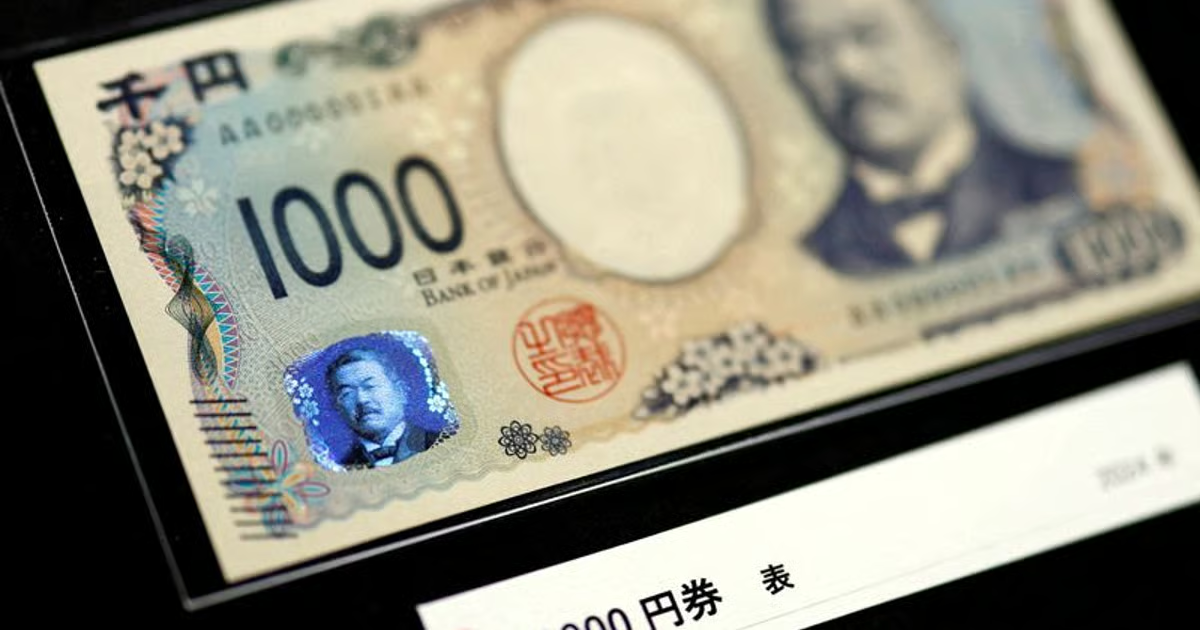
The Japanese yen strengthened 0.08% to 159.37 per dollar. It is on track for a weekly decline of around 1% as the effects of recent U.S. and Japanese intervention continued to fade. That has left traders betting that either a rate hike or another round of official buying will be needed to arrest the currency’s slide.
Bank of Japan Rate Hikes
Reuters reported the Bank of Japan is set to raise rates as soon as September and is considering more aggressive hikes to follow. Since exiting a massive, decade-long stimulus in 2024, the BOJ has raised interest rates at a pace of roughly twice a year including in June, when it took rates to a 31-year high of 1%.
Analyst Insights and Future Outlook
“The recent interventions have failed to turn JPY sentiment around. On the contrary, JPY bearishness increased considerably over the past month, reaching four-year highs,” Bank of America analysts led by Ralf Preusser said in a report on Friday.
Most fund managers surveyed by the bank for its most recent FX and rates sentiment survey believe that a 2% terminal rate could stabilize the currency, which would mean four more 25-basis-point hikes, they added.
The yen was trading at 40-year lows near 164 per dollar before July’s intervention, and traders see the 160 level as a potential trigger for fresh official action. Its retreat mirrors a similar selloff in May, when it also fell back after a round of official buying.
(Reporting by Karen Brettell; Additional reporting by Ankur Banerjee and Reuters’ Toyko markets team; Editing by Joe Bavier and Chizu Nomiyama )