Cash transfers for women: Do direct benefits really improve household welfare – Experts explain
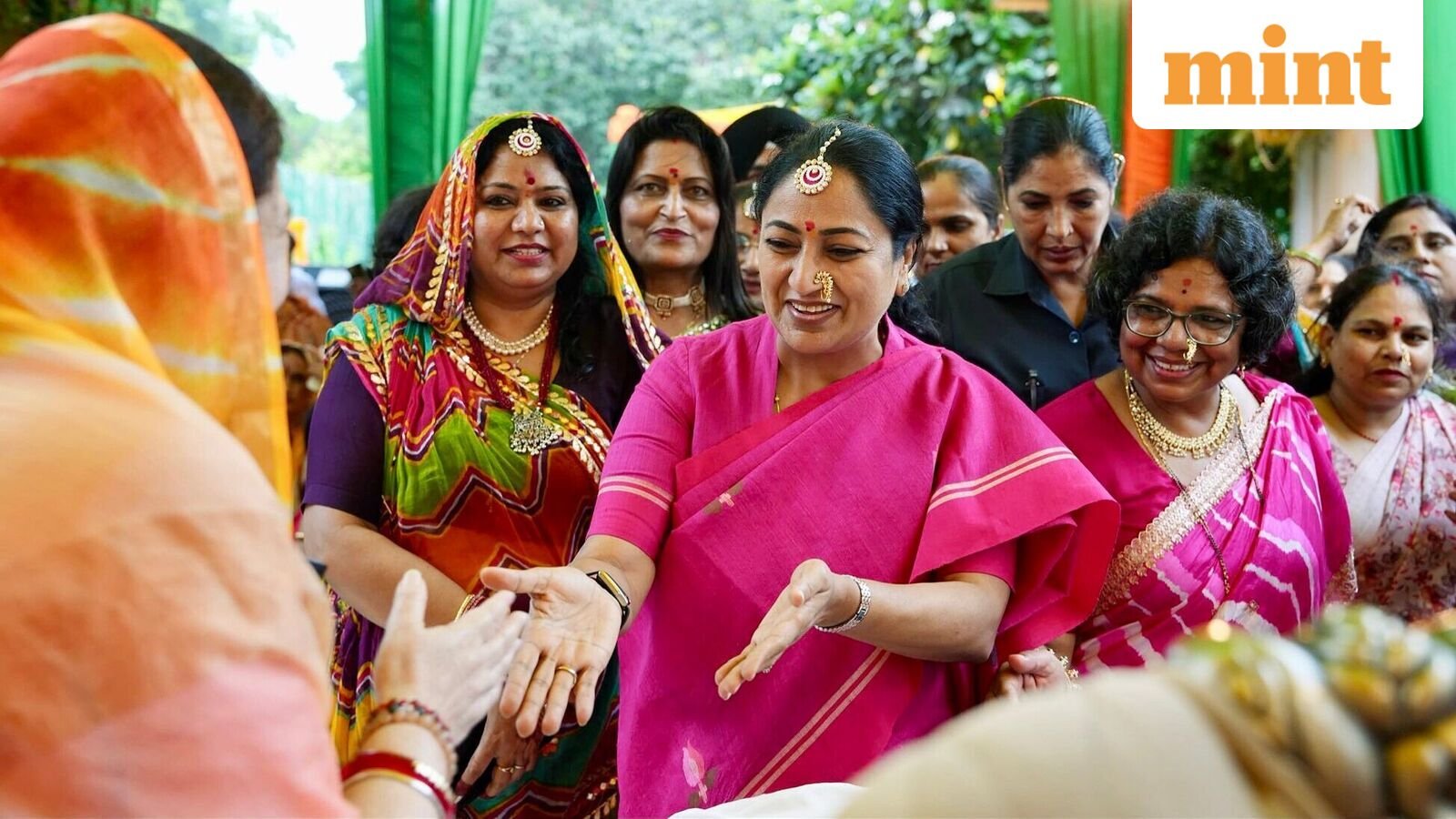
Chief Minister Rekha Gupta-led Delhi government launched the Delhi Lakshmi Yojana, or the Mahila Samriddhi Yojana, on 1 August, providing ₹2,500 per month to eligible women residents. With this, Delhi has just been added to the long list of states and Union Territories running direct cash schemes for women.
As things stand, more than 15 states have unconditional cash transfer schemes for women across India, costing roughly ₹2.68 lakh crores and reaching almost 120 million beneficiaries. These schemes provide regular unconditional monthly payments ranging from ₹1,000 to ₹2,500 to support financial independence and recognise unpaid household labour.
India’s growing direct cash transfers has triggered a familiar debate: Are such schemes an effective tool of welfare, or are they simply political freebies?
A recent working paper by the Economic Advisory Council to the Prime Minister (EAC-PM) adds an important dimension to the debate. Drawing on monthly transaction data from more than 1.6 lakh State Bank of India accounts, the study examined the impact of Maharashtra’s Ladki Bahin Yojana and Odisha’s Subhadra Yojana — two unconditional cash transfer (UCT) schemes aimed at women.
One of the key findings of the working paper was that the impact of cash transfers went beyond the women who received the money in their bank accounts. In Maharashtra, male relatives of Ladki Bahin beneficiaries saw their month-end bank balances rise by 23 per cent, while their spending fell by 49 per cent, the study found
This could be explained by changes in financial behaviour within households, experts said.
With women having a regular and independent source of income, other family members may face less pressure to meet everyday expenses, according to Pankhuri Shah of Project DEEP, an organisation focused on research and evidence-based approaches to welfare and direct cash transfers.
“The EAC-PM study links this wider impact to financial shifts within the household,” Shah told LiveMint.
With women receiving a steady, independent income, relatives face less pressure to cover daily expenses, Shah said. This is evident in Maharashtra, where relatives saw a 23 per cent increase in month-end bank balances and a 49 per cent drop in spending, she added.
“Both global and Indian evidence, including Project DEEP’s data, indicate that cash transfers effectively stabilise consumption (via small amounts), improve productive asset generation (via lump-sum amounts), and cushion against crises, making them an important tool of development,” she said.
However, this does not replace other essential welfare objectives of the government, such as ensuring quality health, nutrition and education, amongst others, according to Shah.
“It is an important component of the welfare portfolio, not the only one.”
One of the conclusions drawn from the EAC-PM study said that both programmes in Maharashtra and Odisha should be sustained and evolved toward cash-plus architectures that combine the income transfer with voluntary capacity-building, digital literacy, and Self-Help Group linkage components.
“Beneficiary targeting should be strengthened progressively through hybrid multidimensional verification frameworks that enhance precision while ensuring no deserving woman is excluded. Transfer amounts should be reviewed periodically for adequacy in light of inflation and evolving household expenditure patterns, with efficiency gains from improved targeting deployed to fund enhanced benefits and complementary services for beneficiaries,” it says.
Improved food security and higher incomes
Akshay Modi of Sattva Consulting also pointed to evidence from more than 100 studies on unconditional cash transfers. Such schemes have been associated with improved food security, higher incomes and savings, increased spending and better psychological well-being. Recipients are also more likely to repay debts and remain employed, while their children are more likely to be enrolled in school.
“Recipients of UCTs report better food security, higher income and savings, increased spending, and better psychological well-being. They’re more likely to pay off debts and be employed, and their children are more likely to be enrolled in school. As a result, the well-being of individuals and families improves,” Modi told LiveMint.
Sattva Consulting is another non-profit that has been engaging with communities, businesses, and governments to achieve societal impact at scale.
Cash or services: Which works better?
The debate, however, is not simply about whether governments should give people cash or provide services. Shah argued that the effectiveness of an intervention depends on the objective it seeks to achieve. While subsidies can sometimes distort markets, investment-oriented cash transfers such as PM-KISAN give beneficiaries greater freedom to decide how to use the money.
Similarly, she said, the quality of government-provided services can be difficult to monitor at scale. In such cases, cash transfers can give citizens greater agency and make them an active part of the transaction.
But cash is not always the answer. “While in some cases, cash transfers may be the clear choice, in many cases, the optimal approach may not be a binary choice between cash and services, but rather a combination of the two, to overcome specific developmental bottlenecks,” she said.
Experts like Shah called for a more data-driven approach to budget allocation, based on the government’s objective, whether human capital formation, economic growth or another developmental goal and the instrument most likely to achieve it.
The rapid expansion of cash transfer schemes over the years has changed the political conversation around them.
Cash transfers to women in India did not begin as the election-oriented monthly ‘women’s cash’ schemes we see today. They evolved gradually from maternity benefits, pensions and incentives for girls into large-scale, recurring, unconditional transfers targeted at women
The emergence of Direct Benefit Transfer (DBT) made it increasingly feasible for governments to transfer welfare payments directly into beneficiaries’ bank accounts, reducing dependence on intermediaries.
The really important transformation came in the late 2010s and especially after 2020. Several states began moving towards unconditional or relatively unconditional transfers paid directly to women’s bank accounts, often on a monthly or recurring basis.
The trend accelerated dramatically around the 2023-24 election cycle. States began introducing large women-focused cash-transfer programmes, including:
Maharashtra – Mukhyamantri Majhi Ladki Bahin Yojana
Odisha – Subhadra Yojana
Jharkhand – Mukhyamantri Maiya Samman Yojana
West Bengal – Lakshmi Bhandar
Karnataka – Gruha Lakshmi
Madhya Pradesh – Ladli Behna Yojana
In West Bengal, the new BJP government launched Annapurna Yojana replacing the TMC government’s Lakshmi Bhandar Scheme, under which women from Scheduled Caste and Scheduled Tribe households receive ₹1,200 per month, and women from other categories received ₹1,000.
Ladki Bahin example
Announced after the ruling Mahayuti alliance – led by Bharatiya Janata Party and two regional allies – after it suffered setbacks in India’s 2024 general election, Ladki Bahin became the defining issue of the Maharashtra election five months later. The government cast it as recognition of women’s unpaid work, while the opposition called it vote-buying even as it promised similar cash transfers of its own.
When Mahayuti returned to power with a much larger-than-expected majority, its leaders credited Ladki Bahin with helping secure the victory.
A post-election survey by Lokniti-CSDS suggested the scheme helped Mahayuti. Half the women surveyed voted for the ruling alliance, compared with a third for the opposition. Among Ladki Bahin beneficiaries, Mahayuti’s support rose to 54 per cent.
There is no denying the fact that women have emerged as an increasingly important electoral constituency, especially with increase in women’s voting turnout. Political parties have recognised that a recurring payment directly credited to a woman’s bank account is highly visible and personally attributable, according to political analysts.
This does not necessarily mean the schemes are merely ‘freebies,’ according to experts. There is a substantive economic question behind them: does putting cash directly in women’s hands improve household welfare, resilience and women’s bargaining power?
Welfare or ‘freebies’?
Shah from Project DEEP said that there is no statutory definition of ‘freebies’. The Reserve Bank of India distinguishes between merit goods that generate long-term social returns and other forms of state expenditure, while the Supreme Court has also drawn a distinction between large-scale distribution of state funds to individuals and investments in public welfare.
“With respect to cash transfers, there is established global evidence, and growing local evidence of the long-term impacts it has on helping households build productive assets and resilience to break out of the vicious cycle of poverty and enter a virtuous cycle of growth and development. It moves beyond a point in time benefit, towards a real investment in improving the lives of citizens,” she said.
Modi similarly argued that concerns about beneficiaries misusing cash are not supported by the evidence. Studies show that cash recipients are not more likely to spend the money on items such as alcohol or cigarettes, he said.
And, importantly, cash recipients continue to seek and find employment, he said.
As India spends nearly ₹2.68 lakh crore on cash-transfer programmes across 15 states, according to Project DEEP, the central question, therefore, may no longer be whether governments should provide cash support, but how such schemes can be designed to deliver the greatest social and economic impact.
The EAC-PM study has added new evidence to that debate, suggesting that the effects of cash transfers can reach far beyond the person whose bank account receives the money.
Cash transfers effectively stabilize consumption, improve productive asset generation, and cushion against crises, making them an important tool of development.
“Both programmes (Maharashtra and Odisha) generate large, statistically significant, and broadly consistent improvements in beneficiaries’ savings and consumption.” the study said.
Month-end account balances increase by approximately 84 per cent (Maharashtra) and 45 per cent (Odisha), representing absolute gains of approximately ₹6,884 and ₹6,887 per beneficiary respectively, a striking convergence that 35 provides cross-programme validation of the magnitude of savings impact, according to the EAC-PM study.