Family fortunes shrink: HCL, DLF, Asian Paints are among biggest losers | Personal Finance
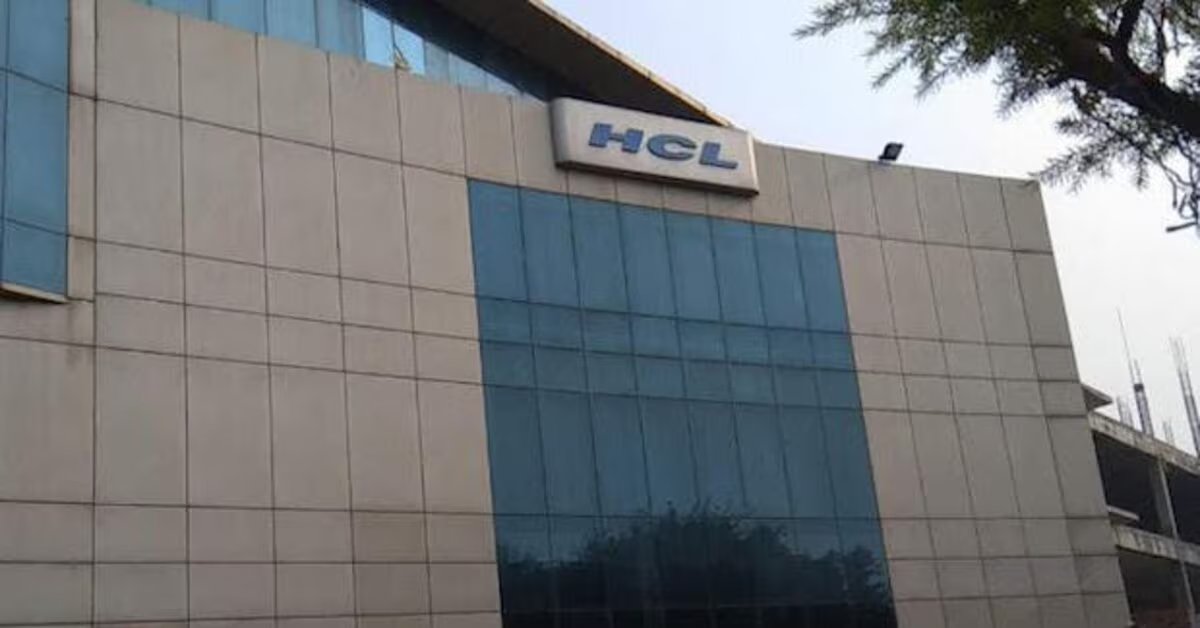
The Nadar family, promoters of HCL Technologies, recorded the steepest three-year decline in family-business value, losing ₹1.39 lakh crore, or 32%, according to the 2026 Barclays Private Clients Hurun India Most Valuable Family Businesses List.
The Nadar family’s business was valued at ₹2.91 lakh crore in 2026, compared with a value that was ₹1.39 lakh crore higher three years earlier.
The Rajiv Singh family of DLF recorded the second-largest decline, losing ₹51,000 crore, or 25%, over three years. The Dani, Choksi and Vakil families, associated with Asian Paints, followed with a decline of ₹23,000 crore, or 8.5%.
HCL’s Nadar family sees biggest decline
The Nadar family remains one of India’s wealthiest business families, with HCL Technologies valued at ₹2.91 lakh crore in the latest ranking.
But the family recorded a 32% decline in value over three years, the largest absolute and percentage decline among the top 10 families that lost value during the period.
HCL Technologies operates in the software and services sector, which features prominently among the industries that recorded some of the largest family-business value declines in the Hurun ranking.
The decline does not mean that the family has lost ₹1.39 lakh crore in cash.
Hurun’s family-business rankings are based largely on the value of the flagship businesses associated with each family. Therefore, changes in market capitalisation and business valuations can translate into substantial changes in the estimated value of the family business.
Top 10 Families that Registered a 3-Year Value Decline in the 2026 Barclays Private Clients Hurun India
Source: Hurun Research Institute; 2026 Barclays Private Clients Hurun India Most Valuable Family Businesses List; 2024 Barclays Private Clients Hurun India Most Valuable Family Businesses List
DLF’s Rajiv Singh family loses ₹51,000 crore
The Rajiv Singh family, which controls real estate developer DLF, recorded the second-largest three-year decline.
The family’s business value fell by ₹51,000 crore, or 25%, to ₹1.53 lakh crore.
DLF’s inclusion in the list of major decliners is notable because real estate is one of the sectors that features prominently among businesses that lost value over the period.
The decline also comes against a period when India’s residential real estate market has experienced strong demand in several segments, particularly at the luxury end.
The Hurun data, however, measures the change in the family’s business value over three years and does not provide a direct explanation attributing DLF’s decline to any single factor.
That distinction is important: a fall in family-business value can reflect movements in the listed company’s share price and valuation rather than a direct fall in operating performance or property prices.
Asian Paints family value falls ₹23,000 crore
The Dani, Choksi and Vakil families associated with Asian Paints recorded the third-largest decline.
Their combined family-business value fell by ₹23,000 crore, or 8.5%, to ₹2.48 lakh crore.
The company operates in the chemicals sector, another industry represented among the largest family-business decliners.
The Godrej Industries family recorded the fourth-largest decline, losing ₹19,300 crore, or 11%, to reach ₹1.53 lakh crore.
The Anil Rai Gupta family of Havells India followed, with its value falling ₹18,800 crore, or 21%, to ₹72,800 crore.
Birlasoft promoter family records sharpest percentage fall
The Amita Birla family, associated with Birlasoft, recorded the sharpest percentage decline among the families in the table.
Its value fell 57% over three years, a decline of ₹17,700 crore, leaving the family business valued at ₹13,200 crore.
The Rathod family of Cello World and the Ramachandran family of Jyothy Labs also recorded steep percentage declines.
Cello World’s family-business value fell 51%, or ₹8,500 crore, to ₹8,200 crore, while the Jyothy Labs family’s value fell 54%, or ₹8,300 crore, to ₹7,100 crore.
The data therefore shows that the biggest absolute losses and the biggest percentage losses are not necessarily the same.
The Nadar family lost the most in rupee terms because it started from a much larger base, while smaller family businesses such as Birlasoft, Cello World and Jyothy Labs experienced sharper percentage declines.
Software, real estate and chemicals among biggest decliners
Three sectors stand out in the list of family businesses that lost the most value: *software and services, real estate and chemicals.
Software and services appears twice among the top 10 decliners, with HCL Technologies and Birlasoft.
Real estate is represented by DLF and Lodha Developers.
Chemicals includes Asian Paints and PI Industries.
India’s family fortunes are splitting — and some are shrinking: Hurun
The Hurun report also provides an unusual look at another issue that matters enormously to India’s wealthy families — succession and the division of family businesses between different branches.
Thirteen families in the list have split into separate branches. Hurun has ranked these families according to their combined value.
The Kumar Mangalam Birla and Amit Birla families top this ranking, with a combined value of ₹8.27 lakh crore.
The Birla business traces its roots to 1857, when it was founded by Shiv Narayan Birla, and the family split in 1987.
The Niraj Bajaj and Kushagra Bajaj families are next, with a combined value of ₹7.99 lakh crore. The Bajaj business dates back to 1926 and the family split in 2008.
The TVS and Santhanam families rank third, with a combined value of ₹1.97 lakh crore. The business traces its roots to 1911, when it was founded by T V Sundaram Iyengar, and the family split in 2022.
Some of India’s oldest business families have divided
Families That Have Split in the 2026 Barclays Private Clients Hurun India Most Valuable Family Businesses List
Source: Hurun Research Institute; 2026 Barclays Private Clients Hurun India Most Valuable Family Businesses List *Rank based on Combined Value of families
The Godrej family, for example, has a combined value of ₹1.81 lakh crore cross the Godrej Boyce and Godrej Industries branches following its 2024 split.
The Muthoot Finance and Muthoot Microfin families have a combined value of ₹1.32 lakh crore, following a family split dating back to 1979.
The Harsh Goenka and Sanjiv Goenka families have a combined value of ₹1.16 lakh crore, following their 2011 split.
Other families that have divided include the Vivek Jain and Pavan Jain family, K K Bangur and Benu Bangur families, Rahul Kirloskar and Sanjay Kirloskar families, and Vishad Mafatlal and Hrishikesh Mafatlal families.
The list covers family splits dating from 1979 to 2024.
Why family splits matter for wealth
For wealthy families, a business split is not necessarily a sign of destruction of value.
In many cases, dividing a business between family branches can allow different members to pursue separate strategies, industries or management structures.
But it can also alter the concentration of wealth.
The Hurun methodology therefore combines the values of different branches to show the economic scale of the original family business.
For example, the Kumar Mangalam Birla and Amit Birla branches together are worth ₹8.27 lakh crore, even though they appear as separate family businesses in other contexts.
The same applies to the Bajaj, TVS, Godrej and Goenka families.