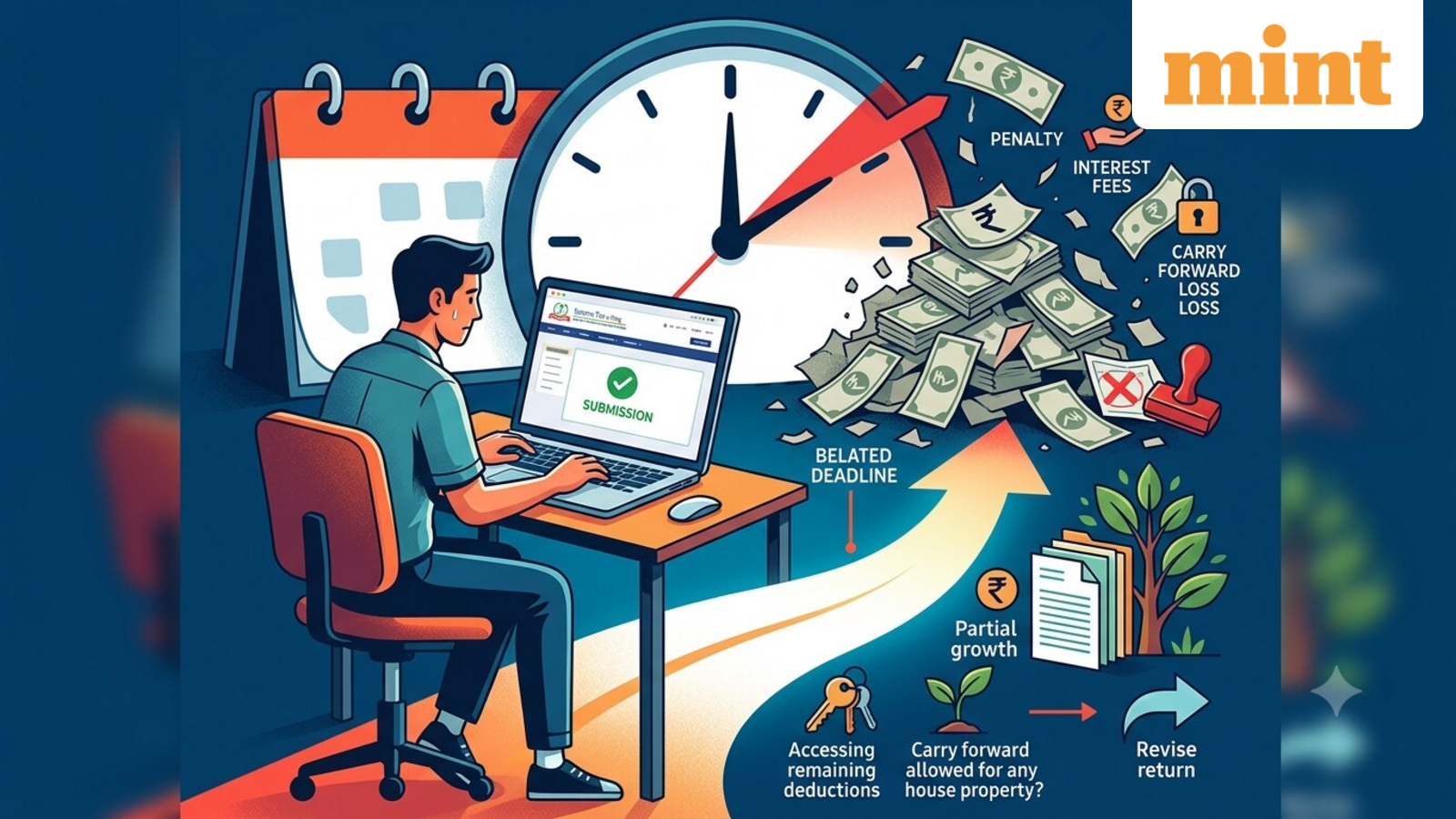
Belated income tax return AY 2026-27: How to file, late filing charges and what you may lose
Taxpayers who missed the July 31 deadline for filing their income tax return (ITR) for Assessment Year (AY) 2026-27 still have a chance to comply with the law by filing a belated return. However, delaying the filing comes at a cost.
Under Section 139(4) of the Income Tax Act, taxpayers can file a belated return by December 31, 2026. While the filing process remains largely the same as a regular return, taxpayers may have to pay a late filing fee, interest on unpaid taxes and could lose some tax benefits that are available only if the return is filed within the original due date.
“Any taxpayer who missed the original due date can file a belated return under Section 139(4). This includes salaried individuals, freelancers, business owners and others who were required to file but could not do so on time. Even taxpayers expecting a refund can still file a belated return,” said CA Chandni Anandan, Tax Expert at ClearTax.
According to CA Parag Jain, Tax Head at 1 Finance, the filing process is similar to a regular ITR. Taxpayers need to log in to the income tax e-filing portal, select the appropriate ITR form, choose Section 139(4) while filing, report their income, pay any outstanding tax along with applicable interest and late fees, and complete e-verification within 30 days.
What are the charges and what do you lose?
The late filing fee under Section 234F is ₹1,000 if the taxpayer’s total income does not exceed ₹5 lakh and ₹5,000 for those with higher income. In addition, interest under Section 234A may also apply if there is unpaid tax liability.
“The biggest losses are usually late fee, interest and loss of certain tax advantages. Taxpayers may also lose the ability to carry forward certain losses, while refunds could take longer because the return is processed later,” Anandan said.
Jain pointed out that taxpayers can still claim most deductions and exemptions, including those under Sections 80C and 80D, HRA, the standard deduction, capital gains exemptions under Sections 54 and 54F, along with TDS credits and eligible refunds.
However, he added that taxpayers who fail to file within the original due date lose the option to opt for the old tax regime for that assessment year. They also cannot carry forward capital losses, business losses and futures and options (F&O) trading losses. House property losses remain an exception and can still be carried forward subject to the applicable provisions.
Can a belated return be corrected later?
Experts say filing a belated return does not mean taxpayers lose the opportunity to rectify mistakes.
“A belated return filed under Section 139(4) can generally be revised under Section 139(5), provided it is within the prescribed timeline and before assessment is completed,” Anandan said.
Jain noted that taxpayers should carefully reconcile their income with the Annual Information Statement (AIS) and Form 26AS before filing, choose the correct ITR form, pay all outstanding dues and complete e-verification within 30 days. Failure to e-verify within the stipulated period could result in the return being treated as invalid.
Experts also advise taxpayers to pre-validate their bank account to avoid delays in receiving refunds and ensure that all income has been correctly disclosed to minimise the chances of receiving defective return notices.