What are CFDs? CFD Trading Explained for Beginners
When eToro priced its shares at $52 and debuted on the Nasdaq under the ticker ETOR in May 2025, much of the revenue behind that roughly $620 million offering came from a product most of its American users are not allowed to touch.
That product is the contract for difference, or CFD, one of the most popular ways to trade markets in Europe, Australia, and much of Asia.
Understanding what a CFD is, and why the door to it stays locked in the United States, explains a great deal about how leverage and speculation actually work.
What Is CFD Trading?
A contract for difference is an agreement between you and a broker to exchange the difference in an asset’s price between the moment you open a position and the moment you close it.
You never take ownership of the underlying stock, currency, commodity, or index.
You are trading on the direction the price moves, and the cash difference settles the result when you close out.
If you expect the price to rise, you go long, and if you expect it to fall, you go short.
That ability to profit from falling prices, without borrowing shares to short them the traditional way, is a big part of why CFDs caught on overseas.
How a CFD Trade Actually Works
Picture gold trading at $2,400 an ounce.
You open a CFD position on 10 ounces because you expect the price to climb.
If gold rises to $2,450, you collect the $50 move on each ounce, or $500 before costs.
If gold slips to $2,350 instead, you owe the $50 move on each ounce, or $500.
The important part is that you never put up the full $24,000 value of that position.
CFDs trade on margin, so a broker might ask for only 5% or 10% of the position’s value as a deposit.
That small deposit controls the entire trade, which means your gains and your losses are both calculated on the full position size rather than the amount you actually put down.
Leverage is what makes a modest price move feel enormous, in either direction.
What CFD Trading Costs
The spread, meaning the gap between the buy price and the sell price, is the cost baked into nearly every CFD trade.
Share CFDs sometimes add a separate commission on top of that spread.
Any position held past the daily cutoff usually incurs an overnight funding charge, since you are effectively borrowing to hold a leveraged trade.
Those overnight fees make CFDs expensive to hold for weeks or months, which is why most CFD activity is short term by design.
Why You Cannot Trade CFDs in the US
This is the part that matters most for American readers.
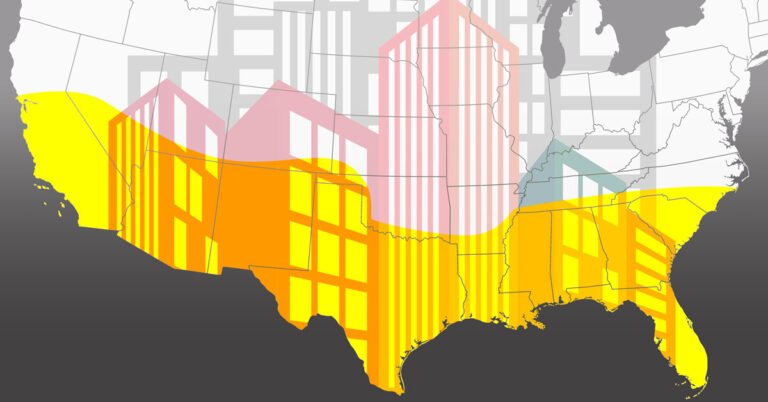
CFDs are effectively unavailable to US retail traders, and the reason traces back to the 2008 financial crisis.
Congress passed the Dodd-Frank Wall Street Reform and Consumer Protection Act in 2010, which brought over the counter derivatives under federal oversight by the SEC and CFTC.
Under those rules, CFDs can be classified as swaps or security based swaps, and offering them to everyday investors is only permitted if the trade happens on a registered US exchange.
Almost every CFD in the world is traded over the counter, directly between a broker and a client, rather than on an exchange.
That single requirement effectively shuts retail CFD trading out of the country.
Most offshore CFD brokers respond by simply refusing to open accounts for US residents.
It is also why eToro, whose record breaking Nasdaq debut was built on a business that leans heavily on CFDs abroad, strips the product out for its US customers and offers stocks, options, and crypto to its American accounts instead, a difference from the multi asset platform it runs internationally.
The Risk Regulators Worry About
The concern behind the rules is not abstract.
European regulators found that between 74% and 89% of retail CFD accounts lose money, a statistic that pushed that region toward strict leverage caps rather than an outright ban.
Leverage cuts both ways, and a position that moves against you by only a few percent can erase your entire deposit.
Some traders have historically lost more than they deposited when markets gapped violently overnight, which is exactly why negative balance protection later became mandatory across Europe.
Legal Alternatives for US Traders
American traders are not shut out of leverage or short selling, they simply reach them through different, exchange traded instruments.
Regulated futures contracts offer leveraged exposure to commodities, indexes, and currencies, and they clear through established exchanges such as the CME.
If you want to see how the platforms stack up, we compare the best futures trading platforms on commissions, margin requirements, and execution quality.
Exchange traded options let you speculate on stocks and indexes with clearly defined risk, and we’ve ranked the best brokers for options trading by pricing and platform tools.
Spot forex is available through brokers registered with the National Futures Association, and we break down the best forex brokers for US clients if currency markets are your focus.
Futures come closest to replicating the CFD experience, since both let you go long or short with leverage across a wide range of markets.
The main difference is transparency: futures prices are set on a central exchange, while CFD prices are set by your broker.
If the leveraged, go anywhere trading that draws people to CFDs overseas is what you are after, TradeStation gives US traders direct access to futures and options on a single regulated platform, which is the closest legal equivalent most Americans will find.
Before funding any leveraged account, it pays to check the minimums, since many futures brokers now let you start with micro contracts that require only a fraction of the margin a full sized contract demands, sometimes as little as a few hundred dollars.