Bond yields at 19-year high send Warsh credibility warning
By Michael MacKenzie, Ye Xie and Greg Ritchie
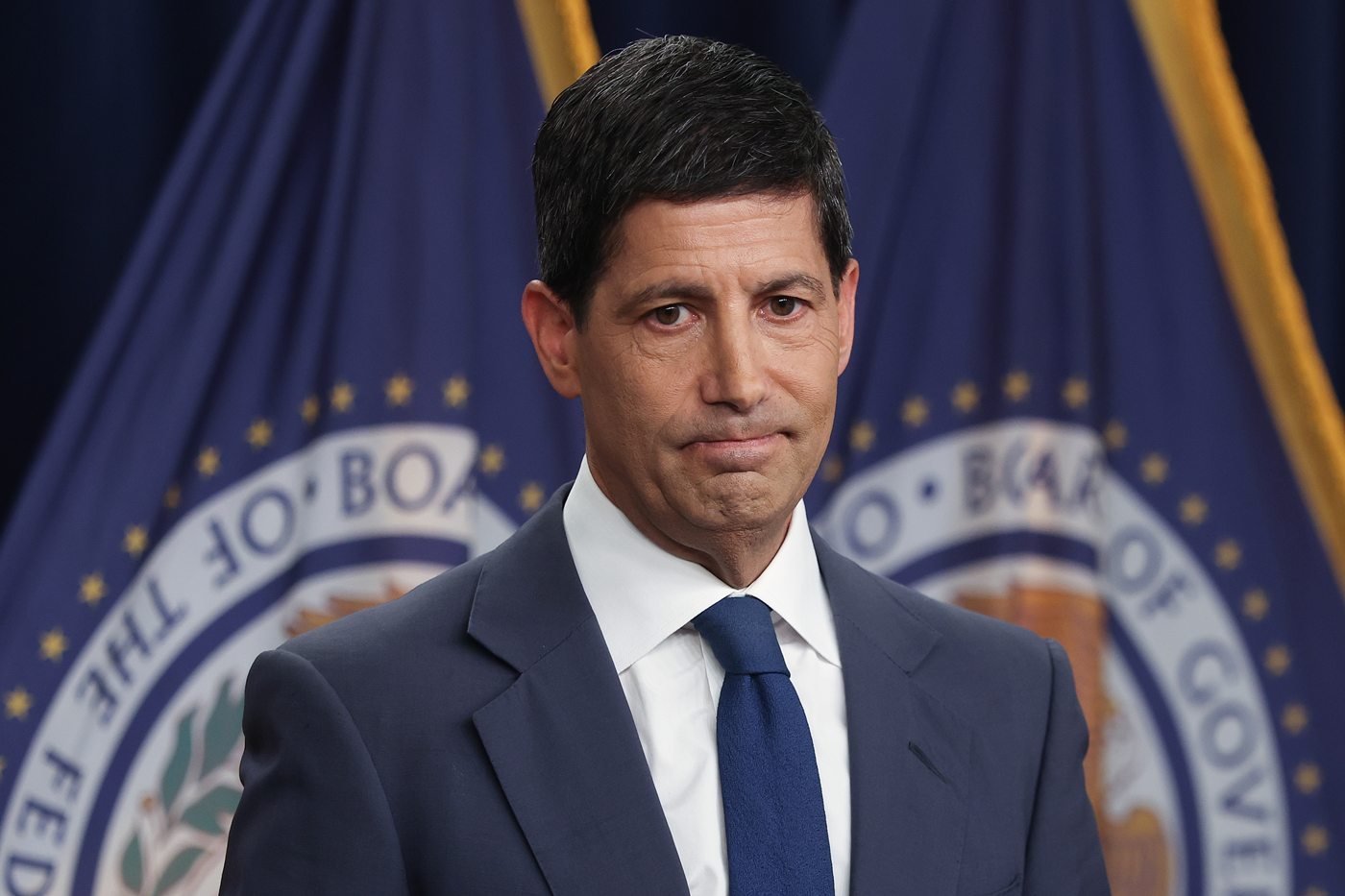
(Bloomberg) — The message from the bond market was clear: For all of Federal Reserve Chairman Kevin Warsh’s tough talk about taming inflation, he’s not rushing fast enough to deliver.
After the Fed kept interest rates unchanged for a seventh consecutive month on Wednesday, investors dumped 30-year Treasury bonds, sending the yield shooting up as much as 14 basis points to nearly 5.23%, a 19-year high. Market measures of inflation expectations rose, the dollar slid, and even stocks tumbled as investors wagered Warsh was only delaying an inevitable rate hike.
The moves revealed investors are growing increasingly concerned that Warsh won’t manage to rein in inflation that has run above the Fed’s target for five straight years.
As a result, bondholders both pushed down yields on the most short-term Treasuries — a reflection of how they rapidly scaled back bets on immediate increases — and demanded higher payouts on longer-term bonds to compensate for inflation risks in the years ahead. The drop in two-year yields coupled with the rise in 30-year rates made for one of the biggest such steepenings of the yield curve after a Fed meeting since at least the mid-1990s.
That steepening indicates Warsh’s “policy strategy lacks credibility,” said Ben Emons, managing director of fixed income at Highline Asset Management and founder of FedWatch Advisors.
“Being hawkish without taking action is a convenient way to let markets judge for themselves and let markets tighten Fed policy,” Emons said. But, he noted, “this could backfire when inflation accelerates, and the market judges the Fed is once again behind the curve.”
Treasuries were relatively little changed on Thursday, with the yield on 30-year bonds trading around 5.21% after data showed the U.S. economy grew at a weaker-than-expected pace in the second quarter. Benchmark 10-year yields at 4.67% remain within touching distance of the highest levels since January 2025. Meanwhile, the Fed’s preferred measure of inflation — the personal consumption expenditures price index — fell 0.1% last month from May on the back of lower gasoline prices.

The decision to hold the benchmark rate steady at 3.5% to 3.75%, where it has been since the central bank’s last cut in December, came a little over two months since Warsh was elevated by President Donald Trump to lead the Fed.
Trump has downplayed inflation and repeatedly lashed out at Warsh’s predecessor Jerome Powell for not slashing rates. That fanned fears about Fed’s continued political independence, which is key to its credibility.
What Bloomberg Strategists say:
“It may be the Fed’s inflation-fighting credibility that’s in question, but the consequences are unlikely to stop at the U.S. Treasury market. Correlations between U.S. and G10 30-year government bond yields are high. Canada, given its close economic integration with the U.S., is understandably the most exposed. Europe is not far behind — arguably unfairly so, given the ECB has already hiked and faces a much less severe inflation problem than the Fed.”
Since his first meeting last month, though, Warsh has repeatedly emphasized that the Fed will do what it takes to bring inflation back to its 2% target.
Even so, the central bank has maintained its wait-and-see approach, despite what Warsh characterized as a still strong economy. When asked repeatedly during his press conference why the Fed has delayed — even with the consumer price index still rising at a 3.5% pace — he pointed to the jump in longer-term market rates as doing some of the Fed’s work for it.
Jack McIntyre, a portfolio manager at Brandywine Global Investment Management, said he “can’t remember another time when reporters said they were confused and asked for more clarity. The market thinks the same thing.”
He said the sharp jump in longer-term yields indicated a lack of confidence. “The long end doesn’t buy into his inflation fighting story,” he said.
Warsh’s comments drove traders to push back the likely timing of a Fed rate hike until later this year. Two-year Treasury yields dipped, with traders now depending on upcoming data on inflation and the job market to help gauge the Fed’s path.
U.S. 10-year breakeven rates, a gauge of inflation expectations in the years ahead, closed seven basis points higher on Wednesday, the most since November 2024.
But stocks tumbled, sending the S&P 500 Index down 1.5% by the closing bell, as investors wagered that the Fed will face increasing pressure to act, as evidenced by a trio of dissents by members who wanted the Fed to raise rates now.
“You’re starting to see a little bit of that family fight come out into the public with the three dissenters,” said Kevin Flanagan, head of investment strategy at WisdomTree.
In the days leading up to the meeting some Wall Street firms had started to predict that the Fed would hike rates. Traders ratcheted up the odds steadily to as much as 40%, showing a rare lack of consensus so soon before a decision.
That sort of uncertainty is likely to persist, given that Warsh is jettisoning his predecessors’ long practice of telegraphing where the Fed is heading, wary that it could leave policymakers boxed in.
Cindy Beaulieu, chief investment officer for North America at Conning, noted that Warsh also declined the opportunity to flag what he may discuss at his late August appearance in Jackson Hole, a venue where central bankers frequently telegraph their views.
“He referred to it as a blank page,” she said. “That probably gives people a little bit of a pause as to how serious is this Fed about getting ready to raise rates.”
The bond market’s moves, instead, are starting to tap the brakes on the economy by pushing up longer-term rates. That’s been driven by stubbornly high inflation as well as other factors, like the continually swelling federal debt and a surge of borrowing by the big tech companies that are spending hundreds of billions of dollars on artificial intelligence.
“The market has already tightened for the Fed,” said WisdomTree’s Flanagan. “But that only goes so far and if Warsh continues to talk hawkishly and the numbers point in the direction for a rate hike, then his credibility is at stake.”
©2026 Bloomberg L.P.
Visited 5 times, 5 visit(s) today
bloomberg bond yields Dashboard federal reserve Kevin Warsh treasuries
Last modified: July 30, 2026