CFR roundtable event highlights prediction market debate
- Key insight: Key players in the prediction market space discussed their differing views in an open roundtable event hosted by the Council on Foreign Relations.
- What’s at stake: Traditional financial institutions that have expressed interest in prediction markets could be exposed to regulatory uncertainty and market risk.
- Forward look: Mulvaney said that he doesn’t expect prediction market legislation to get through Congress, so regulatory uncertainty will likely be decided by the courts.
Prediction markets may not be part of the banking world just yet, but their growing prevalence in the financial system and the potential risks attached are hotly debated.
Processing Content
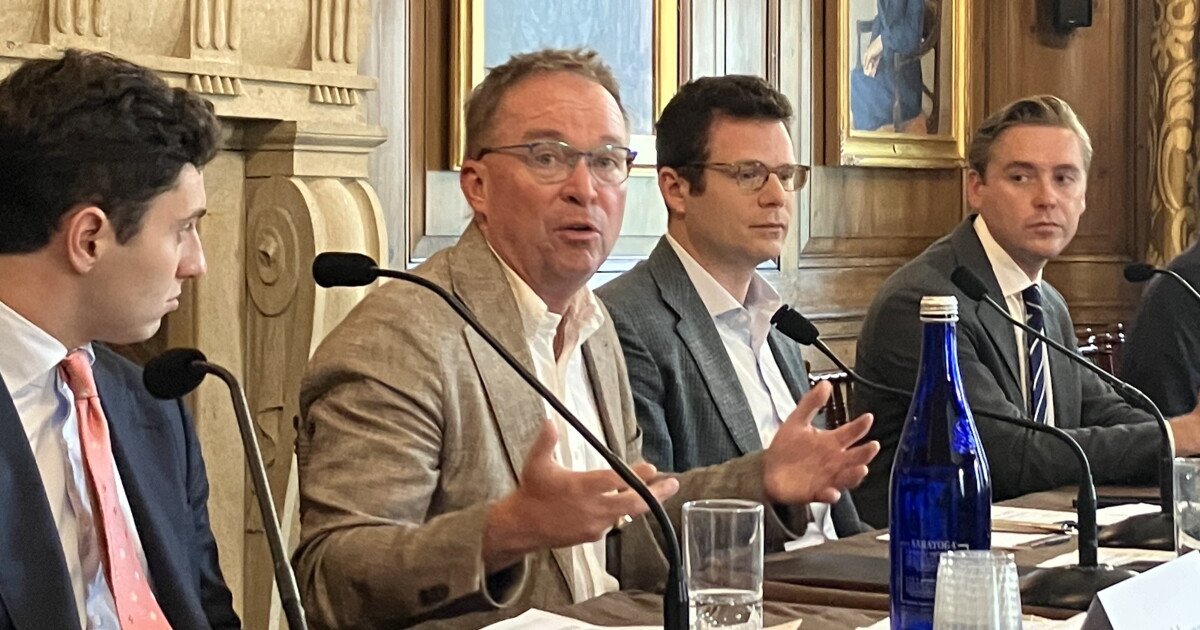
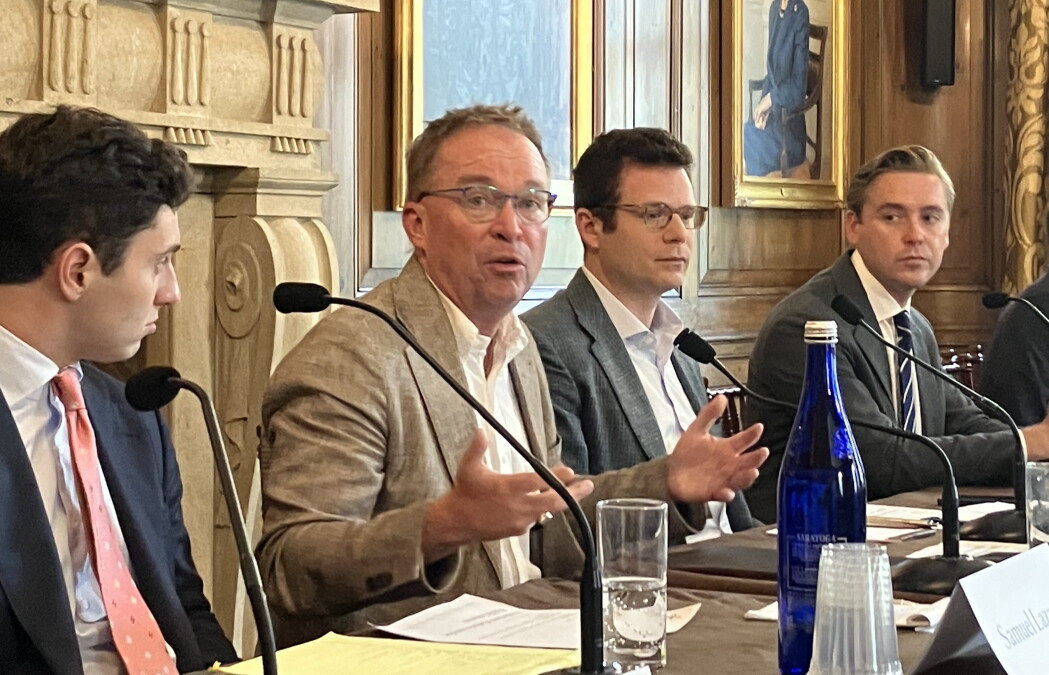
The Council on Foreign Relations hosted a roundtable event in New York City on Wednesday titled “Prediction Markets and the Public Interest” featuring Kalshi Head of Enforcement Robert DeNault and former acting Director of the Consumer Financial Protection Bureau Mick Mulvaney.
The conversation comes at a time when banks have yet to formally enter the prediction markets space but major players such as
DeNault said prediction market platforms can serve as a risk-hedging option and a decision-making tool based on aggregated data readings.
“Certain economic markets on Kalshi offer significantly improved readings on things like unemployment or the consumer pricing index,” he said, “and the value of those markets is something that the Fed and other financial institutions are beginning to observe and utilize as they’re making certain economic decisions.” DeNault referred to an academic paper published by the Federal Reserve Board in February of this year titled
Mulvaney, who also serves as the executive director for the coalition Gambling Is Not Investing, said that he has concerns regarding the prevalence of sports contracts on prediction market platforms and how that could impact state gaming commission regulations. He views sports contracts on platforms like Kalshi, which constitute the
“Generally, we have deferred to the states on two issues: alcohol and gambling,” Mulvaney said. “This is a state sovereignty issue. My state [South Carolina] has made a decision not to allow it. Other states made a decision to allow it, and then regulate it and tax it. The CFTC decisions have allowed that all to be thrown to the side.”
DeNault said in response to a question from American Banker that Kalshi has been cooperating with financial institutions to provide information about how prediction markets operate and the platform’s control systems as “institutional interest in these markets is growing.”
“They’re looking themselves at what public data is available so that they can develop risk assessments and profiles for trading in certain types of macro-markets on Kalshi,” he said. “CFTC regulations require so much of the data about trading activity and contract resolution on Kalshi to be public, so they are able to ingest all that data themselves and take a look at what the risk profile is for certain markets based in certain categories, whether it be politics or economics.”
Addressing a question about compliance concerns for financial institutions, DeNault said that he personally has had direct conversations with a number of interested parties, although he did not specify any specific firms in his response.
“We’re partnering with certain third-party compliance vendors that banks and other financial institutions utilize across the board in their various exposure to financial markets, and so we’re excited to launch some of those,” he said. “We recently launched a partnership with
Read more:
Some major fintechs have also pursued various avenues for entering the prediction markets space. For example, Coinbase has expanded into its own prediction market products as part of its
Another element of potential risk exposure for traditional financial institutions, such as banks, is regulatory uncertainty regarding which agencies have the authority to oversee prediction markets. The Commodity Futures Trading Commission, or CFTC, has
State regulators, citing what they see as similarities between prediction markets and gambling, have pushed back against prediction market platforms like Kalshi and Polymarket in a
In one instance last week, for example, Kalshi found itself in what was described
The Michigan order, finalized on July 6, required Kalshi to cancel and refund open sports event contracts entered into between Michigan users and Kalshi’s trading affiliate while a lawsuit between the platform and the state is pending. On July 14, the CFTC issued its own order directing Kalshi not to liquidate and refund but rather to “fulfill the [contracts] as it would in the ordinary course of business.” According to Kalshi’s court filing, the refunds were processed before the CFTC issued its order and the company could no longer fulfill its Michigan-based transactions in this specific instance.
Mulvaney said in response to a question from American Banker that the likelihood of
“That’s the likelihood for just about any piece of legislation right now, including funding of war or keeping the government open in September,” he said. “I don’t think you’re going to see Congress weigh in; that means it goes to courts. I think there’s going to be a split in the circuit relatively quickly … and the Supreme Court will ultimately have to take it.”