Wilbur Ross: Trump former commerce secretary on Iran war and oil prices
The U.S.-Iran war is not going fantastically well for either side. President Trump has been unable to conduct the negotiations he had hoped for and reach a final deal over the Strait of Hormuz. And Iran’s military infrastructure—and a great deal of its economic infrastructure—have been reduced to rubble.
Looming over the conflict is a timeline both sides are aware of: The midterms.
For Trump, that means the Middle East conflict needs to reach a palatable point for voters before November. For Iran, it means making life difficult for the Oval Office and waiting out the president in the hopes he will lose some of his political firepower.
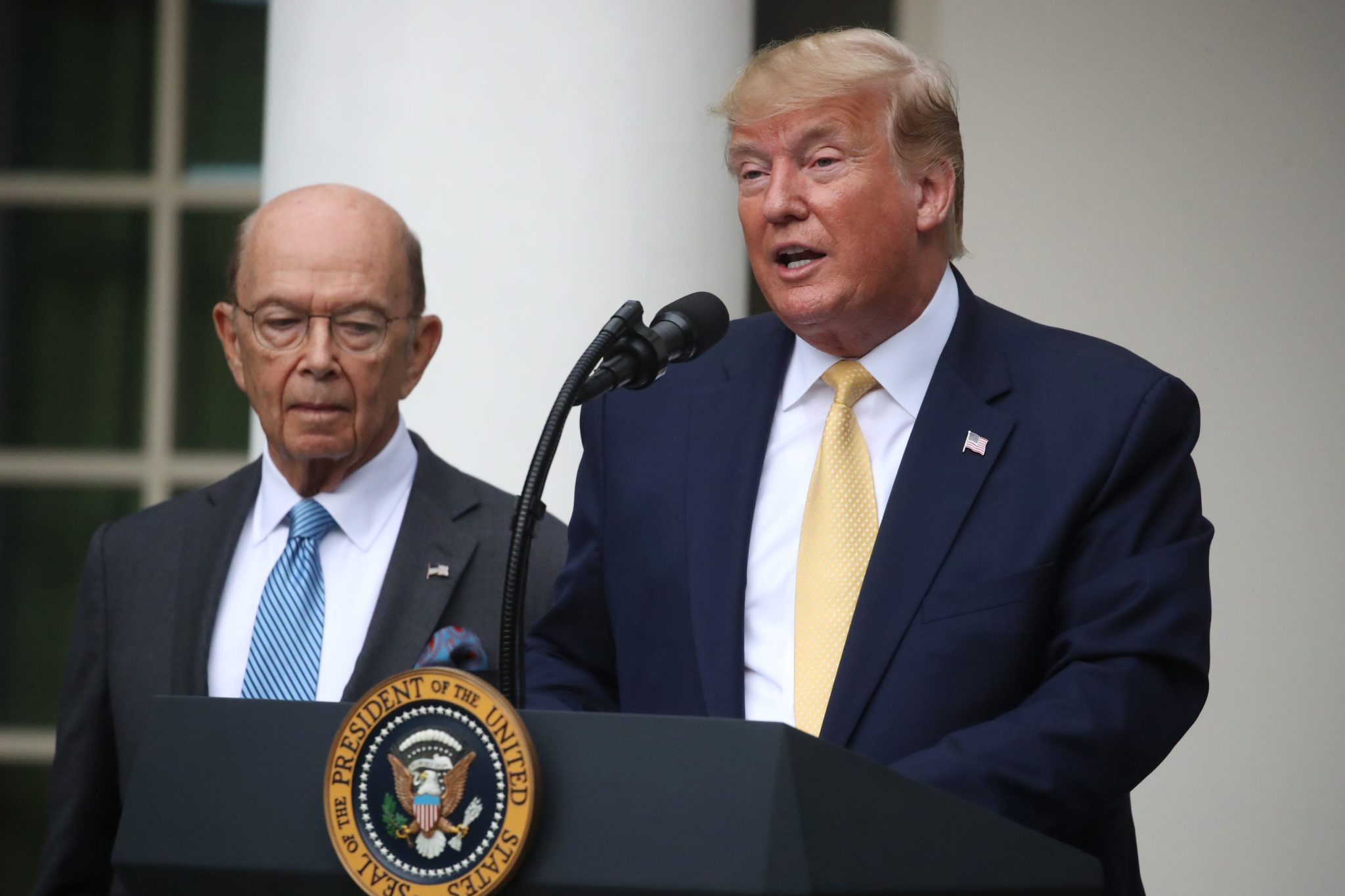
That’s the current state of play according to Wilbur Ross, Trump’s former commerce secretary in his first administration. Speaking exclusively to Fortune, Ross said the president has a balance of risks to strike: Either face the wrath of voters if oil prices remain high due to the Iran conflict, or withdraw from the region and risk that being used against him.
Of course, there will be other forces shaping voters’ perceptions in the run-up to the midterms—Ross highlights immigration issues as chief among them—but there is no denying that “affordability” has become a political lightning rod, and was the issue that Trump made key promises on during his election run.
Ross underlined that, in the grand scheme of wars, the Iran conflict is thus-far relatively short-lived. However, it has dragged on in the eyes of Wall Street and voters, given that Trump’s rhetoric at the outset was that it would be over within a matter of weeks.
“We’re about to go into the midterm elections, and so there’s an unusual political factor which I’m sure both sides are aware of. The Iranians seem to be betting that they can outlast the president, and that has been a characteristic theory of their prior discussions,” Ross explained. “The war itself, in a kind of technical sense, is over. Iran has no air force, they have no real navy, they have no air defense, so in that sense, it’s over. The question is, can we win the peace? And that’s what Hormuz is about.”
Consumers are already paying for the re-escalation in the Middle East because Iran borders the Strait of Hormuz, a vital waterway for oil exports from the Persian Gulf to the rest of the world. With ships reluctant to travel down the Strait—despite Trump insisting it is controlled by the U.S.—supply is stalling while demand remains at the same level, pushing prices up. And in the last 24 hours, the Houthis—a Yemen-based terror group that acts on Iran’s behest—have begun attacking ships in the Bab al-Mandab Strait on the other side of the Arabian Peninsula.
The biggest political risk facing Trump in the run-up to the midterms is oil, Ross adds: “If oil gets back up to $5 a gallon at the pump, that’s gonna make the midterms very, very difficult. And, if he loses both houses in the midterms, he will be impeached.”
If there’s a split—potentially with the Democrats controlling the House and the Republicans the Senate, then Trump would face a shift in power, meaning his prerogative to make or conduct war could be restricted, Ross said.
On the other hand, Ross adds, “If he pulled out without this being resolved, and [Iran] do impose some huge fines or what have you on Hormuz, then the Democrats have a very nice storyline: ‘What was the war all about? Look what we got for it: We’ve got the high oil prices, and we don’t have peace.’ People saying ‘Oh, he’s gonna have to pull out before the midterms,’ I’m not so sure that’s true.”
Even if Trump was motivated to withdraw from the conflict by the midterms, that doesn’t automatically mean prices come down. “I can’t imagine if he pulled out the Iranians, suddenly saying, ‘Well, we’ve decided to play nice, then there won’t be any constraints on Hormuz,’” Ross explained. “That’s not gonna happen. The midterms are a factor, [but] I think it’s probably influencing the Iranians more than it is the Americans.”
The Big Oil option
President Trump has also begun turning up the temperature on his former allies in the Big Oil world. In a Truth Social post last month, the president wrote that despite oil prices “dropping like a rock … the big oil companies are not dropping their price at the pump commensurate with the sharply lower prices they are paying for oil.”
Consumers are being “gouged,” the president added, and as such: “I have instructed the DOJ to immediately start looking into this. Gasoline prices better start going down a lot faster than what I’m seeing!”
Ross said Big Oil can expect the president to keep up the pressure to bring down prices, highlighting that as soon as any military action occurred, prices at the pumps also leapt, adding: “The pump price isn’t really justified to go up the same day because the oil hasn’t found its way through.”
“I would expect that [Trump] would be putting increasing pressure on them to do two things,” Ross explained. “One, not to expand the margins of the gas stations themselves, and two, to produce more. They’ve been relatively constrained in the amount of increase in their production.”
Data from the U.S. Energy Information Administration released earlier this month show that the U.S. is producing an average of 13.8 million barrels a day in 2026, only slightly higher than a year ago at 13.6 million barrels a day.