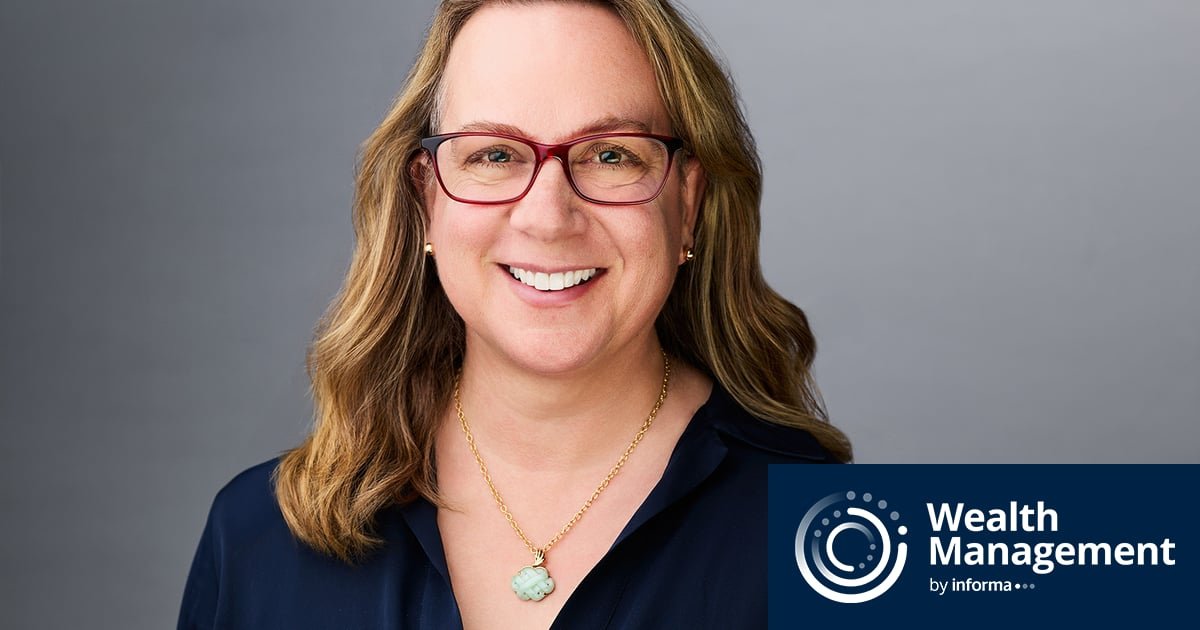
Q&A: Orion CEO Natalie Wolfsen
Orion recently announced several major milestones, including expanding its Denali AI platform with a third option to better help certain firms accelerate advice and drive growth.
Every Orion product will include artificial intelligence features at no extra cost, with options that scale alongside each firm’s needs.
The three Denali tiers include Powered by Denali (which offers built-in AI features across Orion products including Redtail CRM, portfolio accounting, trading, risk, compliance and planning), Denali Solutions (which provides connected AI capabilities customized to each firm’s strategy, including proposal generation, portfolio opportunity alerts, prospect prioritization and revenue insights), and Denali AI (launched in February, it is meant to orchestrate AI across entire firms by connecting Orion and third-party systems and automating firm-wide workflows).
Orion CEO Natalie Wolfsen recently visited Wealth Management’s New York City offices and spoke with Technology Editor Davis Janowski and Senior Reporter Patrick Donachie about these and other developments at the company and across the industry.
The following has been edited for length and clarity.
Wealth Management: Can you share the latest milestones Orion has achieved?
Natalie Wolfsen: We now have $6.6 trillion in assets running through the platform … a 29% growth year on year. The second [milestone] is the wealth part of our business actually grew to about $211 billion in assets, and that’s more than 50% growth, or about 50% growth year on year. And that’s truly a reflection of the success of the advisors who use our platform and the utility of the tools and services that we offer to financial advisors.
We’re seeing a lot of success with large enterprises, insurance companies and banks, as well as RIAs.
We participate in 75% of industry M&A. … In addition, our financial advisors grow about 40% faster on average than other financial advisors, and that’s a combination of two things. One, the best advisors in the industry choose our platform. And two, our platform helps those advisors grow.
WM: How has the Denali AI platform evolved since its launch?
NW: We launched Denali, Denali AI, Denali Enterprise. And at the time, we said Denali is the central platform from back to front that we’re going to use to deliver a variety of AI solutions to our clients. And since then, what we’ve learned is that clients have three different types of needs, and so we need to have three components to our Denali platform. The first is Denali Enterprise, or Denali AI, what we’re calling Denali AI, and that’s if advisors want to buy a package. They want to buy the data architecture, the query language, the front-end tools, the prompt library, they want to buy front to back the AI solutions for their clients. The second is what we’re calling Denali Solutions, and that’s really Denali integrated, or AI integrated. And so, there are holistic features or tools that financial advisors can use in concert with tools, maybe their home office or the RIA firm has already developed.
An example of this is a very important workflow when an advisor prospects a client. We have a Denali solution set that we’re launching this fall that will package those things as an AI agent to help advisors do that in an automated and efficient way.
And then the third category is actually what we call AI Features or embedded AI. And we believe that for some core features that save advisors time and effort, that needs to be embedded in the tools we already deliver. [note-taking in the CRM, reconciliation in portfolio accounting …] We feel that those very basic features should be included in the tools that advisors are already using and not cost extra.
WM: How does this flexibility work with firms that have their own AI strategies?
NW: That’s one of the reasons that we need these three levels. A lot of what firms want to do is they want to control their client experience, and they want to make sure that they’re increasing their advisor’s capacity and they’re maximizing their leverage for growth. They need portfolio accounting, financial planning, CRM, risk management, trading tools, too. And so, in that second category, the solutions category, we orchestrate with what it is our financial advisors are doing. Different advisors with different strategies can lean into leveraging Orion in a different way, and we can help those advisors grow in a different way. I have several large clients who have very robust AI strategies and others who really want help from Orion to do it, and we want to be able to serve both sets of clients. And that’s the reason that Orion’s AI strategy is really flexible. We’re in a time of incredible experimentation right now.
WM: What are some of your favorite AI implementations that are advisor-specific?
NW: The one I’m really excited about, and we actually have hundreds of users on it already, is in portfolio accounting, the ability to access the data and do custom reports. We’ve implemented Query Studio, which allows financial advisors to ask questions about their business and about their clients in a natural language way, very much like ChatGPT or Anthropic, where I’d like to understand the growth rate of my clients who fall within $100,000 and $1 million in AUM and were acquired by the firm after 2018 or something like that. And then the answer comes back to the client, not just in the data, in the average growth rate, the median growth rate, the growth rate per client, but also next likely prompts can come up that help that query get smarter. So, break that into quartiles. Would you like to understand if there’s some outliers driving the averages? Would you like to understand if there are particular financial advisors in your firms who have [driven the averages?], so those next order questions that make that query useful are embedded in the tools. And those activities used to take financial advisors, [and] Orion, a ton of time, and because they took so much time and because they required specialty skills, folks weren’t doing as many of them as they could, which means they weren’t as effective in deploying the resources they could. We have hundreds of users of it. It’s getting better every day. And the more clients use the tools, the better their subsequent prompting gets, the more we learn.
Market Positioning and Competition
WM: How are you doing when it comes to the smaller advisors these days?
NW: Our sales pipelines are robust at all segment levels. So, we have very, very large enterprises that our enterprise sales teams are working on. And then we also have large, medium, and smaller financial advisors. The smaller ones who choose Orion choose Orion because they usually have growth aspirations. And they want to grow with a system that can meet their needs today and tomorrow.
The other thing I’ll say is kind of in the middle-sized RIA firms; there’s a lot of acquisition. So, the number of advisors stays the same. But how they affiliate and whether or not they go it alone or they join another firm or they sell them an already staked, that has never been a more vibrant part of the industry than it is right now. It’s never been easier to research a provider than it is right now because of AI tools and other things. We have AI goals for everyone in the company. We have AI training for everyone in the company, and what we’re noticing is folks’ productivity is increasing, which means that you can serve smaller clients better. You can serve them more effectively, and you can add the services that you provide. If everyone at Orion can be twice as productive because they’re using AI tools, that means that I can deliver at least twice as much to my clients, and that’s what we want to do.
Security and Compliance Initiatives
WM: Where do you see things in terms of the developments in the agentic space and cybersecurity threats?
NW: There’s no question the threat environment continues to escalate. There’s no question about that. And we have a segment of our resources and our budget dollars that is earmarked toward infrastructure and security every year. Because it’s truly an arms race. Like you need to keep developing because as your tools and skills improve, so does the threat actors’. Threat actors are using AI tools so that if they do get access to your system, they use those tools to capture information really quickly. And so, you need to double down on ensuring that you’re securing your system so that there’s no access. And then also your monitoring tools to make sure that they’re catching activity really fast. I know that at Orion, we’re investing in these things all the time. I know that we have partnerships with industry-leading firms so that we implement what we need to secure our systems. There’ll never be a time when I would ever say ABC or Orion has got this solved. We’re all investing all the time. And I feel confident that we’re investing in the resources and tools we need to serve our clients. We were also one of the first companies to get an ISO certification in AI. We want to make sure that when regulators audit a client, or if they have questions about AI, our clients are prepared with fully auditable data.
Data Lake and Infrastructure Services
WM: When it comes to the architecture of how you guys are building data lakes for client firms, is it being hosted on say AWS or Google or one of those big firms or are you self-hosting the data lakes?
NW: We’re not hosting. We work with partners for that.
WM: And then, as regards the data lake itself, would firms pay for it separately, or is it through their contract with Orion?
NW: It depends on the choice they’ve made. The thing is, though, is it is getting increasingly complex, but the tools are getting better, too. And so, things that five years ago would just blow your mind. You couldn’t imagine integrated workflows [for example]. Now everyone is having to be much more flexible with AI, and AI makes developers much more efficient and effective. And so, this type of integration has just become much easier, too. The holistic Denali AI, at the base of it, is a database, a data lake, which is Denali-powered. And advisors can use the Denali data engine. So smaller, mid-sized advisors might not want to do that on their own. The great thing about Denali is it can integrate with Snowflake and Redshift if the firm hasn’t done that. Or we can port our Denali information into their instance, and we can grab the information there if need be. And then, for smaller and mid-sized advisors, we can help them get to a place where they’re ready for that decision, if that’s what they want to do. Start with us, and move to their own, or stay with us.