Big Investors Sell More Rental Homes, as Law’s Buying Ban Takes Effect
“For Sale” signs have been popping up more often on homes that are owned by institutional investors in response to the recently enacted 21st Century ROAD to Housing Act, the most comprehensive housing reform package in decades.
The law bans institutional investors from purchasing single-family homes.
CNBC reported that the number of homes owned by institutional investors listed for sale is, as of July, more than double what it was at the start of February. That’s according to an analysis provided exclusively to CNBC by Parcl Labs, a real estate data provider.
According to the report, listings have risen from 4,166 on Feb. 1, when Parcl launched its full research, to now 9,447 homes representing $3.1 billion in total asking price.
“The rate of for-sale change is something to keep an eye on,” Jason Lewris, co-founder of Parcl Labs, said. “These numbers won’t materialize into actual dispositions for months given how long the sales cycle can be, but it’s the fastest read into institutional behavior.”
The bipartisan law defined institutional investors as those owning 350 or more homes, CNBC said.
That was a surprise to the industry, which traditionally set that bar at 1,000 homes. The legislation does not force the investors to sell the homes they currently own, but they are barred from buying any more homes unless they fall under certain exceptions, including build-to-rent.
Inflating Prices
The charge by lawmakers was that these investors, most of whom were able to buy the homes with all cash, were inflating prices and sidelining regular owner-occupant buyers, CNBC said..
Large-scale investors first entered the market during the financial crisis in 2008, CNBC noted, when foreclosures were rampant and bulk auctions were popping up in the hardest-hit markets such as Atlanta, Las Vegas, and Phoenix. Private equity firms bought thousands of homes in a short period, converting them to rentals and creating a new single-family rental asset class.
CNBC said that the cohort of investors with 350 or more homes that fall under the new legislation now own roughly 589,000 homes, or 3.9% of the 14 million single-family rental homes in the U.S., according to Parcl.
They account for roughly 40% of the net selling year to date, CNBC said.
The largest landlords — Progress Residential, Invitation Homes, AMH, Tricon, FirstKey, Amherst and VineBrook — all are net sellers year to date, with 3,180 more homes sold than bought since Jan. 1.
They still own about 400,000 homes, however, so it’s not exactly a liquidation sale, with one exception, CNBC said. VineBrook currently has nearly 10% of its portfolio on the market, roughly 1,900 homes with a total asking price of $285 million.
Invitation homes and AMH, the two publicly traded, single-family rental REITs, have 549 and 536 homes for sale, respectively, CNBC said. The largest landlord, Progress Residential, has the least of the larger players with 143 for sale.
“There is broad recognition now both by the White House and lawmakers, in an overwhelming majority, that private capital has a very big role to play for a component of the American population that wants to rent a home,” said Stephen Scherr, Co-President of Pretium, in an interview last week on CNBC’s “Squawk on the Street.” Pretium is the parent company of Progress Residential.
Can Buy Build-to-Rent
Progress is now focusing on the areas that the new legislation allows and which the industry fought for during the legislative process.
“We can buy build-to-rent, which is a predominant component of new housing. We can buy under various other exceptions including rent-to-renovate, where we improve the housing stock or we buy under a homeownership boost, where we give people an opportunity to transition where they want from renters to owners,” Sherr said.
The build-to-rent play has been gaining significant steam over the past few years as demand for single-family rental housing grows.
AMH started early, in 2017, building its own homes, CNBC noted. So far, it has developed more than 14,000 homes for rent in 180 communities, the company said. Invitation Homes bought an Atlanta-based homebuilder, ResiBuilt, at the beginning of this year.
“The financing case has materially changed with the forced disposition mandate removed. Lenders can underwrite [build-to-rent] again, and we’re starting to see this happen,” Chris Nebenzahl, Vice President of rental research at John Burns Research and Consulting, wrote in a report.
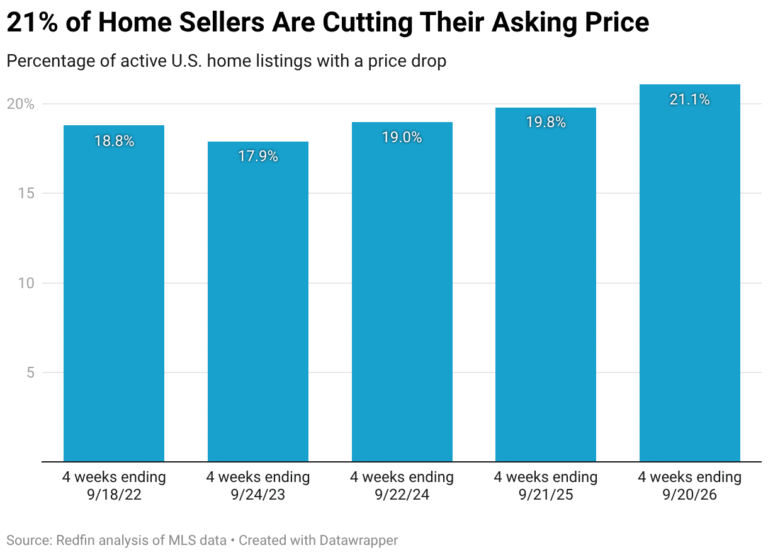
CNBC noted that the investors who are selling are offering discounts on the properties.
Nationally, 38.7% of all listings for sale today have had price cuts compared with 54% within the institutional, single-family rental cohort, according to Parcl Labs. CNBC noted that since early May, markdowns have deepened from about 3.1% to 4% of asking value. Meanwhile, 54% of the investor listings for those in the more than 350 homes category carry a price cut.