Trump tariffs could reopen door to Bank of Canada rate cuts: BMO

U.S. President Donald Trump’s latest tariffs against Canada have reinforced BMO Economics’ view that the Bank of Canada will keep interest rates unchanged through the rest of the year.
BMO believes the Bank is “firmly on hold” and said any rate increase would now have to be considered “very, very carefully.” If Canada-U.S. trade relations worsen, however, senior economist Robert Kavcic said the resulting economic risks could “open the door to easing again.”
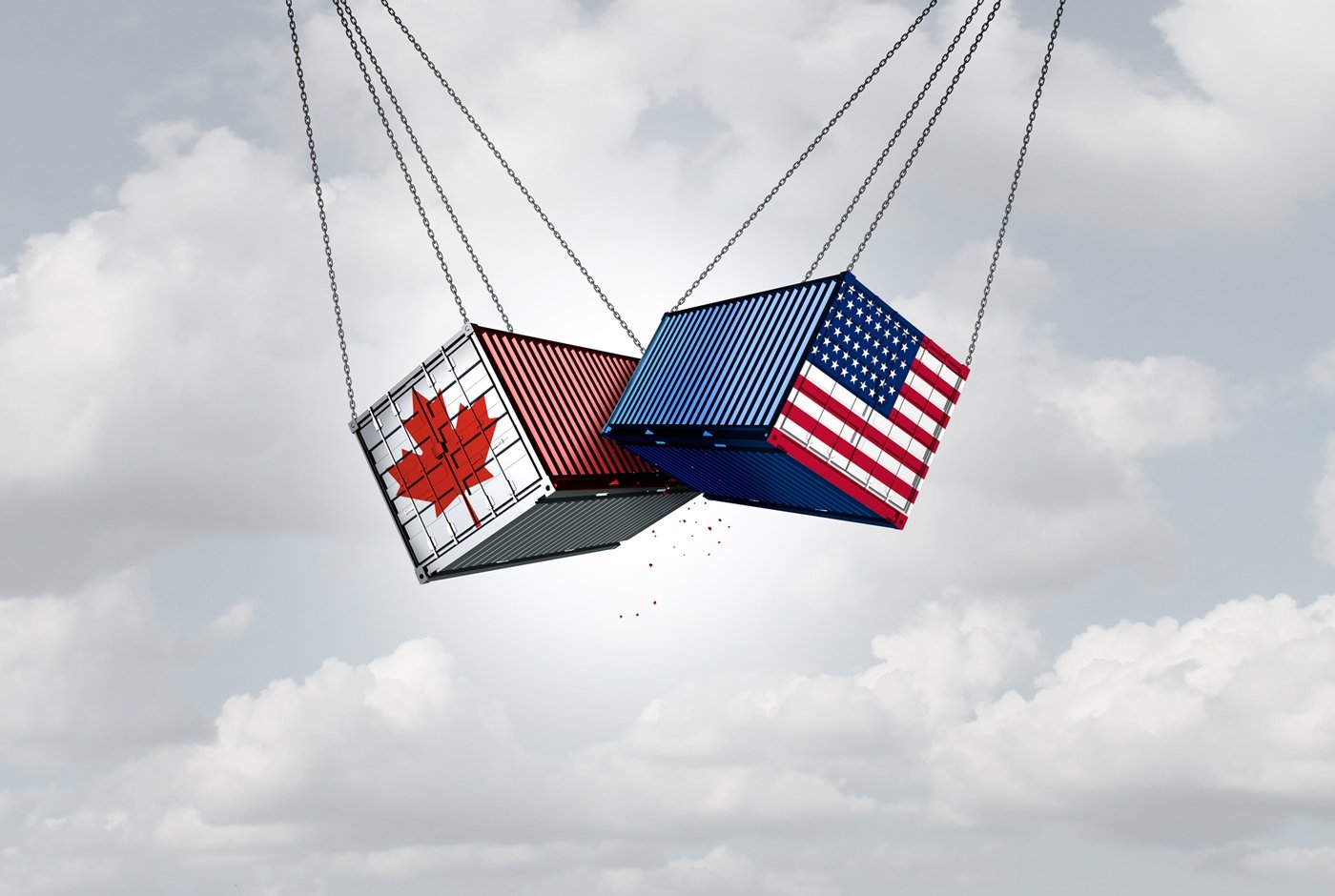
The assessment follows the U.S. announcement of a 50% tariff on a targeted range of Canadian goods beginning Aug. 19.
The measures would affect roughly $28 billion (US$20 billion) worth of Canadian exports to the U.S., including alcoholic beverages, cement, dairy products, wood and paper products, chemicals, plastics, electronics and some industrial equipment.
Energy, potash, critical minerals, fish and goods already subject to tariffs under Section 232 will be exempt, according to BMO.
The duties are being imposed under Section 338 of the U.S. Tariff Act of 1930, which allows the president to levy tariffs of up to 50% against countries deemed to discriminate against American commerce.
The White House said the move responds to Canadian measures affecting U.S. automobiles, dairy products and alcohol, including provincial restrictions on American liquor sales and Canada’s dairy supply-management system.
Prime Minister Mark Carney said the tariffs violate the Canada-U.S.-Mexico Agreement and would raise costs for American consumers, while indicating that Canada remains prepared to negotiate a resolution, Reuters reported.
While the 30-day delay leaves time for negotiations, the decision marks a significant escalation because the duties would apply even to CUSMA-compliant goods, which have so far remained tariff-free unless covered by separate sector-specific measures.
CIBC analysts described the announcement as the “starting point” for potentially difficult negotiations over the continental trade agreement, according to Bloomberg.
“We believe the selection of goods is largely political,” analysts led by Christopher Harvey, CIBC’s head of equity and portfolio strategy, said in a note.
Tariffs could weigh on Canadian growth
The affected products represent about 5% of Canadian goods exports to the U.S. and roughly 0.8% of Canadian GDP, according to BMO.
TD Economics estimates that the tariffs could subtract between 0.3 and 0.6 percentage points from Canadian GDP growth over the next year if they remain in place, although it expects the impact to be closer to the lower end of that range.
TD economist Andrew Hencic said the targeted products appear to have been selected partly because U.S. demand is likely to respond quickly to the higher duties. He pointed to Canadian iron and steel exports, which are down roughly 50% from pre-tariff levels as U.S. demand has declined.
Businesses are also likely to accelerate shipments ahead of the Aug. 19 deadline, adding volatility to upcoming trade data. TD said the data would likely not reflect the full effect of the tariffs until September, with the broader economic impact beginning to emerge late this year.
Financial markets initially showed little reaction. TD said the Canadian dollar was down about 0.2%, while expectations for the Bank of Canada’s rate path were largely unchanged.
The latest tariff announcement follows a cooler Canadian inflation report and the Bank of Canada’s decision last week to leave its policy rate unchanged at 2.25% for a sixth consecutive meeting.
Visited 1 times, 1 visit(s) today
Andrew Hencic Bank of Canada bmo cibc CUSMA Donald Trump economic news Mark Carney Robert Kavcic tariffs td economics trade war
Last modified: July 21, 2026