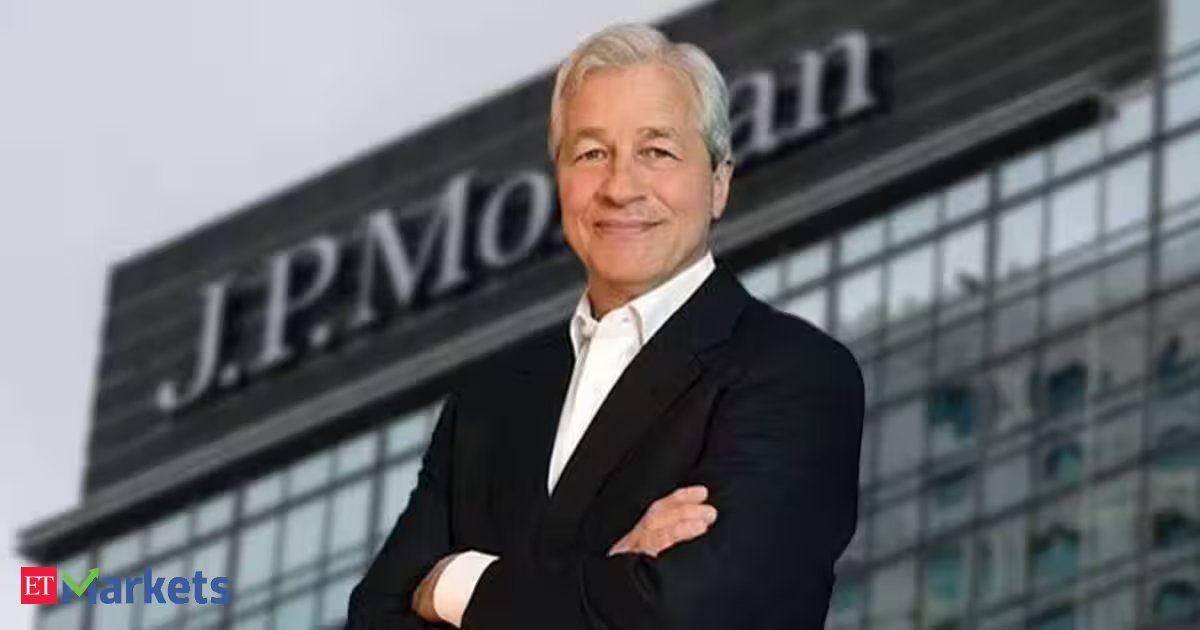
Bigger crash ahead? JPMorgan CEO Dimon says he won’t buy stocks at current prices, says markets underestimating risks
“I do think those risks are probably bigger than other people think,” Dimon said during an interview with Wilfred Frost, highlighting the wars in Ukraine and Middle East, along with rising tensions between US-China, leading to rising military spending at a time when government deficits are escalating.
When asked if markets are underpricing the chance of a major shock ahead, the JPMorgan CEO said it is difficult to know exactly what risks are already reflected in asset prices. “It is possible something is baked in, but what is not baked in is what actually happens,” he said during the interview.
He however acknowledged that the global economy has become more resilient because of a lower energy dependence than in previous decades. However, that does not completely wipe off the possibility of a sudden inflection point following the previous selloff seen this year, according to Dimon.
Would Jamie Dimon consider buying some stocks?
For the stock market, Dimon said he would consider an individual stock if it was “a great investment,” but he would not be a buyer of the broader market at current valuations. He also will not be a buyer of US Treasury bonds right now.
Dimon also raised worries about the massive AI spending by hyperscalers. “The amount of money being spent is huge. Will it in total pay off? Probably, just like the internet did,” he said during the interview. “Will it pay off the way you expect and the timetable you expect? Definitely not,” Dimon said.

Also read | Warren Buffett admits to a rare mistake with these 2 big tech stock bets
This comes as oil prices jumped after the fragile ceasefire between Iran and the US broke down as the countries exchanged strikes. Yemen’s Iran-aligned Houthis on Monday said that they would impose a naval blockade on Saudi Arabia, opening a potential new front against the US in its war with Iran and raising the threat to global energy supplies and trade beyond the Gulf.Goldman Sachs in its recent note warned that Brent crude could surge to $120 per barrel if disruptions through the Strait of Hormuz persist, even as its base case assumes an eventual easing of tensions in the Middle East.
JPMorgan last week reported a stellar set of earnings, posting its highest profit in history by a US bank.
Also read | South Korea’s Kospi jumps 4% after 31% crash from June peak. What’s ahead?
(With inputs from agencies)
(Disclaimer: Recommendations, suggestions, views and opinions given by the experts are their own. These do not represent the views of The Economic Times)