What is SAVE America Act? Here’s all about Trump’s plan to overhaul voting in America
If you’ve been scrolling through the news lately and keep seeing the phrase “SAVE America Act,” you’re not imagining things, it’s been dominating headlines out of Washington for months, and President Donald Trump has made it one of his top legislative priorities of 2026. Supporters call it a common-sense fix to election security. Opponents call it the biggest rollback of voting access in a generation. Here’s a plain-English breakdown of what’s really going on.
What does the Save America Act Do?
The SAVE America Act, short for the Safeguard American Voter Eligibility Act, is a federal bill that would change how Americans register to vote and what they need to bring with them on Election Day. Two changes sit at the heart of it:
- Proof of citizenship to register: Anyone registering to vote in a federal election would need to show a document proving U.S. citizenship, think a passport, a certified birth certificate, or a REAL ID-compliant license that specifically indicates citizenship. A standard driver’s license alone typically wouldn’t cut it.
- Photo ID to vote: Every voter would need to show government-issued photo identification at the polls, a driver’s license, state ID, passport, military ID, or tribal ID. The same requirement would extend to absentee and mail-in ballots, where voters would need to include a copy of their ID both when requesting and returning a ballot.
The bill would also require states to scrub noncitizens from their voter rolls, and it creates new legal tools, including the ability for private citizens to sue, to enforce the rules, along with criminal penalties for violations.

Where Did The Save America Bill Come From?
This isn’t a brand-new idea. A version of the SAVE Act has been kicking around Congress since 2024, passing the House twice before but always stalling out in the Senate. The 2026 version, technically House Resolution 7296, cleared the House on February 11, 2026, by a narrow 218-213 vote, almost entirely along party lines.
From there, it moved to the Senate, where it needs 60 votes to survive a filibuster. Republicans control 53 seats, meaning they’d need at least seven Democrats to cross over, support that, so far, hasn’t materialized. In March 2026, the Senate held its first real test vote on the bill; it advanced narrowly on a 51-48 procedural vote, with Alaska Republican Lisa Murkowski breaking ranks to vote no. A later attempt to force a final vote failed 53-47.
Frustrated by the standstill, President Trump used his July 4th address to renew his call for the bill’s passage, and days later, House Speaker Mike Johnson said the chamber would try passing it “one more time,” this time through the budget reconciliation process, a procedural route that only requires a simple majority and sidesteps the filibuster entirely. As of mid-July, that effort is still unfolding, and the bill has not become law.
How Save America Act Mean for You?
For most Americans who are already registered and have a driver’s license or passport handy, day-to-day voting probably wouldn’t look dramatically different. But for millions of others, the bill would add real friction:
- Online and mail-in registration would get harder: Because the law would require an in-person document check in most cases, it would upend registration drives, DMV-based registration, and the online systems most states now rely on. Election-law groups estimate that in a recent election cycle, more than 7 million people registered by mail and nearly 11 million registered online, all systems this bill would force to be reworked.
- Married Women: Married women and others who’ve changed their name could be disproportionately affected. A birth certificate that doesn’t match a current legal name, common after marriage, could complicate the citizenship-proof process unless additional paperwork is provided.
- Rural Older Voters: Rural voters, older Americans, and lower-income voters may face bigger hurdles, since they’re statistically less likely to have a passport or easy access to a certified birth certificate or a DMV office.
- Anyone updating their registration, after a move, a name change, or a party switch, would need to go through the same documentation process again, not just first-time registrants.
- Absentee and mail voters would need to attach an ID copy to both their ballot request and their returned ballot, an extra step that doesn’t currently exist in most states.
Why Trump is Pushing for Save America Act?
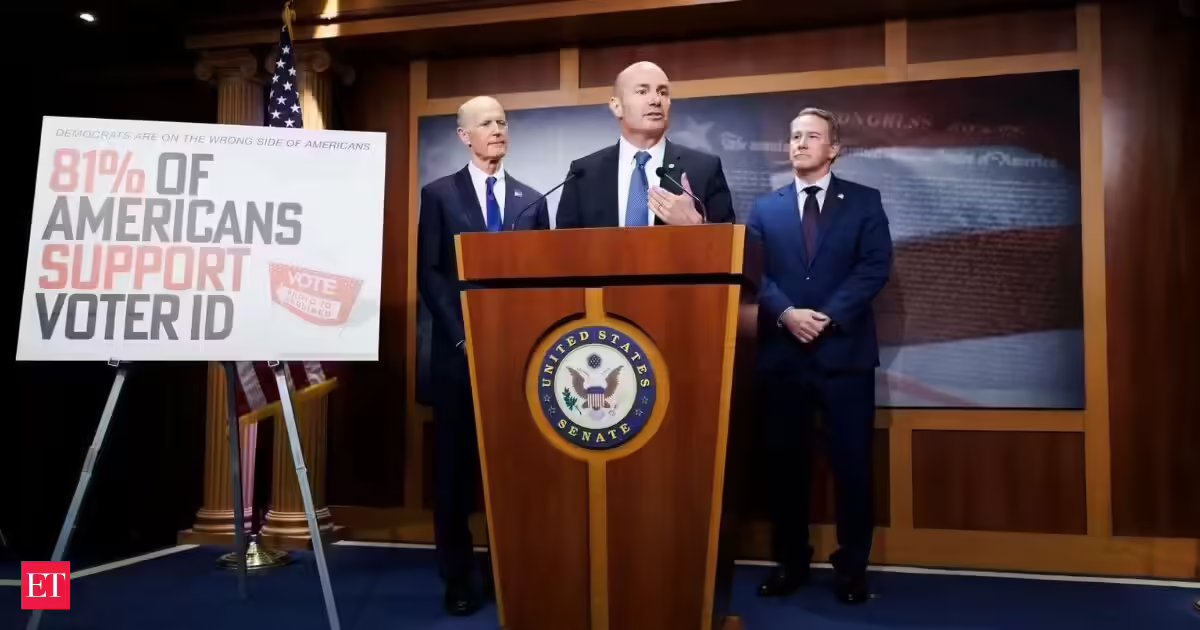
Supporters, led by Trump and House Republicans like Rep. Nancy Mace and Rep. Bryan Steil, argue the bill closes a loophole that lets noncitizens end up on voter rolls, even if only rarely, and that requiring ID to vote is a basic, reasonable safeguard most other democracies already use. Backers frame it as restoring public confidence in elections ahead of the 2026 midterms, when control of Congress is on the line, and reject claims that it would be used to purge eligible voters.
Why Many Legislators are Opposing the Save America Act?
Critics, including most Democrats, the League of Women Voters, the Campaign Legal Center, and the Brennan Center for Justice, counter that noncitizen voting is already illegal, already rare, and already actively prosecuted when it happens, meaning the bill solves a problem that barely exists while creating a much bigger one: locking out eligible citizens who lack easy access to the right paperwork. They point to the bill’s national ID mandate as stricter than nearly every existing state voter-ID law, and warn it would hit women, students, elderly voters, people with disabilities, and rural Americans hardest.
Save America Act 2026: What Happens Next
As of mid-July 2026, the SAVE America Act remains stuck, passed by the House, but unable to clear the Senate’s 60-vote threshold. With President Trump pushing hard for a reconciliation-based path that would need only a simple majority, and Speaker Johnson signaling the House is ready to move again, the fight is far from over. Whether it becomes law before the 2026 midterms could shape how tens of millions of Americans register and vote for years to come.