More deed theft laws pass, but most states are still lagging
Lawmakers are ramping up deed theft enforcement but the majority of U.S. states, particularly less populated regions, still lack title fraud protections for homeowners, a new report finds
Processing Content
Alabama, California and Virginia
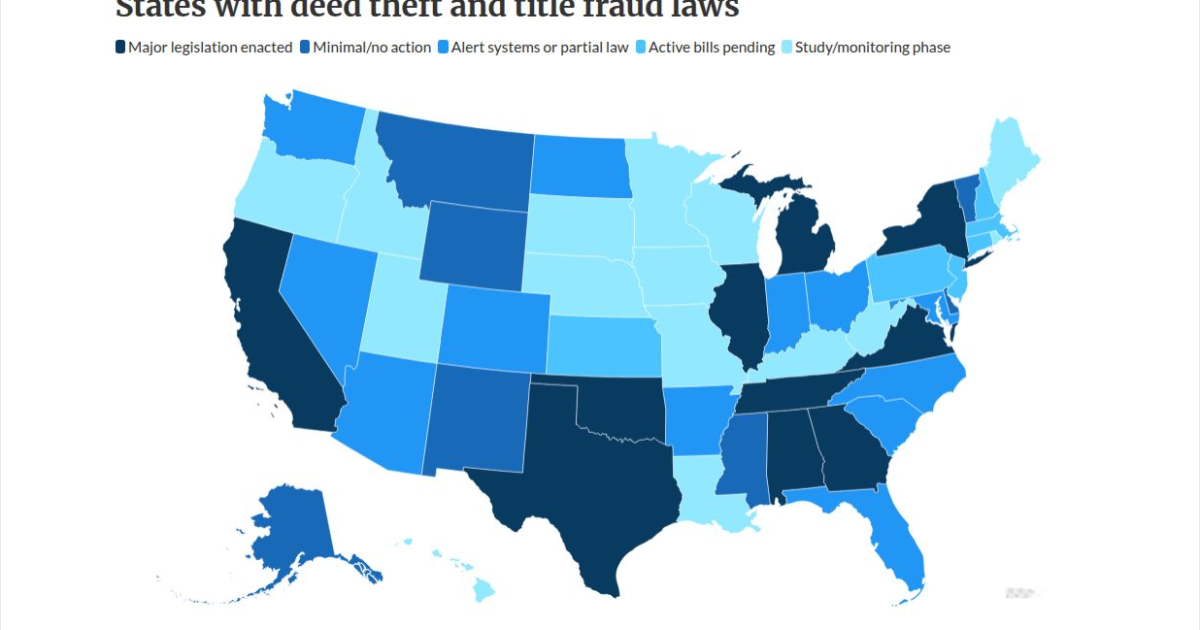
Six states have active deed theft bills pending. While meaningful, the legislation still doesn’t completely cover homeowners, said Ryan Marshall, CEO of EquityProtect.
“Most laws punish deed theft after it happens, they do not prevent it,” he said in a press release. “Property owners need preventative safeguards, not just legal remedies after the damage is done.”
Title fraud victims can spend between $50,000 to $150,000 in legal fees to restore ownership following a fraudulent deed recording, EquityProtect said. The report cited the FBI’s findings of
The states with the strongest, weakest protections
Texas has the nation’s strongest deed theft protections, according to EquityProtect. The state requires photo identification for title transactions, fast tracks court relief for incidents and enhances criminal penalties against seniors.
Twelve states have fraud alert programs or pre-2023 deed fraud statutes, while 15 more states are mulling protections, according to EquityProtect. The report noted that property alert programs only provide after-the-fact notifications and can’t prevent fraudulent filings.
While the nation’s most populous states have some of the strongest protections, the most rural have the least. Contributing to risk are large agricultural, ranch or undeveloped land across Montana, New Mexico and Wyoming, while tourism and second homes pose vacancy risks in Vermont.
Pricey properties are also at risk. EquityProtect noted deed theft exposure in Delaware from its high coastal property values. The state only has a “limited” residential deed fraud framework.
Beyond states, other stakeholders have increased their efforts to combat title fraud. New York City earlier this year