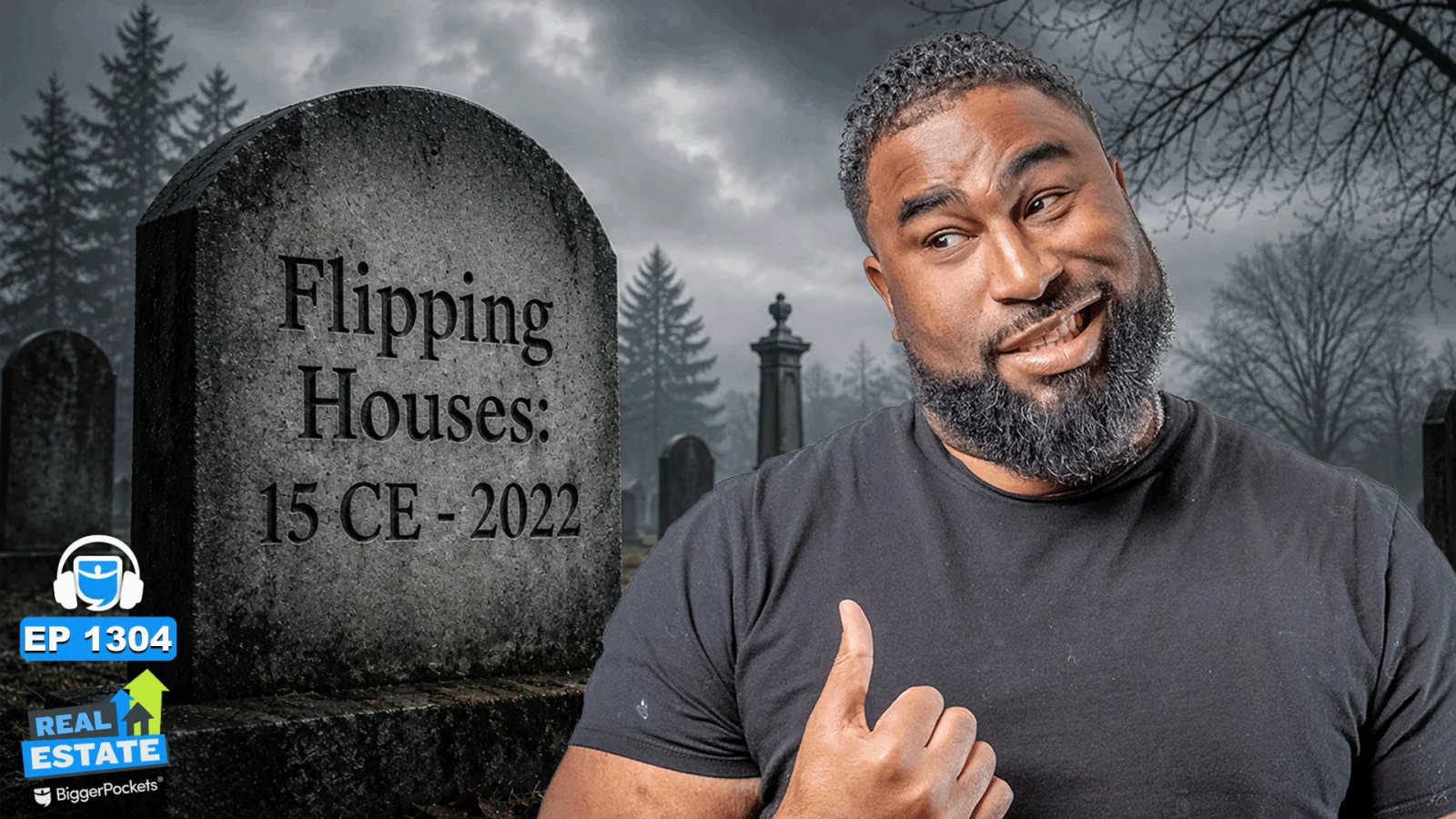
If House Flipping is “Dead,” How Is She Flipping 10+ Houses THIS Year?
Many people assume house flipping doesn’t work anymore.
They’re wrong.
House flipping isn’t dead. The “easy” money is. While it’s true that flipping houses isn’t as forgiving as it was just a few years ago—and yes, the “bad” flippers are being exposed—the fear surrounding this investing strategy is actually creating massive opportunities for those who do their homework.
Just ask Henry and today’s guest, Dominique Gunderson. They’ve been flipping houses for many years and are still finding plenty of real estate deals, even in this tough housing market. They’re just doing it a little differently than in years past.
In today’s episode, we’re getting into what’s changed and what investors need to do to find, buy, renovate, and flip houses for a profit. We break down our own processes for analyzing properties, estimating rehab costs, pricing them on the back end, and so much more.
Whether you’re a complete newcomer or a frustrated investor eager for the numbers to work again, follow our blueprint to make your next flip a successful one!
Henry:
Some people seem to think house flipping is dead. Costs are up, margins are gone, the glory days are over, but they’re wrong. Some of the best opportunities we’ve seen in years are showing up right now in 2026. House flipping didn’t suddenly stop working. The easy version of it did. And the investors who were too aggressive with their numbers and bit off a bit more than they could chew, they’re being exposed. But for the rest of us, things are pretty good. Dominique Gunderson still does around 10 to 12 flips every year. And between the two of us, we’ve done over a hundred flips and counting. The differences we’ve adapted. Today, we’re breaking down what has changed in the last few years and how investors are winning in this housing market from smarter deal analysis and discipline buying to renovations that maximize your ROI. We’re sharing the exact framework we’re using right now.
Whether you’re looking to do your very first house flip or just trying to make the numbers work again, this playbook has everything you need to find, buy, renovate, and flip houses profitably in 2026. Hey everyone. I’m Henry Washington, co-host of the BiggerPockets Podcast, and today I’m talking with Dominique Gunderson. She’s a real estate investor flipping houses and buying rental properties in New Orleans, Louisiana. So let’s welcome Dom back to the BiggerPockets Podcast. Dom, welcome back to the BiggerPockets Podcast.
Dominique:
Thanks for having me. I’m excited for this one.
Henry:
Perfect. And this is a great time to be talking about flipping because there’s a lot of chatter out there in the real estate world about it. But before we get into that conversation, can you remind our audience who you are and what your history is in the real estate space?
Dominique:
Sure. Yeah. I got started in real estate straight out of high school, which was a little over 10 years for me now. So I’ve kind of done a few different things in that time, but started with the basics, just got my real estate license, kind of jumped in learning the game, learning sales and marketing. Did a little bit of wholesaling for about a year and a half, kind of get my feet wet in the investment space and then jumped full-time into flipping. So I did my first flip back in 2019 and have slowly scaled it up from there today running 10 or 12 flips at a time, mainly flips, but I do have a little bit of a rental portfolio now as well.
Henry:
I do a very similar volume. I do 10 to 20 flips a year. So I think that makes us both pretty qualified to talk about this. And a lot of people are saying it’s not a great market to be flipping houses in. So how would you describe the flipping market or the flipping landscape now that we’re in the middle of 2026?
Dominique:
Yeah, I think, man, a lot has changed since even just two or three years ago, but I’m sure you would agree since you’re still flipping 10 to 20 houses a year. It’s not a bad market to flip. It’s not a bad time to flip. There’s tons of money to be made still in flipping
Henry:
Right
Dominique:
Now. But things have changed in that the margin for error is so small right now compared to a couple years ago. And so I don’t want to put this term on anybody, but bad flippers are kind of being exposed with the current state of the market and have been for the last two years because I mean, you literally can barely make a mistake on a deal without losing money or breaking even or making five grand and you hope to make 50 or whatever. So yeah, it’s just changed a lot in the margin of error.
Henry:
Yeah, there’s a lot of areas where I think flippers can make mistakes, but the first mistake that you make is typically the offer that you pay. Your offer price is going to be based on the ARV. So first of all, for me, it starts with comping.
Dominique:
Right. And I feel like there’s so many nuances that you have to look at too with comps. In 2021 and 2022, you could kind of just put renovated property into one big bucket and as long as you kind of fit in there, you’re good. You can sell at the same price all those people are selling for. And again, this is definitely market specific, but I think generally speaking, what I’ve noticed is buyers are just getting so, so picky. So you have to be just as picky when you’re looking at the comps. There’s a reason why something sold today for the highest price in the neighborhood. It’s not just because it’s “fully renovated.” It’s because it was probably designed by a professional designer and everything looks perfect and beautiful and trendy. It’s not just the gray and white rental grade colors. It looks amazing. And so if you’re not going to match that level of design, you’re not going to match that level of materials that you’re putting in your property, you better not be using that comp and expecting that number.
Henry:
I totally agree with you. And so I don’t know how you comp your properties, but for me, I have an agent comp mine and they give me a zone. Typically it’s a high, a medium, and a low. And I am underwriting now at the ARV that falls somewhere in the mid to low end of that sale. Because that way, if I go and I list my property, when I go to run my comps again before we sell, if it’s gone up a little bit, I may adjust. But I’m never trying to get the tippy-top most money possible because I’d rather sell my house fast for less money than shoot for the stars and try to get the most money because sometimes it just makes your property sit on the market longer and then you lose your profitability to hold in costs anyway and make the same amount.
Dominique:
Yeah, no, I couldn’t agree more. I’m always underwriting, like you said, right in that kind of mid-tier, not expecting the absolute highest. The other thing too is I’m trying to underwrite my deal when I make the offer, expecting what is my number going to be after I get two price drops, after someone asks me for $10,000 in closing cost asistance, after I held the deal for two months longer than I wanted to. All those things, that’s my ARV that I’m basing my offer off of kind of knowing that hopefully some of those things, all of those things don’t happen and we can pick back up some extra profit on the back end, but the deal still underwrites if it does happen.
Henry:
Yeah. I’m not trying to underwrite deals so it tells me to buy it. I’m trying to talk myself out of buying deals. I’m underwriting so conservatively that I want to talk myself out of it. And then if it still says I’m going to make money, then it’s probably a really good deal. So I think based on us just walking through that, what I’d like to do is to go through the different elements of underwriting a flip and talk about how we have adjusted those numbers for the 2026 market. And so numbers I want to talk through with you are ARV, which we just did. Then we’ll talk about commissions, closing costs, holding costs, renovation budgets, and profits. So we can dive into each one of those factors and talk about how it’s affecting us in our business or how we shifted when we’re underwriting those numbers into our offer prices, but we’re going to do that right after the break.
All right, we are back on the BiggerPockets Podcast and I’m with expert flipper Dominique Gunderson. She’s done about 90 flips in her career so far and I’ve done several as well. And so we want to give you the things that you need to be looking out for as a flipper in this current market or economy. We said before the break, it’s not a bad market to flip. I actually think it’s kind of the opposite. We’re getting great deals right now because there’s a lot of pain in the market and people still need to sell. And so I’m finding fantastic spreads and flipping, it’s a circle in my opinion. It’s either very easy to find deals and harder to sell them, or it’s very easy to sell deals and harder to buy them.You just pick your hard.
Dominique:
Oh yeah, absolutely.
Henry:
So before the break, we talked about how we were handling our after repair values, so how we’re comping properties to determine what the ARV is and how we’ve shifted doing that in this more challenging market. Next, let’s talk about the cost. So we can kind of cover commissions and closing in one fail swoop since they’re very similar. Have you adjusted how you’re accounting for commissions and closing costs in this new economy?
Dominique:
Yeah, I mean I made a pretty big shift, not that everyone can do this or wants to do this, but at the beginning of 2025, I went ahead and got my license. And prior to that, I had never listed any of my own properties. But again, just kind of feeling the market tightening up and it being harder to make those spreads as mistakes get made, that was a huge, I mean at least two and a half percent if you’re paying five total that you can save on every deal, two and a half percent of your sales price, which is a lot. I mean it works out to, for me, hundreds of thousands of dollars a year that kind of get put back into the profit margins. And so that’s been a big shift for me, both in just increasing profitability, but also I’ve actually found it extremely helpful in learning more about how to design the properties that it will best sell to buyers.
What are buyers looking for? What’s driving their decisions? Even just things as like how many times do they have to see a property or how many properties are they seeing before they make a decision? You get all that feedback and data when you’re the one that’s getting the calls from the agents and all the feedback. And so being the owner, that’s invaluable feedback that
Henry:
It’s
Dominique:
Just kind of hard for an agent as much as they want to send you feedback. They can’t download absolutely everything to you.
Henry:
That’s a pretty cool, I agree with that. Not enough so that I’m going to go get my license, but I think that that’s a pretty cool perspective.
Dominique:
It’s
Henry:
Helpful
Dominique:
That I flip out of state and I’m not there because so many of the tasks I have to delegate anyway. It’s mainly just taking extra phone calls and a little bit more paperwork and stuff, which even I delegate a lot. But yeah, I could see it if you were there running around, putting up signs, doing showings and all this stuff, just being a lot of extra time.
Henry:
For me, commissions and closing costs, I did not change. I always assume I’m going to pay 6% in realtor commissions just because that’s worst case scenario and I want to underwrite it worst case scenario. Now I don’t always pay 6% commissions. My agent that I’ve been working with for a long time typically gives me a break on a percentage point or depending on the deal, it might be more or less, but I don’t factor that into my underwriting. I just assume 6%. And then for my closing costs, I just take historicals. So I’ve closed enough deals now that I can look back and see what am I typically paying for closing costs on a house of a certain price point. And so I don’t really have to guess at my closing costs. I can really be pretty specific about the closing costs. But where I think people do screw up in their underwriting for closing costs is they don’t underwrite for the closing costs on the buy and the sell.
They’re typically only underwriting for the closing costs on the sale. Then they get hit with closing costs on the buy and then it wasn’t in your numbers and so that shrinks your profitability.
Dominique:
Yeah, I totally agree. I haven’t really adjusted much on closing either, but yeah, just going from historical data.
Henry:
And for those of you who’ve never done a deal, obviously you can’t use historical data, but you can have a title company estimate closing costs. So you don’t have to guess. If you have the address of the property, you can typically send it to your title company and say, “Hey, can you run a preliminary HUD statement? I just want to see what my fees might be. ” And they can typically get you pretty close to the ballpark on what your closing costs will be. So that way you don’t have to guess as much either. All right, next on the list is the rehab budget. This is the one that gets people because estimating rehabs is, it’s kind of like a mix between an art and a science because we’re talking about estimating. And even when you have a contractor do the estimation for you, it’s still an art form.
They’re not actually doing the work yet. So it’s a best guess. So how have you adjusted your rehab estimations in your underwriting?
Dominique:
I don’t think I’ve done a ton differently as far as the estimate goes. Kind of similar to what you said for closing costs. I use a lot of historical data since we’re using the same crews over and over again, the same type of product that we’re putting out. It’s kind of easy to look back at past projects, but I do think it’s super important that you’re adding in the proper contingencies because probably 70 to 80% or more of my rehabs have major $10,000 plus surprises. It’s just what happens when you’re pulling out walls, you’re digging up under houses, you’re looking at the plumbing, the old wiring. It happens.
Henry:
So you’re saying 10K plus surprises, not 10K plus items you know are going to be there. These are just things that 80% of your flips, no matter what you budget for, there’s an extra 10K hiding behind a wall somewhere.
Dominique:
Yes, almost always. So there’s one thing to say there’s always a surprise that’s $10,000. That sounds crazy. There’s another thing to say that’s very predictable.
You need to pad your major system renovation numbers knowing that there’s going to be a plumbing surprise probably. If there’s not, there’s going to be an electrical surprise or whatever, a framing surprise, termite damage. If you know that you’re getting into major projects that are going to have surprises like this come up, you just need to estimate the correct contingencies. So for me, what I like to stick to is if it’s a project that I can fully inspect beforehand, we get a chance to run cameras down the pipes, get my contractor in there and everything. I think somewhere around a 10% of your total estimated rehab cost is a decent contingency, which if it’s $100,000 rehab, that’s still 10 grand. On the other side of the scale, if it’s a sight unseen buy or maybe you only got to drive by or look in the windows, you don’t have any access and inspections, you should bump that up to 20%.
Literally double your contingency because it’s a risky deal.
Henry:
Absolutely. For us, we have adjusted underwriting, but it’s more because just labor and materials cost more now. Tariffs were a thing for a while and that caused material prices to go up. So that meant our rehab budgets went up some. Plus labor just is more expensive. I mean, it’s economics. There’s inflation. There’s inflation with labor and materials as well. And I tend to overestimate my budgets from the standpoint of, again, I’m trying to price myself or talk myself out of doing a deal. And so us as flippers and in real estate investors in general, we all have a superpower. We all have things where we’re like, oh, I get this cheap. I know a guy that knows a guy that knows a guy. I got a carpet guy. My carpet prices are dirt cheap. I’ve got a roof guy. I get roofs done dirt cheap.
When I am underwriting my deal and putting together my renovation budgets, I’m not putting the Henry special contractor roof deal price on my underwriting. I’m not putting my carpet guy’s pricing on the underwriting because what if something happens and they fall off the face of the earth before I get to that part of the renovation or their price just magically goes up? I mean, have you ever had a contractor just magically charge you twice as much for something on a house that they didn’t the house before? Happens all the time. So I never underwrite to those numbers. I always underwrite to market value on the renovation. And then if I can get it done cheaper, I will. So I underwrite to market value even if I can get things done cheaper and then ad a contingency on top of that. For me, I typically add a 10% contingency because my numbers are pretty tight.
But for a new investor, you’re right, it should absolutely be higher. All right, so the last section I want to talk about is profit. Now this is definitely different for different investors. I underwrite my profit into my offer price. So when I’m underwriting a deal, I’ll say, okay, I need to take the ARV and then I need to subtract the commission, the closing cost, the holding cost, the rehab budget, and then I want to subtract how much money I’m going to make that equals my max allowable offer. That’s the offer price that I want to make. I have a rule of thumb for me in my market, but everybody’s a little different. So my general rule of thumb is I want to make the same amount of profit as I’m spending on the renovation. And my thought process behind that is I want to be paid for risk to reward ratio.
In other words, I’m assuming a higher renovation is a potentially riskier deal. It’s more work, it’s more level of effort, there’s more moving pieces, there’s more room for things to be found that are high dollar ticket items. And so I don’t want to do a $100,000 renovation and end up with a $20,000 net profit deal. If I spend 100, I want to make 100. If I spend 60, I want to make 60. And I will adjust that rule. I’ll bend that rule if I’m more comfortable with that house. Let’s say I’m doing a three, two, 80s built single family home, desirable neighborhood floor plan I’ve sold a million times and it needs a $70,000 renovation. I might be willing to make 30 or 40 of profit on that because I am so overly confident in that product selling. And the more confident I am, the less risky it is, so I’m willing to make a little less profit.
So I might push that profit number down and make a higher offer to get that deal because of my confidence level. Now, if it’s a house that’s in a neighborhood, maybe I’ve never done a flip-in before, layout’s a little funky, I got to change some things. I don’t know. If I’m doing a $7,000 renovation, I might need to be pretty close to that $70,000 profit number in order for me to do that deal because I see it as a little riskier. But that’s how we manage it on our side. What are you looking at in terms of what’s your profit margin you’d like to hit when you’re underwriting these deals?
Dominique:
Yeah, I like that you highlighted that every flipper does it differently and even in every market it can be so different. I usually target making a 15% return on the total investment into the deal. So purchase and rehab and closing costs and some little fes in there. So if all in were spending $100,000, let’s just say, they’re usually not that cheap, but I would want to make 15 after everybody else is paid out on that deal. Lenders paid out, contractors, everything. I will push that up slightly, like you said, if I don’t feel as comfortable about the deal or I feel like the market is really shaky maybe in that particular neighborhood, that particular floor plan, or even if I just have a ton of really good projects on my plate right now and I don’t really need another deal, I’m not going to buy one that has a less than good margin that I’m looking for.
I’m actually going to push it up to take on a slightly better, only slightly better deals. But that 15% return on investment is kind of like the minimum that I try to underwrite with.
Henry:
That makes perfect sense. And that’s a fantastic point. If you were as conservative as I am in your market, you probably wouldn’t do many deals because people are going to be able to offer more than you and you’ll lose out on deals. And that kind of leads us into the next part of the conversation, which is there are so many market intricacies that will shape you as a flipper in your flipping business. And yes, the fundamentals of flipping are all the same. We want to find a deal, buy it, add value to it, sell it and make a profit, but the market specific intricacies will really shape your business. Dominique came to visit me in Bentonville, Arkansas, and we got to compare notes. I took her to some of my properties, showed her what I had bought, talked to some of the numbers and got to ask her about some of her deals.
And it was so interesting because we would be walking through one of my properties and I’d go, “Well, what do you think? ” And Dom would say, “Well, I’d never buy this. ” And not any shade. It wasn’t a negative thing. And the reason was because our markets are so different. In Dom’s market, she has more competition than me. There are more homes available per sale based on the amount of buyers that are looking to buy, which means buyers have a lot more options in hard market than they do in mine. When buyers have more options, you’ve got to know exactly what they want and you got to be able to provide it to them and you got to be able to provide it to them for cheaper than your competition provides it to them. And so it’s just a different business setup. So Dom, can you talk to us a little bit about A, just what that’s like in your market?
Wht do you focus on the major things you focus on in your flips that you would say you focus on because it’s market specific?
Dominique:
You almost want to study the market in such a way where you’re looking at kind of like – for-like data, which is what I do. I mean, I do this almost every single day. I go on and figure out, okay, what are all the new listings? Are these flips? Are these new builds? Are these just someone selling after 30 years type of house? And I’m paying really specific attention, especially to the flips. What’s coming on the market, what’s working and what’s not working. Especially when I see houses that I might’ve looked at that deal and passed on it. I’m going back and pulling up pictures, what did they all do to this house? Is it working? Did it fly off the shelf and dang, I should have bought that deal? Or is it sitting and it didn’t work? So I mean, just getting very, very specific in looking at your data and specifically data that is very applicable to the type of product that you’re going to be putting out on the market and studying what’s working and what’s not.
How long is it taking? What percentage of list price are they actually closing at? Are they giving closing cost assistant? What’s the true sale price? All that data.
Henry:
I like that you framed it like that, how you essentially are telling people you’re studying your market on a daily basis and it is more necessary now than ever. One of the things I remember you said when we were walking one of my properties is because I think all the kitchens and the properties that I took you through, we just repurposed the cabinets. Either we were just changing out the hardware and painting the cabinets, or we were just changing out the doors and keeping the boxes. And you made a comment to me that you put new cabinets in almost every kitchen because your buyer expects a new kitchen. Are there other things like that that you know every time this is something I have to do in my market?
Dominique:
Yeah, the kitchen is definitely the biggest one. It’s definitely hard for me to salvage kitchens. Oh,
Henry:
I salvage them all the time. All the time. I rarely put new cabinets in. I’d probably say less than 10% of the deals I do get new cabinets. That may be pushing it. It may be even lower than that.
Dominique:
That’s crazy. Yeah. I can’t remember the last time I’ve salvaged a
Henry:
Kitchen.
Dominique:
One thing I remember noticing that was actually a little different too is bathrooms also. Your bathrooms are top notch. And I remember we were talking about tile prices and I’m like, dang, you spend that much on
Henry:
Tile. I’m still jealous of what you told me you spend on tile. I’m like, gosh, no, bathrooms cost me an arm and a leg, man.
Dominique:
Yeah. So for me, I’ve noticed that if we do a really beautiful kitchen and even just in general entryway, nice flooring, feature walls, specified dining space all staged and people get an envision for that general living space, we can not skimp out on the bathrooms, but we don’t have to make the bathrooms top-notch. Especially if there’s two or three bathrooms in the house. I’m usually finding one or two of them that I can completely salvage. Not redo the tile in the shower at all, keep a tub insert, just do wallpaper on the walls or a nice feature color to make it look nice, nice tile on the floor, but very minimal stuff. Whereas I didn’t see any of your bathrooms that weren’t dialed in. So that would be one thing. I think generally though buyers are pretty much expecting one consistent paint color throughout, one consistent flooring throughout minus maybe tile in the bathrooms.
But it’s hard for me to salvage when there’s three different kinds of laminate floor that kind of look nice, could be salvaged. That’s really hard for me to resell with salvaging it. Same with paint. If you’ve got four different colors throughout the house because everyone painted their room their own color, it kind of looks nice. It might be newer paint, but it’s not consistent. Same with light fixtures. Hard to salvage all that stuff. Consistency is pretty key.
Henry:
My thought process has always been the bathrooms are smaller. So if I got to make one pop, I can make the bathroom pop cheaper than I can make a kitchen pop. And also, look, if I was going to go get cabinets, I’m just going to go get Lowe’s cabinets. Every place has Lowe’s cabinets. So even when I spend more money on a newer kitchen, it’s hard to make it look that much different than my competition’s kitchen. But in a bathroom, I think it’s a little easier. I can get a more expensive tile because at the end of the day, it’s less than a hundred square foot of tile. I want to dive into more about that right after the break. All right, we’re back on the BiggerPockets podcast. I’m here with Flipper investor Dominique Gunderson. We are talking about how to be successful flipping properties in a more challenging market, specifically the market that we’re in right now in 2026.
And before the break, we were talking briefly about how every market is so different, but the market that you’re in will also shape the kind of flipper you are and how you do business. One other thing I wanted to talk to you about is do you have a price listing strategy when you go to list?
Dominique:
I typically try to pay attention to all the comps and active data within 30 days before we’re going on market. So I’m just paying super close attention. Anything that comes up that looks kind of like mine, even if it’s not renovated, it’s the same size square footage or whatever. I’m watching those hawk like, okay, they’re still sitting. Maybe I shouldn’t list that high or man, those went so fast. Okay, I’m going to adjust based on the active data within 30 days.
Henry:
We’re pretty similar. So for us, if the house is maybe in not the most desirable spot, or again, if the house is a little weird or if there’s something about the house that’s a little different than the comps, typically what we’re doing is we are looking at what are all the comps priced at? What do all the finishes look like? And we typically will list under what the comps are listed at so that it’s essentially undercutting them. I want to ensure that if a buyer is shopping for a house in a neighborhood my house is listed in, that they have absolutely no reason not to go see mine. And typically the only two things that would do that are you’re priced lower and you look better. So I want to make sure it’s both. So before we go and list a property, if it’s one I’m super confident in, we’ll stick to our number.
I know it like the back of my hand, no big deal. But if it’s one where there’s any level of potential doubt or competition seems super higher in that neighborhood, then we are always going to price under what the best comp is priced at so that we get all the same looks that they get and people are force to make a decision. Do I want to buy that one where I get a little less for more? Or do I want to buy this one where I get more, it looks better and it’s priced lower. So it doesn’t make us popular with the neighbors, but it gets us more offers faster. It’s
Dominique:
Kind of a no-brainer decision when you do it that way for buyers.
Henry:
But I am leaving money on the table sometimes, guys. That’s the sacrifice you’re making. The last time we did this, we went under contract in 24 hours, but I listed it $25,000 less than what I planned to list it for when I underwrote the deal. I think that those are the tough decisions that people don’t understand that flippers make when we’re doing these projects. The choices was like, do I want to make a sale and make $25,000 less now or do I want to risk it, try to make that extra 25 grand and then maybe not get it and end up making the same amount of money, but I won’t make it for another six months? Those are tough calls to make and they’re very market specific, but those are the things that you need to be thinking about as a flipper. Those are the calls you have to make.
We talked in the beginning of the episode about underwriting to try to convince ourselves that like, “Hey, we’re going to underwrite so conservatively that the numbers still say it’s a good deal.” Yeah, it’s one thing to underwrite conservatively, but that doesn’t make it easy to make that offer. Underwriting conservatively means your offer’s going to be crazy low. Right now you got to have the confidence to go out… There and make that offer. So it makes this business pretty tough.
Dominique:
I’ve had the same thing probably two or three times in the last six months. I’ve had offers before we listed or before we even finished construction and it’s awesome. Zero days on market, that’s amazing. And even if it’s the price or right near the price you were going to list for, it kind of does make you think like, “Well, dang, if someone’s going to get me this off market, how good is my product then?” So yeah, there’s always the tough decisions. And ultimately though, I’ve always been sticking the route you’re talking about is money now is way better than potential money later.
Henry:
Of the deals that you’ve done that either didn’t go well, has there been a consistent thing that you found that’s either caused the problem or put you in that position where it didn’t go like you wanted it to? Or what have you just learned that I cannot and will not make this mistake in this economy or this market because it’s so tough? This is the one thing that will always be done a certain way.
Dominique:
It’s crazy that you asked that question next because that’s such a good transition. It’s literally what we were talking about right before this is it’s always been a high stakes, high pressure or pressure I’ve put on myself situation. I lost more money on deals that I bought in 2024
Henry:
Than any other
Dominique:
Year.
Henry:
Yep, me too.
Dominique:
And I can look back though and see, sure, there were plenty of mistakes. I didn’t design it right. I should have been more conservative. I missed this reno thing, whatever. But the consistent theme on all the deals were why did I want to buy that house so bad?
Henry:
Yes. Yes. It’s
Dominique:
A funky house. I didn’t need to buy another house that month, but in my head I did or else I’m falling behind. I didn’t need to bid that extra, but man, I was right in the middle of the bidding war. It breaks down to the deals that I didn’t have to buy. I shouldn’t have bought. I shouldn’t have pushed myself to buy a deal just to buy a deal. I should be buying only great deals that you feel as 100% confident as you can about.
Henry:
Amen. Every time I’ve lost money on a deal, it’s because I bought a deal where I knew I was pushing either my numbers or I was buying something a little just outside of the comfort zone I want to. There was always an adjustment. It was never like, oh yeah, this is 100% a no-brainer. It was always like, this could be good or it could not. And I’d say I’m probably still 70 / 30 on those. For the most part, I’ve overcome it and we’ve made money, but that 30% where it didn’t go well, I don’t think people realize the tougher part about flipping. It’s not that you lose money at the closing table. The days I’ve closed deals where I lost money, I felt good about it. I was like, “I’m so glad to be done.” It’s all the anxiety and sleepless nights prior to that of you trying to fix it and not being successful, of you sitting there and waiting and waiting.
It’s all that anticipation and anxiety that ages you, that stresses you out. But I’d say that’s probably 100% of every deal I’ve lost money on has been one that was just, I knew better and I did it anyway.
Dominique:
That’s why they call us business an addiction.
Henry:
Right. Very true. Very true. All right. Well, this has been amazing. Thank you, Dom, for coming on the show and being so open and transparent about your business and how to be an effective flipper in 2025.
Dominique:
Yeah, absolutely. It’s been fun. I love that we’ve gotten to download so much of our time together earlier this year and just share all those details because comparing notes is always one of the most helpful things for me. So I hope it’s been helpful for everyone else to hear too.
Henry:
Absolutely. I hope it has been helpful for everybody else. And for those of you who want more of an opportunity to compare notes with other flippers, you should consider coming to BPCon. Not only will there be tons of other flippers at BPCon who you can chat with and talk just like Dom and I talked on this episode, but you can also go and listen to Dominique Gunderson and James Dayner during their flipping session where they will be talking about their flipping businesses or how to effectively flip properties. And that’s going to be in Orlando, Florida on October 2nd through 4th. So if you want to come, go ahead and grab a ticket. You can go to www.biggerpockets.com/conference. I would love to see you there and I’d love to talk to you about your flipping business. All right everybody, that’s our episode. Thank you so much for joining us.
It’s been a pleasure and we’ll see you on the next episode of the BiggerPockets Podcast.
Help us reach new listeners on iTunes by leaving us a rating and review! It takes just 30 seconds and instructions can be found here. Thanks! We really appreciate it!
Interested in learning more about today’s sponsors or becoming a BiggerPockets partner yourself? Email [email protected].