Waller, eyeing incoming inflation data, says Federal Reserve ‘at a crossroads’
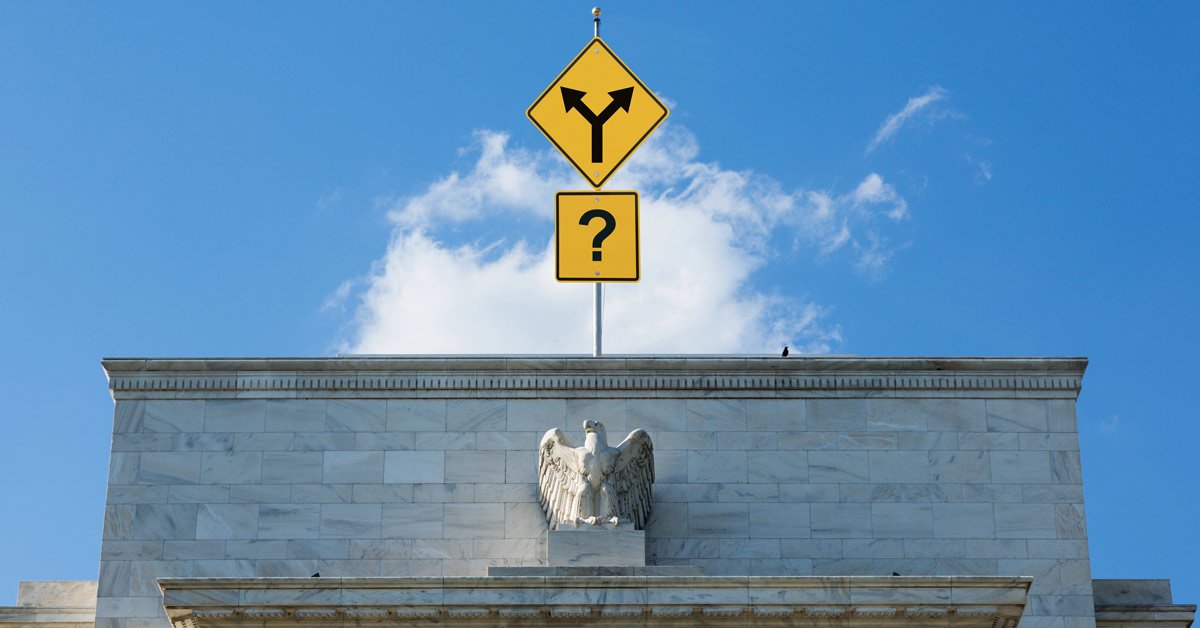
Inflation and monetary policy are “at a crossroads,” according to Christopher Waller, the longtime Federal Reserve governor who was a viable contender for the Fed chair position now held by Kevin Warsh.
Speaking at a New York Association for Business Economics event Monday, Waller posed a key question: Will core inflation, which excludes volatile food and energy prices, continue its steady upward trajectory, or has it reached a “turning point” where it will begin to retreat toward the central bank’s 2% target?
“The direction it takes has very different implications for the path of monetary policy,” Waller stated, according to prepared remarks.
Tuesday’s highly anticipated update to the consumer price index will offer a potential roadmap to the future monetary path. In May, the overall CPI grew at an annual rate of 4.2%, compared to 3.8% in April. Though spiking energy prices from the Iran war accounted for more than 60% of the monthly increase, core CPI rose at a still-elevated 2.9% annual pace in May.
The Fed’s preferred inflation gauge is the personal consumption expenditures price index. Headline and core PCE grew at respective annual rates of 4.1% and 3.4% in May, with Waller flagging the latter increase as part of a trend that began “well before the oil price shock.”
A three-cylinder inflation engine
Waller cited three main factors driving upward pressure on inflation: tariffs, energy prices and “spillovers from demand for the AI buildout.”
According to the Fed’s semiannual report to Congress, submitted Friday, the pattern of price changes observed in 2025 clearly suggested Trump administration tariff policies had an inflationary impact.
“As an example, relative to their pre-tariff trends, average monthly price increases were higher in goods categories that are more exposed to tariff increases due to their relatively high import content, such as household appliances and a variety of consumer electronics,” the report stated.
On the energy front, the Fed noted that PCE energy prices spiked 24% over the 12 months ending in May.
“Much of the gain reflects a jump in oil and gasoline prices following the start of the military conflict in the Middle East,” the report stated, “which severely constrained shipping through the Strait of Hormuz — a key passageway for oil — and damaged some of the region’s energy infrastructure.”
The monetary policy report also highlighted the impacts of the AI boom on overall core goods inflation, suggesting that the gains “likely reflect the surge in demand for semiconductors and other components important to the buildout of data centers that provide the infrastructure needed for artificial intelligence applications and services.”
Lessons from 2021
In June 2022, U.S. inflation peaked around 9% in the aftermath of emergency pandemic-era measures taken by the Fed, including keeping the benchmark federal funds rate anchored at 0% to 0.25% for a two-year period beginning in March 2020.
Waller, who joined the Fed’s board in December 2020, said Monday he is “determined to avoid repeating” the mistakes of 2021, when the Federal Open Market Committee was slow to respond to rapidly escalating inflation.
“The FOMC has to be ready to tighten monetary policy to prevent a repeat of the 2021 to 2022 inflation episode,” Waller said Monday.
But he also drew several distinctions between then and now, including that “today’s labor market isn’t nearly as tight,” and “inflation expectations today seem well anchored.”
Still, Waller warned against central bank complacency.
“If we get another hot reading on core inflation this week, then the FOMC will need to consider tightening monetary policy in the near term,” he concluded.