EarnIn Adds Jobs Platform as Wage Access Draws Scrutiny
A platform that sells access to wages needs customers who have wages. That is the commercial logic behind EarnIn’s move into job search.
EarnIn began by giving workers access to wages before payday. Its new jobs platform, Earn Better, extends that scope to the point at which a paycheck disappears and the search for another begins.
Following its acquisition of EarnBetter, the company has placed job discovery, résumé assistance and interview preparation inside the EarnIn app. The service aggregates roughly 5 million openings and is free to job seekers. The employer needs no relationship with EarnIn. The return is indirect. Users who find work through the app become candidates for the paid products behind it.
The late June launch of the Earn Better platform has broadened the company’s offering, but the organizing principle remains the same: the paycheck.
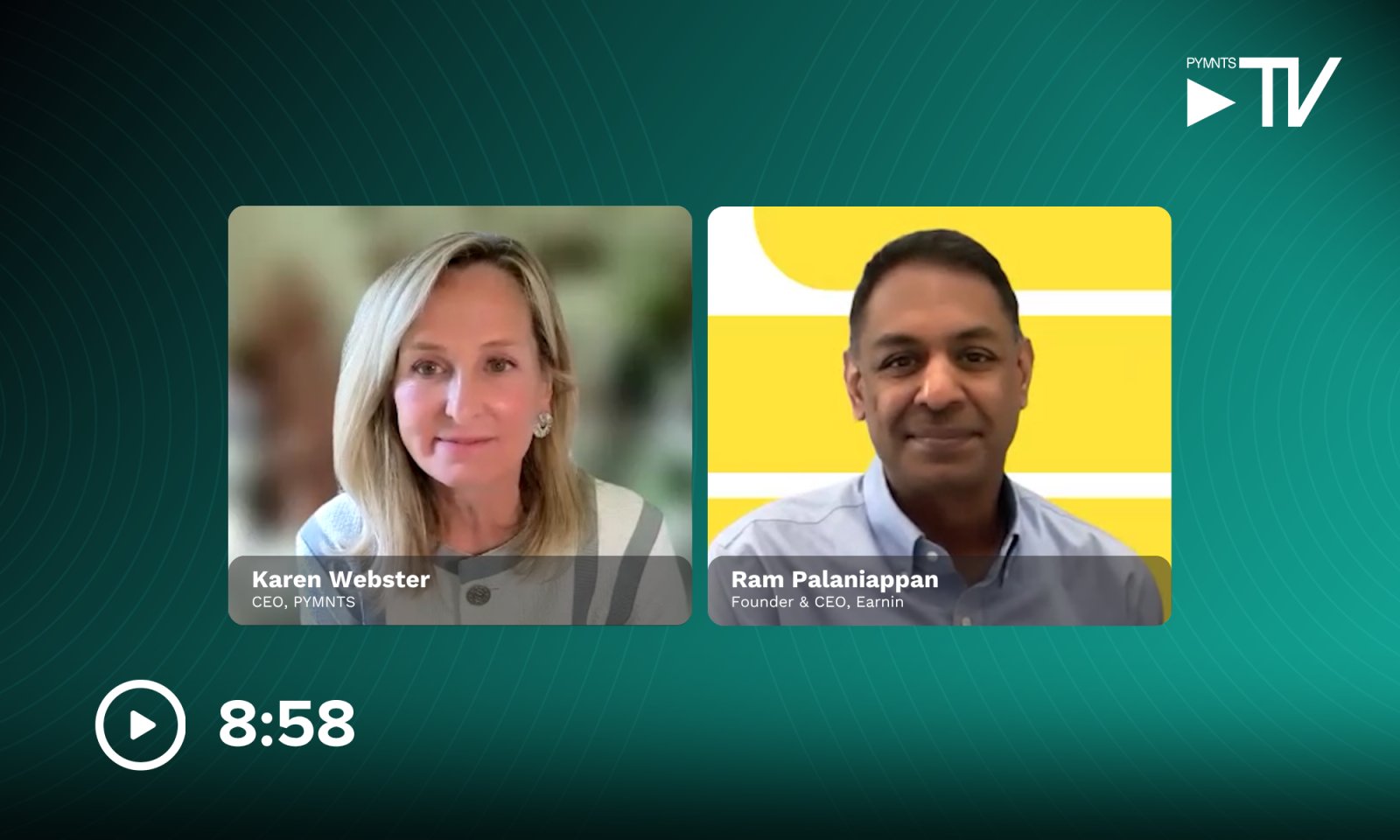
“We’re really focused on making the paycheck work well,” EarnIn founder and CEO Ram Palaniappan told PYMNTS CEO Karen Webster during the newest Monday Conversation. “The paycheck is a digital product, yet it ships every two weeks. There’s no other digital product that ships every two weeks.”
Earn Better applies that argument to the disruption when employment ends. EarnIn can detect when a user stops receiving wages and surface the job search at that point. The same data that prices a wage advance identifies a lapsed customer.
“Our goal is to help them get a job instead of applying to jobs and clicking on jobs,” Palaniappan said, contrasting EarnIn’s economics with job boards that profit from application traffic. EarnIn makes money when a customer has a paycheck, he said, giving it an interest in shortening the gap between jobs. Retention is the business case for a service the company gives away.
A provider that sees when income arrives can also see when it stops, and market to the user at the moment the relationship would lapse. Whether job seekers will choose a wage-access app over established boards is untested.
Earned wage access remains the anchor. Palaniappan cited University of Oregon research showing that income among EarnIn users rose about 11.5%. The research does not establish that wage access caused the increase, and the company has not said what share of users draw on the feature.
Webster pressed him on what the result actually meant.
“Is it because these are hourly workers who aren’t missing their shifts?” she asked, and in that case, “it’s not that they’re getting raises, they’re just showing up.”
Palaniappan said attendance was one factor, but not the only one. Immediate access can make an overtime shift more appealing because the worker does not wait for the pay, he said. It can also supply small amounts of working capital. Workers who opt into wage access may differ from those who do not in ways the income figure does not capture.
The expansion comes as earned wage access faces regulatory scrutiny. Webster pointed to tipping as a pricing model under scrutiny in Washington. Consumer groups argue that optional tips can carry annualized costs resembling the short-term credit the products are meant to replace.
Palaniappan argued instead that the debate resembles earlier moments in banking history, recalling the arrival of ATMs, when Citibank promoted itself as “the bank that never sleeps” and critics questioned why consumers would need cash in the middle of the night.
“I think it’s the same fear of change,” he contended. “What’s better for the people eventually comes to be” standard. The comparison assumes the outcome the regulators are still weighing.
From Wage Access to an Income Platform
Those examples are the case Palaniappan makes for Earn Better. EarnIn’s users include hourly and salaried workers, concentrated among hourly employees in retail, customer service, healthcare and government. Teachers, some paid monthly, also figure prominently.
Palaniappan said job tenure among many of these workers is often under a year, so a stable unemployment rate can coexist with heavy job-search volume. The addressable market is therefore larger than a service aimed at layoffs. It includes workers changing jobs, seeking hours or seeking pay. Those users are already in the app, so EarnIn reaches them at no acquisition cost.
The expansion places Earn Better beside automated savings, credit monitoring, bill reminders and Balance Shield, which notifies users when balances fall below a set level and moves earned wages into the account. EarnIn has not said how many users engage with those tools.
Webster asked whether Earn Better would become “a more prominent part of what EarnIn is about.” Palaniappan placed the jobs service within a portfolio built around the mismatch between income and obligations.
Most workers are paid every other week, he noted, while bills arrive monthly. A monthly bill will fall before payday six times a year. Faster access alone does not solve that, an admission that narrows the claims made for wage access. Workers also need tools that reserve money for rent, warn of bills and show how far earnings will stretch.
The issue grows if payroll moves beyond the two-week cycle, a shift no major payroll processor has committed to.
“I think it’s going to be continuous pay,” Palaniappan said. “Take anything that’s digital that was in batch, the logical endpoint is continuous.”
The argument concedes a limit. Faster pay is not a self-contained product. Its value depends on whether workers can use it to stay employed, take better work and manage bills that do not follow the payroll calendar.
Earn Better tests that proposition and a distribution strategy. While a customer has a job, the platform sells tools to manage the paycheck. When the paycheck stops, the free jobs product keeps the customer in the app until there is another.
Watch the interview
Watch the full PYMNTS Monday Conversation with EarnIn Founder and CEO Ram Palaniappan to hear more about:
- Why the argument over tips is also an argument over consumer choice.
- How the early backlash against ATMs informs today’s earned wage access debate.
- Why job search can be a lonely financial event.