8th Pay Commission: Should the highest government salary be capped? Here’s what employee bodies want
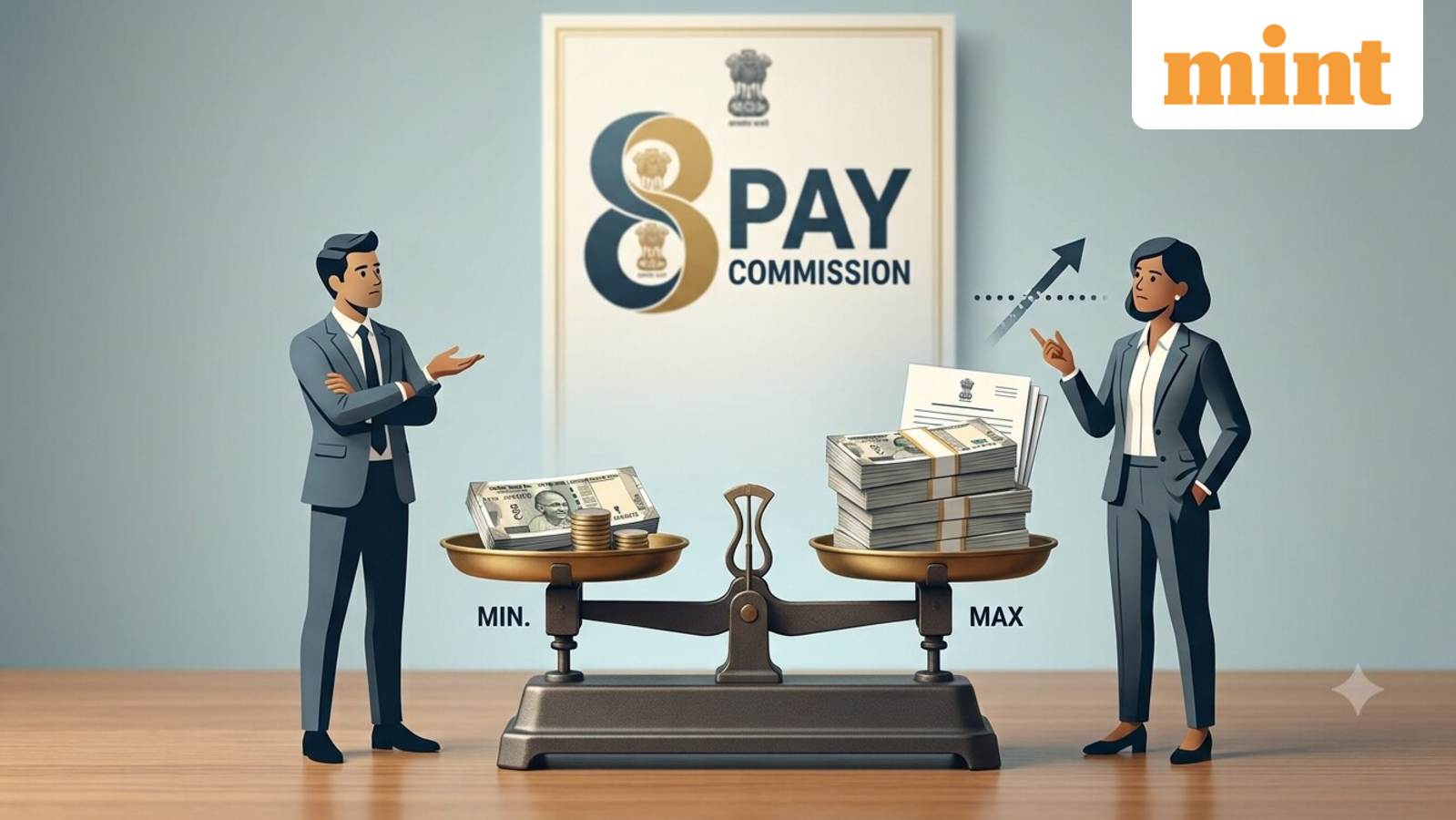
While discussions around the 8th Pay Commission have largely focused on the minimum salary, fitment factor and allowances, another proposal has emerged in the submissions made by employee organisations. Should there be a limit on how much the highest-paid Central government employee can earn relative to the lowest-paid one?
Different employee bodies have presented contrasting views in their memorandums to the 8th Central Pay Commission (CPC). While one group wants the gap between the minimum and maximum pay to be capped, another argues that senior and technical positions should not be constrained by any such limit. These are proposals submitted to the Commission and have not been accepted by the government.
Why some employee bodies want a cap on the highest salary
The National Council (JCM) Staff Side, which represents several Central government employee unions, has recommended that the ratio between the minimum and maximum pay should not exceed 1:12.
According to its memorandum submitted to the 8th Pay Commission, limiting the ratio would help reduce excessive income disparity within government service, improve employee morale and reinforce the government’s role as a model employer committed to fairness and social justice.
The memorandum also states that the gap between successive pay levels should remain reasonable so that the Pay Matrix maintains structural balance instead of having sharp jumps between grades.
A similar recommendation has been made by the Railway Senior Citizens Welfare Society (RSCWS). In its submission, the organisation said the highest levels in the Pay Matrix should maintain a rational relationship with lower levels while recognising the greater responsibilities attached to senior positions. At the same time, it said the ratio between the minimum and maximum pay should remain balanced so that the overall salary structure remains equitable and socially acceptable.
Both organisations have recommended maintaining a balanced relationship between the lowest and highest pay levels in the salary structure.
Why another employee body wants no limit on the highest salary
The Indian Railways Technical Supervisors’ Association (IRTSA), however, has taken a different position. In its memorandum to the 8th Pay Commission, the association said the Apex Scale should not be limited by the ratio between the minimum and maximum pay.
IRTSA has also proposed that the wages of technocrats, particularly those working in the Railways, should be fixed separately from those of non-technocrat employees. According to the memorandum, this would adequately compensate them for hazardous working conditions, additional working hours, specialised job requirements and the peculiar conditions of service under which railway employees work.
The proposals on the maximum salary are among several representations submitted by employee organisations to the 8th Pay Commission. Other memorandums have sought changes to the fitment factor, minimum basic pay, House Rent Allowance, transport allowance, pension benefits and the methodology used to determine salaries.
The Commission is consulting ministries, departments and employee associations before preparing its recommendations. It will examine the various submissions before finalising its report. None of the proposals made by employee bodies has been accepted by the government so far.
The 8th Pay Commission was notified in November 2025 and is expected to submit its report within 18 months of its constitution. The Union government will take a final decision on the Commission’s recommendations after the report is submitted.