Blockchain Pioneer Targets Prediction With Verifiable Trust
Opinions expressed by Entrepreneur contributors are their own.
Every great company is built on a bet about trust. Visa bet that strangers would trust a piece of plastic. Airbnb bet that travelers would trust a stranger’s spare room. The next great opening may be the most fundamental one yet, because artificial intelligence has made it cheap to fake almost anything, and the ability to prove what is real, and who is real, is quickly becoming one of the most valuable things a company can offer.
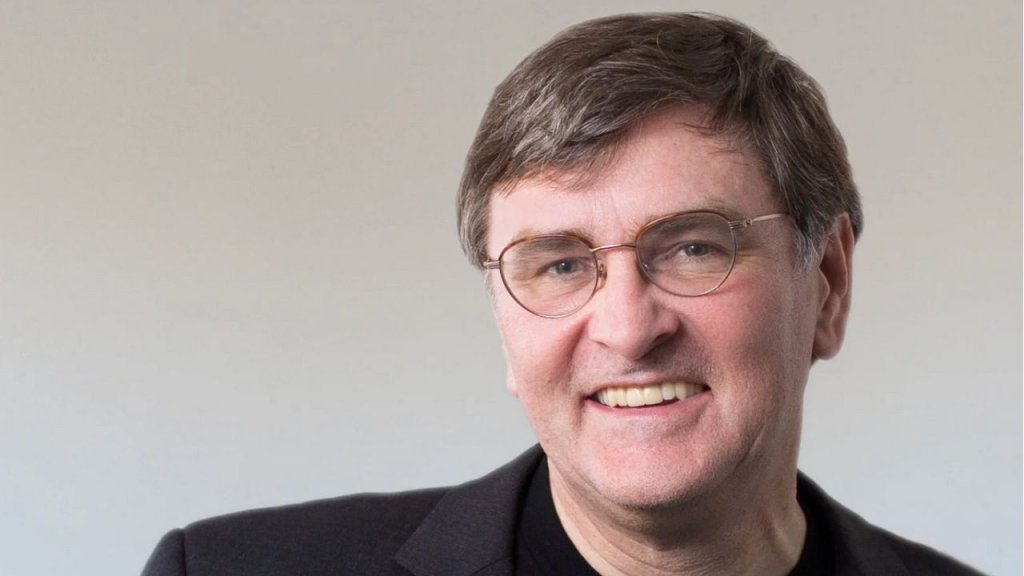
Few people understand that better than W. Scott Stornetta. A founding father of blockchain, he has just joined SafeBets.world, a zero-wager prediction platform, as chair of its Advisory Council, and he is taking aim at an entire category. His goal is to help SafeBets to reinvent the prediction industry on a foundation of verifiable trust.
Stornetta is not only a scientist. He is a builder. In 1991, he and his longtime collaborator Stuart Haber published the research “How to Time-Stamp a Digital Document” that introduced the cryptographic linking of records now recognized as a cornerstone of blockchain technology, work that appears among the first citations in the 2008 Bitcoin whitepaper. Then he commercialized it. His company, Surety, ran the first commercial digital time-stamping service and published a cryptographic fingerprint in the New York Times every week, a chain that has run unbroken for 30 years. More recently, he co-founded SureMark Digital, which helps people prove their identity and authorship in an age of deepfakes. Across three decades and three ventures, one thread runs through everything he has built: Turn trust into something you can prove.
The opportunity hiding inside a trust problem
That thread leads naturally to prediction. Forecasting is booming, with millions of people staking opinions on elections, markets and world events. But the industry carries a credibility problem that any entrepreneur should recognize as an opportunity. Identities are often thin or anonymous, track records are rarely verifiable, and the largest platforms are built on wagering, which draws regulatory scrutiny and the perception that prediction is simply betting in disguise. Where incumbents leave a trust gap, there is room to build.
SafeBets is the answer Stornetta and founder Alex Konanykhin are building. Users forecast outcomes across crypto, commodity, stock and currency markets without placing a wager, and the platform rewards the most accurate predictors, aggregating their calls into what it calls Collective Intelligence. Under Stornetta’s guidance, SafeBets plans to credential its leading predictors and record forecasts verifiably, so that every prediction carries cryptographic proof of who made it and when, and cannot be quietly revised after the outcome is known.
The bet is simple. In a crowded field, credibility is the moat.
“For 30 years, our work was about making records impossible to forge,” Stornetta said. “Prediction is a natural next step. If you can prove who made a forecast and that it was never altered, you can finally trust the track record behind it.”
“The prediction industry has a credibility problem, and credibility is exactly what Scott has spent his life engineering,” said Konanykhin, SafeBets’ founder and chief executive. “That is our advantage.”
What builders should take from it
For entrepreneurs watching, the lesson runs deeper than one startup. The most durable advantages are often built where trust is breaking down, and AI is breaking it down almost everywhere, from customer service to journalism to the simple question of whether the person on a video call is who they claim to be. Recruiting credibility, as Konanykhin did by bringing on one of blockchain’s founding fathers, is itself a strategy. So is differentiating from incumbents on the one dimension they cannot easily copy, here a no-wager, fully verifiable model. Trust is becoming a product category of its own, and the founders who treat it that way will have a head start.
Whether SafeBets ultimately reinvents prediction will depend on execution and on a regulatory landscape that is still forming. But the direction is hard to miss. The first era of blockchain taught machines to agree on what is true. The next will be a business opportunity, and it will belong to the founders who make trust something their customers can prove. Stornetta is betting it starts with prediction.
Every great company is built on a bet about trust. Visa bet that strangers would trust a piece of plastic. Airbnb bet that travelers would trust a stranger’s spare room. The next great opening may be the most fundamental one yet, because artificial intelligence has made it cheap to fake almost anything, and the ability to prove what is real, and who is real, is quickly becoming one of the most valuable things a company can offer.
Few people understand that better than W. Scott Stornetta. A founding father of blockchain, he has just joined SafeBets.world, a zero-wager prediction platform, as chair of its Advisory Council, and he is taking aim at an entire category. His goal is to help SafeBets to reinvent the prediction industry on a foundation of verifiable trust.
Stornetta is not only a scientist. He is a builder. In 1991, he and his longtime collaborator Stuart Haber published the research “How to Time-Stamp a Digital Document” that introduced the cryptographic linking of records now recognized as a cornerstone of blockchain technology, work that appears among the first citations in the 2008 Bitcoin whitepaper. Then he commercialized it. His company, Surety, ran the first commercial digital time-stamping service and published a cryptographic fingerprint in the New York Times every week, a chain that has run unbroken for 30 years. More recently, he co-founded SureMark Digital, which helps people prove their identity and authorship in an age of deepfakes. Across three decades and three ventures, one thread runs through everything he has built: Turn trust into something you can prove.