Forget the Sweater, AI Wants to Pay the Invoice (With a Card)
The consumer version of agentic commerce imagines an agent that knows what a person wants to buy. The B2B version has a bigger prize and a harder job. It has to know which invoice can be paid, through which portal, on what terms, at what cost and whether the supplier on the other end will take a card without tacking on a fee. Then it has to execute without getting it wrong.
That’s a different problem from recommending a sweater, and a much larger one. The spend that moves through accounts payable dwarfs consumer checkout, which is why the biggest TAM in agentic commerce isn’t hiding in a shopping app. It’s sitting inside supplier portals, AP workflows, ERP handoffs and card acceptance rules that vary by buyer, supplier, geography and context.
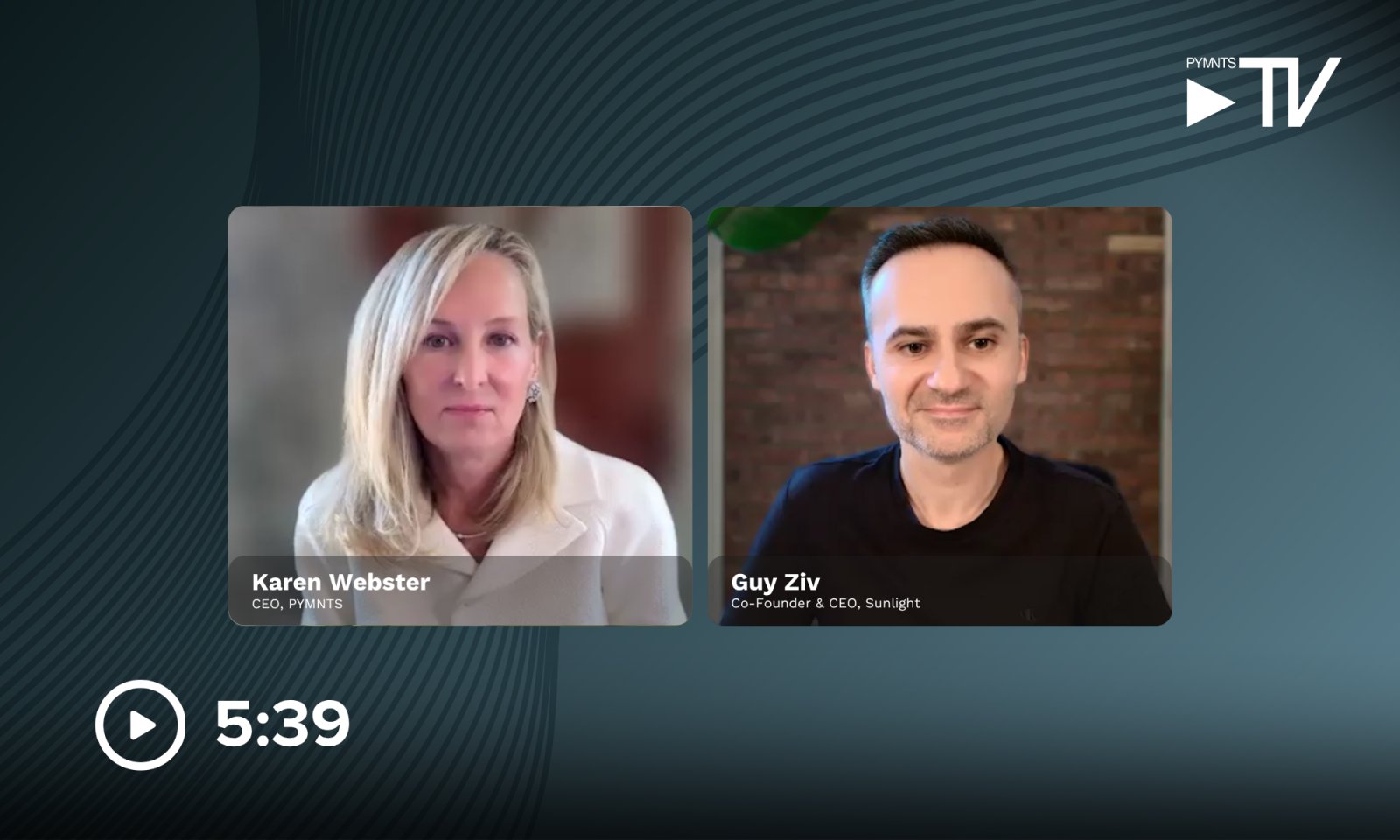
In a recent conversation with PYMNTS CEO Karen Webster, Guy Ziv, co-founder and CEO at Sunlight, made a claim that reframes the entire B2B card conversation: the suppliers who accept cards without a surcharge are already out there in far greater numbers than buyers assume. The market just never had a way to see them.
The Real Problem Was Fragmentation, Not Acceptance
For years, low B2B card adoption has been blamed on suppliers that won’t accept cards. Ziv thinks the industry’s been diagnosing the wrong disease.
“We believe that card acceptance ratio is pretty high, actually,” he said. “The problem is the execution.”
That changes where the value is. If the constraint is supplier willingness, the fix is sales and incentives. If it’s a fragmented ecosystem hiding acceptance behind thousands of non-standard portals, the fix is software that can see, decide and act. Under Ziv’s read, most suppliers already accept cards, and many accept without a surcharge. Buyers just can’t find them one portal at a time.
That fragmentation is the point. Acceptance isn’t a clean yes-or-no attribute stamped on a supplier. The same supplier can treat two buyers differently.
“There might be that supplier X won’t get cards, or gets cards with fees, from a company out of Florida, but not from a company out of California,” Ziv said. “And we have that intelligence by design.”
Ziv said artificial intelligence agents will autonomously identify there’s a portal associated with that specific invoice or bill payment, and will go and navigate that portal real time, identify there’s card acceptance, if there’s a fee associated with that payment and confirm back to our customer.
“Identifying if there’s a portal and there’s card acceptance is not enough,” he added. “Some of the suppliers out there add a surcharge or fee to a card payment. So being able to intelligently, with AI, identify whether there is a fee or not basically unlocks this whole process to be fully autonomous and automated.”
Two Reasons to Reach for the Card, and They Are Not the Same
Finding surcharge-free acceptance matters because the card is being asked to do two very different jobs in B2B, and the economics of each are worth separating.
The first is the classic one: pay on day 60. Use the card to stretch terms and hold onto cash. The buyer wants the float and the rebate, but someone has to absorb the interchange, and the supplier is usually the one asked to eat it. That’s a hard sell. A supplier has little reason to swallow a fee so the buyer can pay later (or late), which is why the industry has spent years trying to persuade suppliers to accept cards at all. This is where surcharge-free discovery earns its keep. If an agent can find the suppliers who already accept without a fee, the day-60 card stops being a negotiation and becomes a routing decision.
The second is more interesting. Pay on day 5 (or 15, but you get the point). Here the card isn’t a stalling tactic. It’s a working-capital instrument. The buyer pays early, the supplier gets cash faster, and the cost of the card becomes a cheap form of financing against the alternatives. For suppliers who lack easy access to credit, early payment funded through a card can be the most affordable capital they’ve got, and everyone in the chain has a reason to say yes. The fee stops being a tax the supplier resents and becomes the price of liquidity the supplier wants.
They’re opposite value propositions wearing the same plastic, so to speak. One asks the supplier to give something up. The other hands the supplier something it needs. Agentic execution matters because it can tell them apart at scale, route each invoice to the path that actually pencils, and surface the surcharge-free suppliers who make the day-60 case viable in the first place.
Trust Architecture, Not Better Models
None of this works without control. Autonomy in regulated financial workflows is only valuable when accuracy and compliance are strong enough to trust.
“Consumer agentic commerce has a behavior challenge,” Ziv said. “You need to trust the agent first that its taste pretty much fits your taste and it’ll make the right decision, and then the payment will follow.”
In B2B, he noted, the order flips. The payment doesn’t simply follow the decision. It’s part of the decision infrastructure, carrying working-capital, supplier-relationship, compliance and revenue implications for AP platforms and banks.
“What AI actually enables is accuracy, speed, scale, and then you don’t build integrations. You build an intelligent agent that thinks kind of like a human, that understands what it sees and makes some smart decisions,” Ziv said.
Ziv talks about keeping AI “on the leash.” Not allowing it to pay the wrong bill and putting the right controls in place was one of Sunlight’s key milestones.
The Invoice Becomes the Shopping Cart
Step back and the card is one piece of a larger shift. As supplier onboarding, procurement, invoicing and payment move online, the traditional AP process collapses into something that looks a lot like a B2B shopping cart. The order, the approval, the invoice and the payment stop being a chain of disconnected handoffs and become one workflow.
That collapse matters because B2B is full of artificial seams. Procurement sits apart from invoicing. AP sits apart from AR. Payment execution sits downstream from decisions made earlier. Every handoff creates delay, missing information and reconciliation work. The invoice, in this frame, is nothing more than a request for payment waiting to be checked out.
“The invoice is a form of a request for payment in B2B workflow. Building that bridge, that connectivity layer between the two sides, it’s an exciting space to be in,” Ziv said.
Once the invoice behaves like a cart, the agent becomes the layer that connects the fragments at scale, surfacing payment opportunities buried in the long tail. Large suppliers and large-ticket payments got the attention because they justified manual enablement. Mid-market vendors and fragmented portals sat outside the economics of the old model.
“If you think about the mid-market and long tails, the beauty there is that up until today, the manual processes of supply enablement were just too costly,” Ziv said, noting that agentic execution changes the cost curve of monetizing that segment.
So, the future of agentic commerce may not start with an assistant buying a pair of shoes. It may start with an invoice, a supplier portal that already takes cards without a fee, a virtual card and an agent trusted enough to pay the bill on the terms that make the most sense.
Watch the full PYMNTS TV interview with Sunlight Co-Founder Guy Ziv to hear more about:
- Why more suppliers accept cards without a surcharge than buyers think. Ziv argues acceptance is high and fragmentation’s the real barrier, and that agents can map surcharge-free acceptance across thousands of non-standard portals.
- Why paying on day 60 and paying on day 5 are two different businesses. The card as a terms-stretching tool asks the supplier to absorb the fee. As a working-capital instrument, it gives cash-hungry suppliers a cheap form of financing they actually want.
- Why AP is the largest TAM in agentic commerce. The spend that runs through accounts payable dwarfs consumer checkout, and intelligent agents finally make the long tail of that spend economical to reach.
- Why trust and control are the real tests. Deploying AI in B2B payments demands accuracy, compliance and safeguards, because an agent can’t pay the wrong vendor, bill or amount.