
During International Fraud Awareness Week, Scott Moritz, managing director at Top 100 Firm Eisner Advisory Group and a former FBI special agent, lays out the pervasiveness of fraud, points out some important red flags — and offers strategies to protect your and your clients’ organizations.
Transcription (transcript prepared by AI; in case of discrepancies, refer to the recording):
Dan Hood (00:03):
Welcome to On the Air with Accounting Today. I’m editor-in-chief Dan Hood. You may not be aware of this, but we’re in the midst of International Fraud Awareness Week. And more importantly, we’re in an economy that’s more or less awash in fraud with companies losing anywhere from five to 10% of their revenue to it by some estimates. Now that makes protecting your business and your client’s business is all the more important. And here to help with that is Scott Moritz, managing director with Top 25 Firm Eisner. Scott, thanks for joining us.
Scott Moritz (00:27):
Oh, thanks for having me, Daniel.
Dan Hood (00:29):
Now you’ve got a bit of a background in fraud from the right side of the fence, I should say. Maybe give us a little bit of your background about what you were doing before joining Eisner to help people understand why we brought you on.
Scott Moritz (00:42):
Oh yeah, thank you. Yeah, so I started my career, I was an FBI special agent assigned to a white collar crime squad. Started in a smallish FBI field office. So the way it works in smaller offices, you work all kinds of violations. You may be rooted on a white collar squad, but I also responded to bank robberies and violent crime incidents, organized crime, money laundered. A little later in my career, I became more of a specialist in money laundering investigations of transnational crime and asset forfeiture. All to all, I was with the FBI for just under 10 years.
Dan Hood (01:17):
Gotcha. All right. So as you say, you come with, I’ll say a background in fraud, but again, from the right side, from the stopping fraud side of things. So what’s your sense of how common fraud is? I mentioned five to 10%, you hear different numbers from different people, but they’re always pretty eye-opening. Is it as common as it sometimes seems?
Scott Moritz (01:35):
It really is pervasive. And that statistic that you cited, that’s one that is promulgated by the Association of Certified Fraud Examiners, the sponsoring organization of International Fraud Awareness Week. And every two years they publish a report called the Report to the Nations, and it’s a compilation of fraud statistics compiled by interviewing a large cross section of fraud examiners. And it always validates that 5% of revenue is lost to fraud, waste and abuse. And that’s a little bit of an abstract concept, but if you apply it to the global economic output in a given year, that’s $5.5 trillion a year. So you’re talking about real money. And I think also just really helpful, we’ll get into this a little later, a benchmark for organizations of how susceptible are we, apply that 5% to your output and your income, and you have a pretty good idea of what you could be losing to fraud if you don’t have the right controls in place.
Dan Hood (02:54):
It’s terrifying. And that report to the nations, we see that every two years and it’s never reassuring. It’s never, “Hey, fraud’s under control. We got it.” It’s always, “Yeah, it’s everywhere.” And you say, “$5 trillion, that’s real money.” You mentioned you worked a lot of cases, a lot of different types of cases. I know you pay attention to the field. What are some of those common types of frauds that organizations might run up against?
Scott Moritz (03:20):
Well, of the 5%, the largest category of fraud year in and year out is asset misappropriation. And that’s a bit of a catchall category, but it includes theft of non-cash assets, billing schemes like vendor fraud, procurement fraud, and expense fraud. So those are very common. And the one I want to delve a little bit into is the procurement fraud piece, because often it’s when somebody onboards one or more vendors that aren’t real or they’re co-conspirators and the invoices behind the vendor are not real. And then where it really becomes important for the scheme to work is that somebody that insider or somebody that insider is working with has the ability to circumvent the procure-to-pay controls that are in place. The hope is that there are in place, that enables them to submit these illegitimate invoices for payment. And sadly, it’s very easy to do and it’s kind of a hiding in plain sight kind of situation.
(04:41):
There’s such a big volume and the people whose job it is to manage the vendor relationships, it becomes kind of mindless. So they’re not necessarily picking them up and saying, “Well, I wonder if this one’s real. That’s just not how human beings are wired.”
Dan Hood (04:58):
Right. Well, it’s often, I mean, I am fascinated with fraud in probably an unhealthy way, but I mean there’s things like that. My favorite is that you take a name of a vendor that’s very common in the business, a real vendor, and you put an account one letter off or slightly misspelled. And so even if the people, even if you are paying attention, even if you’re not on the sort of rote, I just approve invoices, I just approve invoices. If you say, “Hey, is that right?” It’s going to look right because it’s close to the name of another vendor.
Scott Moritz (05:28):
It’s a really good point. And another kind of variant that you see, and some of it is a byproduct of an organization that has a whole bunch of subsidiaries, and they have variations of their own company name and they’ve got maybe even hundreds of subsidiaries, which then opens the door to somebody slipping in a similarly named subsidiary that actually isn’t a subsidiary. And it just looks like another one of this tsunami of intercompany transactions when in fact it’s a variant of procurement fraud using the fact that this decentralized process that exists within the company against the company.
Dan Hood (06:17):
Right. Yeah, it’s interesting, a lot of the common frauds you mentioned are obviously accounting related. It’s not just a, hey, people take this certain habits, but not just people picking up a crate of stuff and walking off the loading dock with it. It’s procurement fraud. It’s a lot of things moving through the accounting systems. You mentioned having a proper system in place with some governance and some protections and so on. But what are some of the most important things firms can do or organizations can do to protect themselves?
Scott Moritz (06:48):
So I mean, one is, and it doesn’t sound like it’s exciting stuff, but performing a fraud risk assessment in a meaningful way and trying to then suss out two categories of fraud, the types of fraud that are kind of universal. Every organization has some degree of susceptibility to things like vendor fraud or payroll fraud or expense fraud, things of that nature that aren’t really industry specific. And then there may be other things that are unique to the industry or even the company because of just the nature of what they do and how they interact with customers and other vendors. So getting a really good handle on the inflows and outflows that are unique to your organization, what are the mitigating controls that we have in place and how susceptible are we? And one of the things really useful in a fraud risk assessment to make it not just like a check the box rote exercise, but getting into actual, almost like a tabletop exercise is using scenarios.
(08:09):
Because I’ve interviewed hundreds of executives and if you ask the question, how susceptible is your organization to fraud? They’re hardwired to say not very, even if that is not rooted in reality because there’s only so much that they can tolerate in terms of their responsibilities and they don’t want to open the door to another one. But then those same people, if you ask a specific scenario, like we were just talking about, well, what if somebody created a fake consulting firm and submitted vendor invoices for this category of consulting engagement, would you be vulnerable? Would your organization be vulnerable to that? And then it completely flips and you’re like, oh yeah, absolutely. And it would be devastating. So it’s not as though your executive team is unwilling to accept the fact that there’s fraud risk. You just need to get it down to that scenario level where it then becomes more of a meaningful fraud risk assessment.
(09:16):
So that’s one. That’s one certainly thing that I think is very helpful. And then it creates a lot of things that flow from a fraud risk assessment is, okay, now let’s go look at the mitigating controls now that we have a good handle on that which is nuanced to our organization. So those are really good discussions and they start to raise awareness and it becomes more of a speak up culture. There’s so many benefits to doing a fraud risk assessment the right way. Another, I think, really useful thing that people don’t look at in this way, a lot of organizations have some kind of confidential reporting channel, a hotline or maybe other means of allowing people to report information. And those are great and important, but they also can be great sources of data, especially in a large matrixed organization across multiple geographies. A lot of those hotline providers will give you a whole bunch of statistics on your own cases and then allow you to benchmark them against the other people on that platform.
(10:30):
It’s really useful information and investigations, it’s like whack-a-mole, right? The people that are doing the investigations are just putting out fires. At a macro level from a governance standpoint, it’s really important to look at, okay, what are the trends? What’s happening in our organization? Are we experiencing different types of fraud or other types of misconduct in business units or geographies? And then how do we counter that? So those are really useful signals in your data that it’s just a good idea to periodically take a look at it. And then I want to kind of shout out to internal audit because I think internal audit, coming from law enforcement, internal affairs was the most maligned part of the organization. So that sort of internal audit in the commercial sector is similar, oh no, internal audit is here, but it’s such an important function. And they really are the people who have line of sight to the dysfunction inside of the organization.
(11:47):
And with that dysfunction comes susceptibility to fraud. So look at your internal audit findings, look at the corrective actions that they have recommended, look to see if there are recurring corrective actions year over year that haven’t been implemented. And then it becomes a question of, is it complacency that is leading them not to be corrected or we have a problem that is maybe a red flag in a part of our business that needs closer attention.
Dan Hood (12:24):
Right. That makes a ton of sense. It never occurred to me that those sort of whistleblower functions that there might be broader data sets to come from that. That’s amazing. All of that makes a ton of sense. It’s interesting because one of the things you see a lot is that a huge percentage of fraud is caught by whistleblowers, right? It’s much more often caught that way than by an investigation or that kind of thing. The investigation follows on the whistleblowing, so that’s fascinating. Tha set of data will be hugely useful. One thing we talked about here, you talked about internal audit and the importance of internal audit makes a ton of sense, but it’s also that’s a more of a larger organization kind of function. There is a huge amount of fraud that happens in smaller organizations routinely read about Margaret who ran the accounts payable department for 30 years and had some kind of grievance and had whatever the iron triangle of fraud, the grievance and the opportunity and she was the only one who ran accounting and so she never took a vacation.
(13:21):
How different is fraud at smaller companies versus larger organizations? And they often don’t have the resources, so are there any things they can do to help themselves?
Scott Moritz (13:31):
So it’s a really important distinction. A lot of what gets talked about in fraud prevention is targeted toward mid-tier on up to the Fortune 50. But smaller organizations, a fundamental control, a segregation of duties, which in and of itself in a lot of organizations is not possible because we’ve got limited headcount and people wear a lot of hats. So it’s a really good point, but it doesn’t mean that you can’t be doing something. It just requires a little bit of stepping back. Let’s step back and look at for things like proportionality anomalies. Our cost of goods sold keep going up and yet our revenues are staying flat. Why is that? What could it be? Could it be outside environmental or economic indicators or is something going out the back door that we are not detecting? Are there a lot of vendors invoicing in round dollar amounts and why would that be?
(14:50):
Oh, and then we pull the invoices and we see they’re sequentially numbered. Well, that’s not a good indicator because you’re the only customer and that’s not a common scenario, but also it is a common scenario in terms of unsophisticated vendor frauds. And then I think a really important thing that business owners do themselves a disservice is they detach themselves from the mechanics of their spending. So it should be required reading to look at your bank statements, even if you’re not a numbers person. It should be required reading to look at your credit card statements regardless of how important a person you are, because that connects you with your business in a way that things may jump out at you that won’t jump out at the people who are afraid to ask you what’s happening. Do you understand that? Yeah, exactly. So those are really, I think, important fundamentals.
(16:01):
And one last thing I think is a really good and useful exercise that I always recommend, particularly if there’s a concern about vendor fraud, but maybe no specifics, is pull a list of your vendor master file. And if you can get your IT people or your accounting people to append the aggregate spend associated with each of those vendors and then sort it by biggest to smallest and then sit with somebody who has a pretty good handle on the operations of the business and then just, okay, what does this vendor do? What does this vendor do? Okay, does this make sense? Does the amount that we’re paying them align with what you would’ve expected to see? And you do that to a level of depth. There are almost always questions. Now, maybe there’s a reasonable explanation, but you get to some point on that list and then somebody, “You know what?
(17:03):
I don’t know who that is, and that seems like a lot of money for me not to know who that is. So let’s go figure out who this vendor or these vendors are.” And it is the largest category of fraud, so there’s a pretty good chance it’s a target rich environment.
Dan Hood (17:21):
Yes, exactly. Exactly. Wow, this stuff is fascinating and I want to dive more into it, but we need to take a quick break. And we’re back talking with Scott Moritz of EisnerAmper about the depth and variety of the rich tapestry of fraud that’s really out there in the universe. We’ve talked through this, you’ve brought up a number of red flags of fraud for different size organizations. We mentioned Margaret, who never takes a vacation. You talked about if cost of goods is going up and revenue is and what’s going on there, all the different things you can look at to see red flags of fraud. Suppose you have a sense of you see an invoice and you’re like, that’s not right, that’s misspelled, and we already have another set of invoices from that company. What’s this about? You have a sense that there’s a fraud going on.
(18:10):
What’s your first step? As an organization, what do you do?
Scott Moritz (18:13):
So I think the hope is that you thought about this when the waters were calm, the what ifs, because that’s always a good practice because if you are methodical… So we’re talking about fraud risk assessment, part of an outgrowth of a fraud risk assessment is like, okay, what are our investigative capabilities internally? What kind of forensic accounting capability can we bring to the table from our own headcount? And then just looking across the organization and saying, what are the things that we’re comfortable doing and that we feel we’re well qualified to do and are there gaps? So some of it is planning for that rainy day when it happens, because when fraud does occur, particularly if it’s sort of in flight, it’s not historical, it’s ongoing, time is not your ally and looking for three competitive bids from outside service providers and then entering into a contract negotiation while you’re hemorrhaging money to just not talk about adding a level of stress.
(19:29):
So figuring out at some level, hey, if we need to go to the outside, who should we tap on the shoulder and can we sign them up without any kind of retainer payment? And every vendor’s going to agree to that. So some of it is being a little introspective and realistic in terms of capabilities. And then also even just who inside our organization should preside over these things. And if we have in-house counsel, should they preside over it to have the benefit of the attorney-client privilege? So those are some things that just are a good thought process because it then also enables you to point to a process that you’re following, and that makes investigations defensible. Because the sad reality is even if you investigate someone who desperately needed to be investigated and they did bad things and then were fired as a result of it, there’s nothing in the world that would prevent them from then alleging that it was a wrongful termination.
(20:35):
So you have to have your ducks in a row to show, no, it wasn’t wrongful and here’s why. And we followed our process that is defined and we were very consistent in our institutional justice. We followed our own guidance and this particular case aligned with the guardrails that we established that this is a terminating event. But I think also before you even get there is it’s helpful to know some common red flags that exist in an organization that in and of themselves aren’t proof positive that there’s something going wrong, but it’s a signal.
(21:27):
And it’s particularly important, and there’s been some studies on this. If red flags are co-occurring with other red flags, then you’re really starting to get to maybe something requires closer examination. So some red flags, and none of these are unfamiliar, but conspicuous spending that appears to be well beyond someone’s unknown sources of income or the inverse of that. Somebody seems to be buckling under financial pressure and it might cloud their judgment. Maybe they’re not otherwise dishonest people, but they’re looking kind of desperate. Unusually close relationships between one or more employees and a customer or a vendor when maybe professionally there should be some amount of arm’s length because that person has oversight of that customer or vendor relationship.
(22:37):
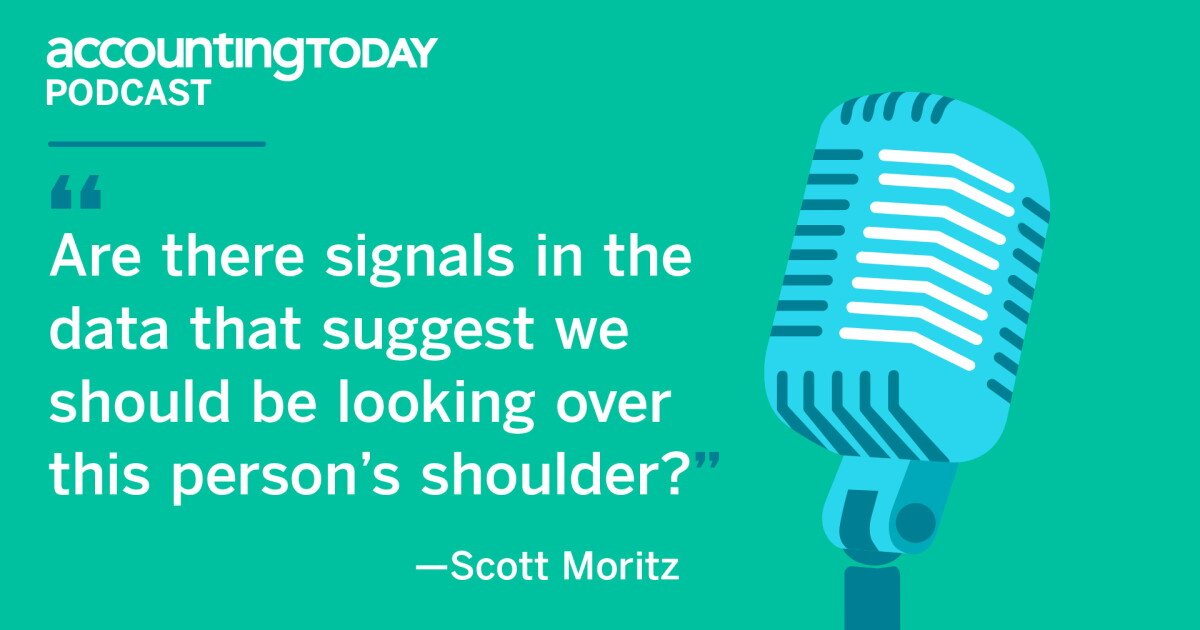
We all have worked with people who heap misery on others, but the question is, are they just miserable people or is this practical? Is this part of a strategy? So like secrecy, unwillingness to share duties or comply with information requests when it’s their job to do so, people that are aggressive and get out of my office and don’t you dare go around my workspace kind of thing. And again, they could just be miserable human beings, but that’s where the co-occurring thing, it’s like there’s signals in the data that suggest that we should be looking over this person’s shoulder, but then when we tried doing that, they threw us out of their office. And that goes to bullying and intimidation. And some of this stuff, by the way, these are also cultural indicators. If the leadership of the organization is allowing this type of behavior, then that’s not a great thing either.
(23:39):
And it’s also a good way to suss it out if you take maybe a stronger line on toxicity in the workplace.
Dan Hood (23:47):
Even if it’s not fraud, you want to prevent that.
Scott Moritz (23:49):
Right. Yeah, nobody wants that. Wheeler dealers, but one of the things that you see a lot of that, and it can be a red flag, is just open discontent or anger toward the company. I did this food tampering investigation a few years back in a big manufacturing facility, and somebody had introduced a contaminant into the food that was being manufactured in this plant three different times on three different days. So they did something really clever, which is also kind of a good takeaway. They looked at the access control system and they were able to winnow down from 800 employees that worked in this plant to seven people that were there on all three of those days.
(24:45):
So it was not scientific. I interviewed all seven people and all of the witnesses were just very kind of cooperative, matter of fact, and gave reasonable explanations and accounted for their activities on those days. And then also denied introducing the contaminant, except one guy who couldn’t contain his anger for the company for having been passed over for promotion, even though he was a miserable human being, and that was probably why he didn’t get the promotion, but I digress. But it was just, he was so situationally unaware. He was being interviewed with his shop steward. They were all represented by a labor union in an investigative setting, and yet he couldn’t keep it together because he was so mad. So it wasn’t hard to figure out.
Dan Hood (25:45):
It makes your job easier.
Scott Moritz (25:48):
I certainly appreciate it. It was so funny because the shop steward is supposed to be kind of his advocate, and at some point he started yelling at the guy. I was just sitting back and taking notes at that point. But these red flags are all, again, they’re not proof positive, they’re not determinative, but you should pay attention to them.
Dan Hood (26:16):
I would love, we could talk a lot more about this, but I want to take a second to ask you, I mean, that’s got to be a pretty good case, but do you have a favorite fraud case other than the food contaminants case?
Scott Moritz (26:29):
Yes, although it made me think twice before buying that category of food for a while. So I do have a favorite fraud case. And it’s got an accounting component to it. So for a very large client of mine, one of the largest companies in the world, they have this category of fixed asset that is their largest fixed asset category. They have literally seven million of these items that are critical for them to perform one of their primary functions. And so as a result, they have all of these tracking databases around this category of fixed asset, and they were seeing anomalies in the data that almost like ghosts in the system. The record showed they had more fixed assets on hand than they physically could observe. And it’s a category of asset that requires ongoing maintenance and repair. So they were asking questions of the department responsible for keeping these things in service.
(27:39):
And there came a point where they started to conclude that it was that part of the organization that was the problem, and they were getting inconsistent answers from this one person, and it started to look a lot like disinformation. So then I was brought in to help, and it was a remarkable… We were talking about road flags before.
(28:06):
So we did a background check of this individual, young guy, mid – 20s, had just bought a Tesla and a brand new Dodge Ram, had not one, but two homes in two different states and dressed well, and he was the life of the party, took 20 people to a NFL game on his dime. All of these things just seemed to be inconsistent with his known sources of income. So they have a salvage process for scrapping and taking obsolete pieces of equipment out of service when they’re at the end of their useful life. On his watch, the number of obsolete pieces of items from the fixed asset schedule were off the graph.
(29:10):
He was characterizing these as scrap when in fact he figured out where there was a weakness in the control environment. And then he was literally driving thousands of these items through the weakness in the control environment, and over the course of four years, stole $7 million worth of this item, and these are big things that have to be moved by trains. So go big or go home. But there were a lot of red flags. But thankfully, he chose to use his work email to negotiate the sale of the stolen equipment with his buyers, who Certainly had a pretty good idea that they were buying stolen equipment. And the price, the mode of payment, all of this was negotiated. The logistics of getting the equipment to them, they either picked it up or he arranged for their delivery. So I’m always grateful for those that make my job much easier.
Dan Hood (30:27):
It’s almost like they want to get caught, but obviously they don’t, but almost like it.
Scott Moritz (30:31):
And he’s awaiting trial. So not all cases result in successful criminal referrals. And this one, it took a while for it to come to that. But yes, it’s not just recovering money from the insurance company, which they did, but also holding this guy accountable, which is always nice icing on the cake.
Dan Hood (30:54):
Yes. Excellent. Scott Moritz, this is, as I say, fascinating stuff. It’s important. As we mentioned, it’s International Fraud Awareness Week. Talk to your clients, talk to your own organization, make sure you’re all keeping an eye on things. Scott Moritz of Eisner, thank you so much.
Scott Moritz (31:10):
Hey, thanks for having me.
Dan Hood (31:12):
And thank you all for listening. This episode of On the Air was produced by Accounting Today with audio production by Adnan Khan. Rate or review us on your favorite podcast platform and see the rest of our content on accountingtoday.com. Thanks again to our guests and thank you for listening.