
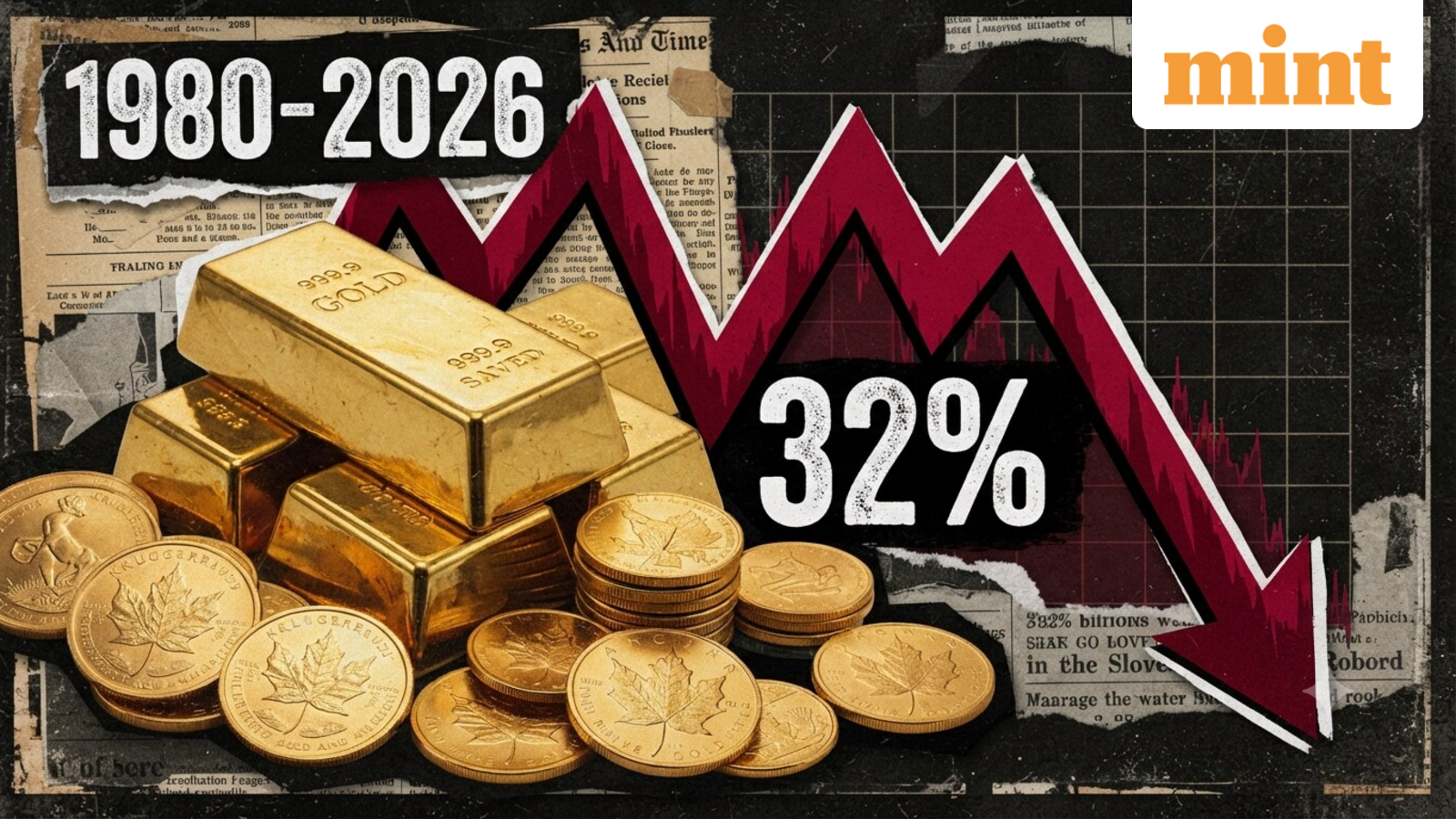
Gold prices have corrected sharply in 2026, leaving investors wondering how long the precious metal could take to recover its previous highs. Historical data suggests that investors may need patience, as gold has taken several years to regain its peak after major corrections.
Gold prices in India stood at around ₹1.22 lakh per 10 grams on 21 November 2026, down over 32% from their January 2026 peak of around ₹1.80 lakh, according to the MCX data.
The November 2026 Wealth Conversations report by FundsIndia, which examined previous gold market cycles, found that large corrections of more than 30% and subsequent recoveries have historically taken around 7-8 years.
Its analysis of three past cycles shows that the recovery period varied significantly depending on the severity of the fall and market conditions. Here’s what you need to know.
The 1980 correction was the steepest among the three periods analysed. Gold fell 57% from its peak of ₹6,555 (per 31.1035 grams) to ₹2,837 in June 1982. It took another seven years and five months to regain its previous high, taking the entire fall-and-recovery cycle to nearly a decade.
The fall-and-recovery cycle refers to the total time gold takes to decline from its previous peak and regain that peak.
The 1996 correction was relatively smaller, at 31%. Gold took three years and five months to reach its bottom and another two years and 10 months to recover its previous peak. The overall cycle lasted six years and four months.
Similarly, after peaking in November 2012, gold declined 29% before recovering its previous high in June 2019. The complete cycle took six years and seven months.
On average, gold took 2 years and 8 months to fall from its previous peak to its lowest level, another 4 years and 7 months to regain its previous peak, and approximately 7 years and 6 months to complete the entire decline-and-recovery cycle.
What does this mean for gold investors in 2026?
Gold’s nearly 32% correction in 2026 is comparable to the declines seen in the 1996 and 2012 cycles, both of which took around 6-7 years to complete the decline-and-recovery cycle. However, recovery timelines can vary depending on prevailing market conditions and economic factors.
For investors, the key takeaway is to avoid assuming that gold will quickly return to its January 2026 peak. Those investing with a long-term horizon should consider their overall asset allocation, diversification needs, and risk appetite rather than making decisions based solely on the recent correction.
Disclaimer: This is for informational purposes only. Please consult a SEBI-registered adviser before making any investment decisions.