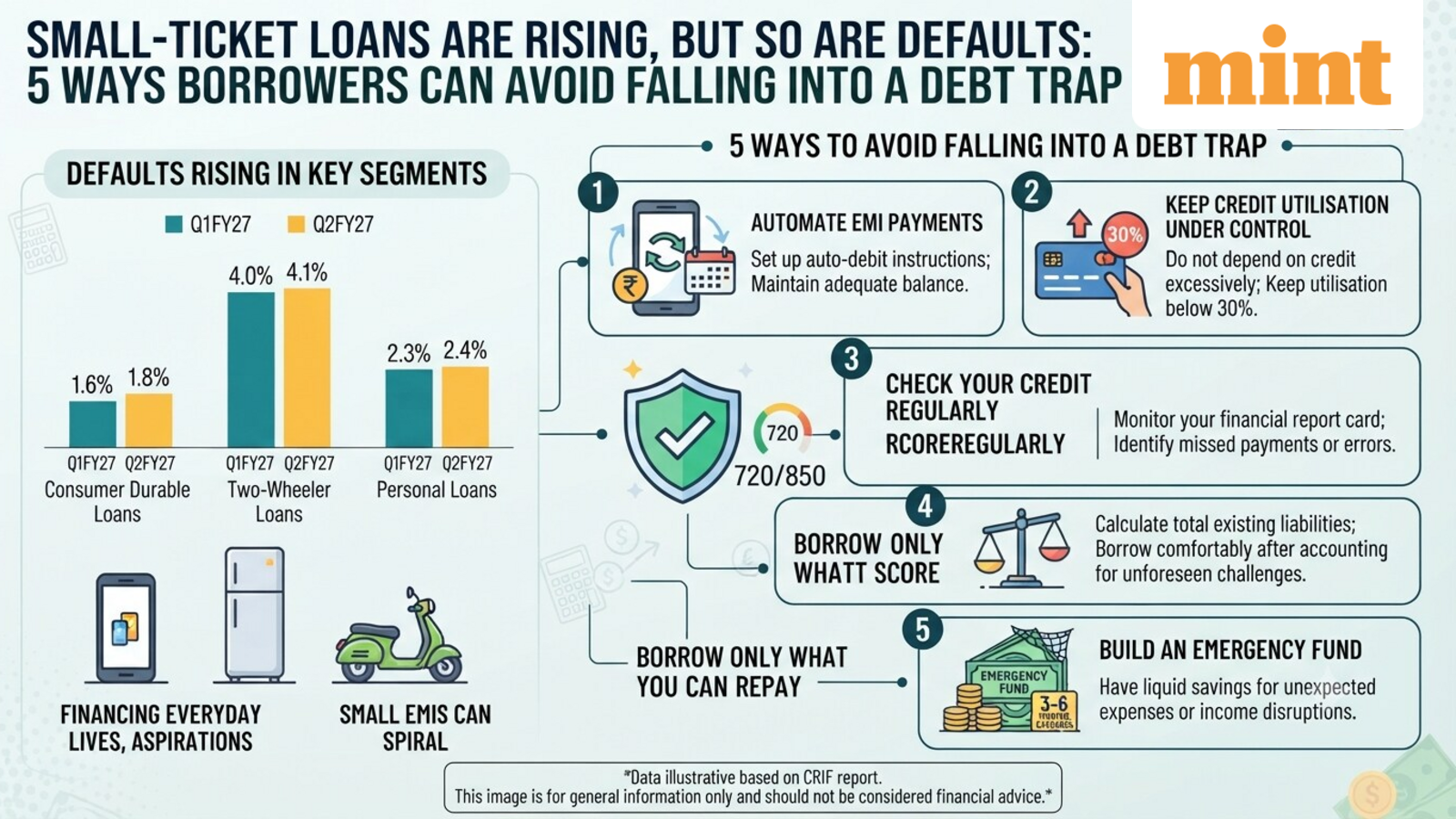
Small loans that can be disbursed seamlessly through technology are helping more Indians finance their everyday lives, aspirations and day-to-day spending.
However, rising defaults in this loan category underscore the need for borrowers to pay close attention and manage their overall debt.
As explained in CRIF’s quarterly How India Lends Credit Report, released on 17 November, India’s retail lending book grew 18.8% year-on-year to ₹185.2 lakh crore in Q2FY27. Consumer durable loans, personal loans and two-wheeler loans accounted for 30.7%, 12.5% and 5.2%, respectively, of new-to-credit accounts. Together, they represented 48.4% of the new-to-credit portfolio.
However, defaults in these segments increased even as overall credit delinquencies declined from 2.9% in Q1FY27 to 2.6% in Q2FY27.
Note: Data as given in the CRIF report. For complete details, refer to the official report.
Borrowers must ensure they clear their pending loans within the stipulated time.
5 ways to avoid falling into debt trap
1. Automate EMI payments
Set up auto-debit instructions to meet your monthly EMI obligations. This will help you reduce the risks associated with missed payment deadlines. Maintain an adequate bank balance and keep your email address and phone number up to date so you receive information.
2. Keep credit utilisation under control
Do not depend on credit excessively. Avoid applying for a new personal loan, credit card loan or any other form of credit simply because a previous loan has been cleared. Keep your credit card utilisation below 30% of your available limit, so that future lenders do not perceive you as ‘credit-hungry’.
3. Check your credit score regularly
Your credit score and your credit report are your financial report card. They provide you with a financial snapshot of how you are managing your borrowing. These metrics should be tracked carefully, as they can help you identify missed payments, errors, omissions in your report, along with incorrect loans that have not been marked as ‘closed’ despite repayment.
4. Borrow only what you can repay
Before you submit any new loan or debt application, make sure that you calculate your total existing liabilities and EMIs. Borrow only as much as you can repay comfortably after accounting for unforeseen financial challenges. Do not borrow money just because a lending institution is willing to offer you an attractive EMI.
5. Build an emergency fund
If possible, keep about three to six months of your monthly expenses in a liquid savings fund as an emergency fund. This will come in handy when you face unexpected expenses or temporary income disruptions without missing debt repayments. Proper financial planning is key here.
Small ticket loans can definitely help an individual make purchases easier and more affordable; however, multiple EMIs can quickly strain your household finances. Borrowers should ensure they assess their repayment capacity, understand the loan they are applying for and its associated terms and follow simple rules to prevent a debt trap.
Disclaimer: This article is for general information purposes only and should not be considered financial advice. Borrowers should assess their repayment capacity, existing liabilities and financial commitments before taking a loan. They should also carefully review the loan terms, interest rates and applicable charges before making any borrowing decision.