San Francisco Hotels ‘Pushed To Their Limit,’ Yet Reinvestment Lags
Bisnow/Max Stein
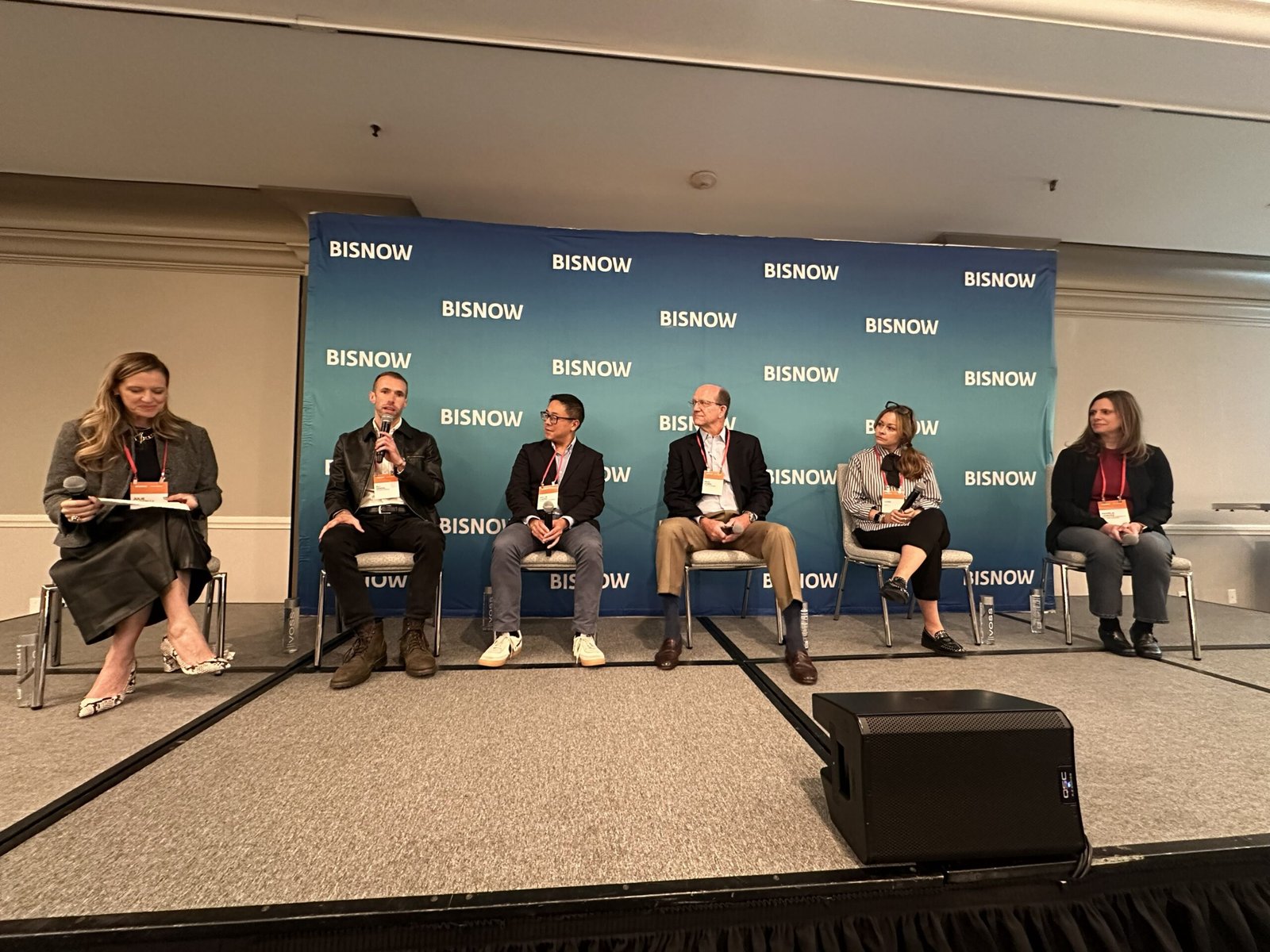
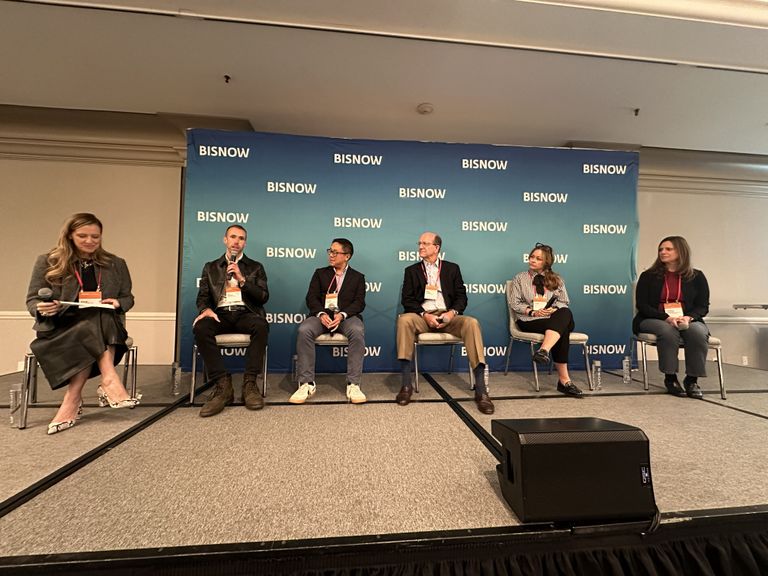
Build Group’s Julie Baccelli, CitizenM Hotels’ Eli Sokol, Marriott International’s Willis Cheng, Pankow Builders’ Mike Jones, LMNL Studios’ Jamie Shaw and Springboard Hospitality by Hotel Equities’ Pamela Janusz
San Francisco’s tourism recovery is expected to bring more than 24 million visitors to the city in 2026, but hospitality executives say a shortage of modern luxury accommodations could limit the market’s ability to capitalize on growing demand.
San Francisco’s roughly 35,000-room inventory has fallen behind competing gateway markets due to high renovation costs, lengthy entitlement processes and uncertainty around investment returns, according to hotel owners and investors at Bisnow’s Bay Area Hospitality Summit.
While major events, convention activity and rising hotel performance metrics are driving renewed optimism, industry leaders argued that significant capital reinvestment will be needed for the city to compete with other top-tier destinations for high-end travelers.
“San Francisco’s inventory of hotels have been pushed to their limit,” said Jan Smidek, partner at San Francisco-based real estate development and investment firm JMA Ventures. “They can’t be pushed any further without triggering major code renovations and stepping up to that next level of capital investment.”
The city is home to some luxury and boutique properties, but San Francisco lacks iconic five-star landmark hotels like in other premier tourism destinations, such as the Waldorf Astoria New York and Beverly Wilshire in Beverly Hills, panelists said during the Nov. 5 event at Hyatt Centric Fisherman’s Wharf.
Much of the city’s more than 35,000 hotel rooms have been left behind when it comes to reinvestment capital, with high construction costs, permitting challenges and uncertainty on returns due to frequent market downturns making it difficult to underwrite major hotel renovation projects in San Francisco.
Assembling capital for major hotel renovations can be a challenging financial puzzle to solve in any market, but the cost environment in San Francisco provides little incentive for hotel owners to figure out how to best reinvest in their assets, said Eddie Yu, partner and head of acquisitions at Ohana Real Estate Investors, which controls more than 26,600 rooms throughout the U.S. and Mexico.
As a result, the majority of hotels in the Bay Area have fallen behind despite the vast amount of wealth that’s poured into the city in recent years due to the artificial intelligence boom, Yu said.
“San Francisco, from an asset quality standpoint, needs to catch up to the rest of the United States,” he said. “There’s a lot of money here, and a lot of people willing to pay, but the people that own assets here manage money for public or private investors, and if you can’t pinpoint when you’ll get that return on capital, it’s quite hard to get those projects through.”
Bisnow/Max Stein
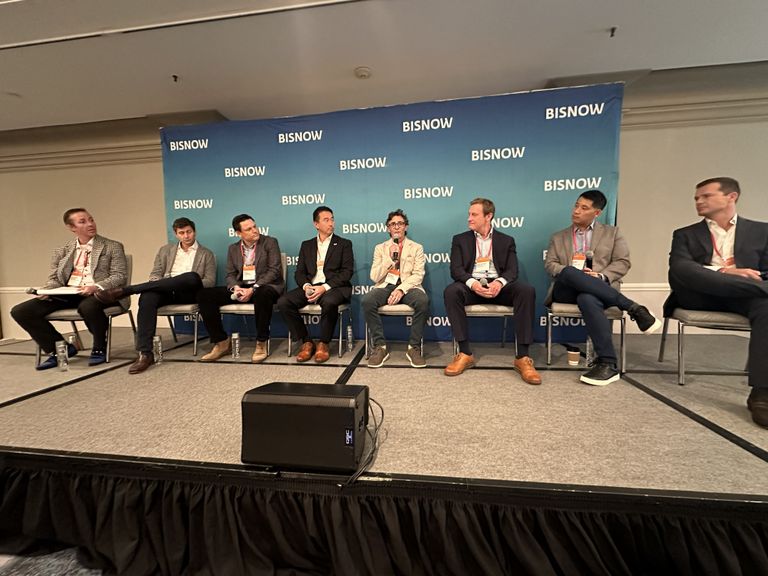
Rider Levett Bucknall’s Matthew Boone, Axis Architecture & Design’s Rory Carroll, KHP Capital Partners’ Jeff Stulmaker, Hilton’s Patrick Speer, Burton Landscape Architecture Studio’s Patrick Baldwin, Wyndham Hotels & Resorts’ Bob Walsh, Ohana Real Estate Investors’ Eddie Yu and JMA Ventures’ Jan Smidek
There’s no doubt the market for additional luxury hotel properties in San Francisco exists, said Jeff Stulmaker, partner and chief investment officer for KHP Capital Partners. KHP owns The Jay at 433 Clay St., purchasing the 25-story property in 2021 for $221.5M. KHP reopened the hotel under the Marriott Autograph flag in 2023.
“There is an immense amount of wealth. If you give people a great product in the right building and the right location, they’re willing to pay for it,” Stulmaker said.
Visitors have flocked to San Francisco throughout 2026 for business and tourism, drawn by the city’s resurgence as well as large events like the Super Bowl and FIFA World Cup.
Rooms in San Francisco are expected to end 2026 with an average daily room rate of $266, up 8.5% year-over-year, and revenue per available room of $188, up 14% from the prior year.
New guidance from Mayor Daniel Lurie’s office indicates an expected 25 million visitors to the city in 2027, boosting ADR to $271 and RevPAR to $195.