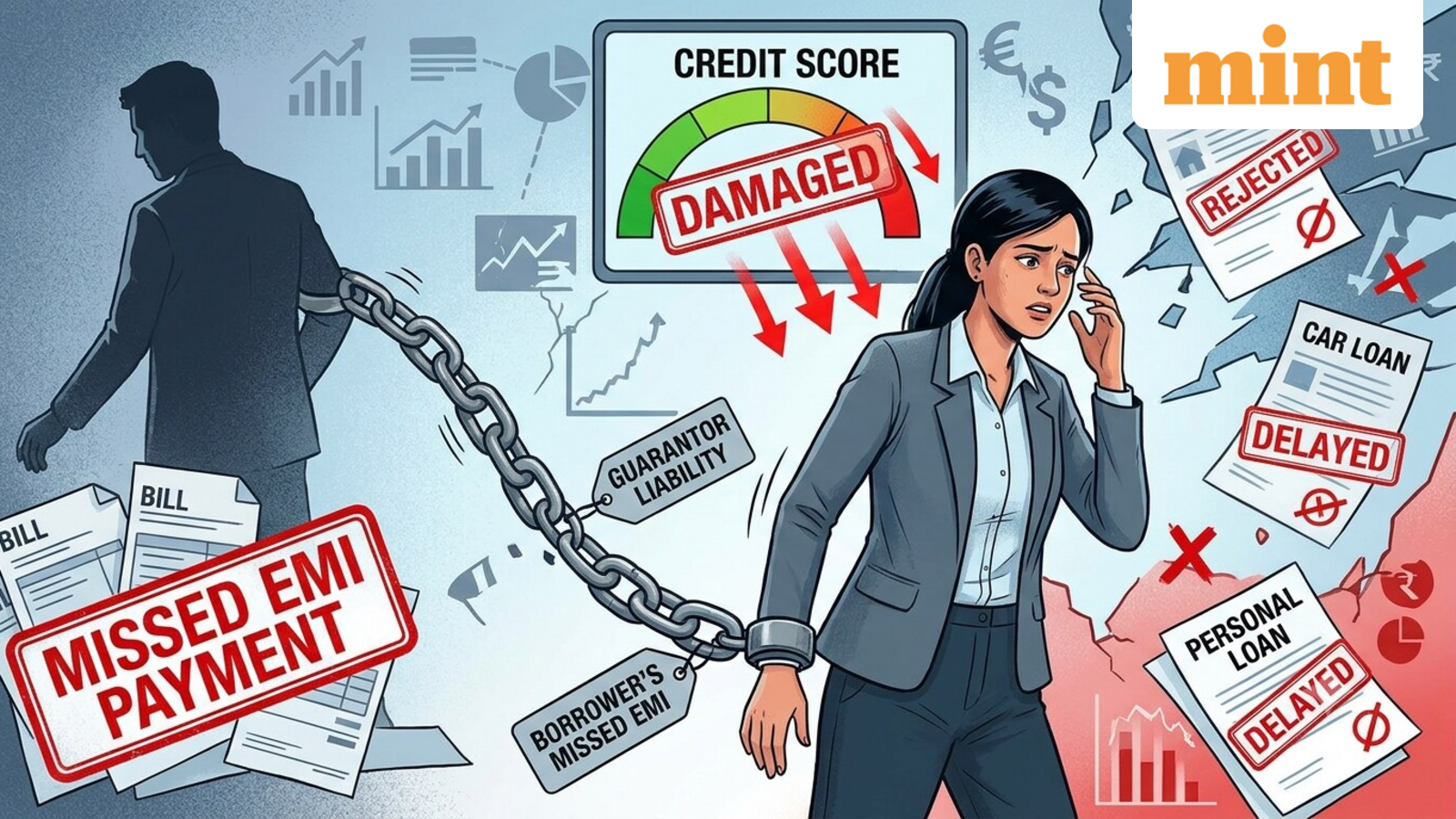
Can someone else’s missed EMI damage your borrowing prospects? What happens to credit score after becoming a guarantor?
When you agree to become a loan guarantor, it may seem like a straightforward and simple favour to a family member or a friend. Still, what you should not overlook is the fact that it can have serious financial consequences if the borrower fails to meet their repayment obligations and clear out the loan on time.
The fundamental point to keep in mind here is that a guarantor is not merely a reference for the lending institution. Therefore, by signing a guarantee agreement, a guarantor assumes financial responsibility for repaying outstanding dues if the primary borrower defaults.
That is why any missed payments or delays in clearing pending dues can affect an individual guarantor’s credit score and overall credit profile, and adversely affect their future borrowing prospects.
How does becoming a guarantor affect your credit score?
According to prominent credit bureaus such as TransUnion CIBIL, CRIF High Mark, among others, generally, a loan for which an individual provides a guarantee, i.e., becomes a guarantor, can appear in their credit information report. That is why, if a payment due date is missed or the primary borrower defaults on the upcoming loan payment, it can directly impact the guarantor’s credit profile. Even if the guarantor never received or used the loan amount.
It is also essential to remember that in such circumstances, the impact can extend well beyond an individual’s credit score. This happens when a listed guarantor applies for a fresh home loan, car loan or personal loan; lending institutions may also consider their existing debt obligations and guarantee assurances while analysing their repayment potential.
A poor repayment history can hence make the loan approval more time-consuming and difficult. In extreme cases, the complete application may be rejected, or the terms and conditions of the offered loan may be very strict, with limited repayment flexibility.
Moreover, under Section 128 of the Indian Contract Act, 1872, as explained in the provision, a guarantor’s liability is generally co-extensive with that of the principal borrower, unless the agreement provides otherwise. This simply means that the lending institution can approach the guarantor for repayment without first exhausting recovery options against the primary borrower, subject to the terms and conditions of the loan agreement.
What should you check before becoming a guarantor?
Before signing the loan application and becoming a loan guarantor, an individual should analyse and honestly assess the borrower’s repayment potential, income stability, and creditworthiness. No agreement should be entered into if the other person, i.e., the primary borrower, is a close friend or a family member.
Not only that, but it is the responsibility of the individual seeking to become a guarantor for a third party to carefully review their own credit history and current credit profile, and to understand the possible ramifications if the loan repayment does not go as planned.
Any missed payments, errors, or omissions on a credit report can impact future credit availability and, in turn, alter personal financial planning. All these factors must be considered before signing a document to become a loan guarantor.
In summary, becoming a loan guarantor is a serious financial commitment, not just a formality. A borrower’s failure to repay can affect your own creditworthiness, future borrowing capacity and can also bring legal trouble in specific cases. Therefore, agree to guarantee a loan only if you are financially prepared to take responsibility for its repayment.
Disclaimer: This article is for general information only. Loan guarantee terms and legal obligations may vary. Read the agreement carefully before signing.