IRS, SEC, PCAOB officials talk more about SI for ‘super intelligence’
- Key Insight: The real reason federal regulators are renaming artificial intelligence to super intelligence.
- Expert Quote: “We are overseeing the accounting firms, and yet we’re way behind as it relates to technology.” — Demetrios “Jim” Logothetis, Chairman, PCAOB
Federal government officials in the Internal Revenue Service, the Securities and Exchange Commission and the Public Company Accounting Oversight Board are changing their discussions of artificial intelligence and AI to refer instead to “super intelligence,” and “SI,” in keeping with President Trump’s preferred label for the technology.
Processing Content
In September, Trump signed an
Federal officials appear to be heeding Trump’s order, using the term during recent conferences. At the AICPA’s National Tax Conference in Washington, D.C., this week, Lia Colbert, commissioner of the IRS’s Small Business/Self-Employed division
“I think that’s where you’re going to see SI really help us,” she said. “I think you’re going to see we’ll be thoughtful, we’ll be disciplined, but I think we’re going to be able to see things we might have been undetectable years before, because the SI expands those capabilities. I would say in many areas SI is very groundbreaking.”
She sees it as a “capacity enabler” for the IRS. “We’ll be able to see the more high-risk areas of noncompliance to make sure that the resources we have at the IRS are really in that complex lane where we need them to be,” said Colbert.
She predicted SI would help the IRS with its nonfiler strategy for catching people who fail to fule tax returns. “We’re going to be very interested in using SI to detect, select that higher-value work that really is going to let us use our resources the wisest,” said Colbert.
“We have always had a nonfiler strategy, bringing nonfilers into compliance,” she added. “I think SI is going to be very useful in that space. I think you’re going to see us talk more about bringing nonfilers into compliance. I think you’re also going to hear us talk more about benefits fraud and abuse, something we’ve been pretty vocal on this past fiscal year. But we can imagine doubleclicking on that even more, and using SI to really detect and identify those areas. SI for us really does help reduce that manual work.”
National Taxpayer Advocate Erin Collins also was asked about SI later during the same AICPA conference.
“We talk about SI nowadays,” she said. “Well, could the IRS now do a better job when they do a filter? Hypothetically, my return shows, you know, that I moved to Alaska and I now work at McDonald’s, and that somehow triggers a filter because my address changed, my employer changed, various things changed. But could we use some sort of data mining to show that no, Erin, in fact, moved. She bought a house in Alaska. Could we use other data to verify that this is the real Erin Collins, and these are things that I actually think SI could start helping the IRS. It could take all this other data, and maybe that will impact the filters, or after the filter pulls it to actually verify. I do think the IRS is trying to figure out how to do that first bucket faster.”
SEC warning on SI
Later that week, at Financial Executives International’s Corporate Financial Reporting Insights conference, SEC chief accountant Kurt Hohl
“We’ve held a number of outreach meetings with peers, other committee members, auditors, to make sure that we do understand the landscape and how SI is being used or not being used in financial reporting and ICFR,” he said; “We are also engaging with other regulators, including the PCAOB, on this topic to make sure that guidance where needed gets produced to help with the responsible adoption of SI. Obviously, just from these outreach activities, we can tell there is a lot of optimism about the benefits of SI, and we are very supportive of innovation that can contribute to reliable financial reporting and effective ICFR.”
Hohl also warned about potential problems with SI. “But I also can tell you that especially over the last number of months later this year, we felt that many organizations have been moving a little bit more cautiously when it comes to the deployment of SI in financial reporting, in particular, as compared to some more operational areas,” he said. “Obviously, everybody is using some of the productivity-enhancing tools powered by AI, and those are quite important.”
He cautioned about the potential risks presented by the technology and the need to manage these risks through effective controls. “We have clear requirements for accurate records, effective ICFR, internal accounting controls, responsibility, risk assessment for the preparation of reliable financial statements, and none of this really changed,” he said.
“When we speak with groups like this one and audit committee members, we do encourage a thoughtful approach to SI deployment,” Hohl added. “We generally try to highlight three key focus areas. The first one being effective governance, which starts with having a plan for SI adoption, rather than letting the technology take hold on an ad hoc basis or completely through citizen-led innovation across the company. That includes having a strategy for reliable data that can be used with SI, but also preparing your workforce for knowing how to work with this new technology. We also think that boards, including audit committees, should have an understanding of the company’s SI strategy, the associated risks, and relevant responses to those risks.”
Risk assessment is important as well. “The second thing that we always emphasize is effective risk assessment, which should start with understanding at the process level where SI is being used and how, and what additional risks it may be introducing into the process,” he added. “Obviously, this technology is unlike any technology we have dealt with before because of characteristics such as opacity and probabilistic behavior, adaptivity, and so on and so forth. It’s really important to regulate the nature of the technology and understand the risks that this technology may introduce.
“I would also add at this point that it is important to keep in mind the technology deployment by the company, but it’s also important to keep in mind that much of this technology may be coming into your financial reporting process from third parties, including your service organizations,” he noted. “Keeping an eye on the proliferation of SI through third parties and service organizations, we think, is important. The obvious reminder is you can outsource a process, but you really cannot outsource the accountability for what happens within this process, even when it’s run by a service organization. And lastly, stemming from the effective risk assessment, you do need to have effective responses to these risks in the form of effective internal controls that do recognize these unique characteristics of SI that I mentioned. Those are our current focus areas.”
PCAOB still speaks of AI
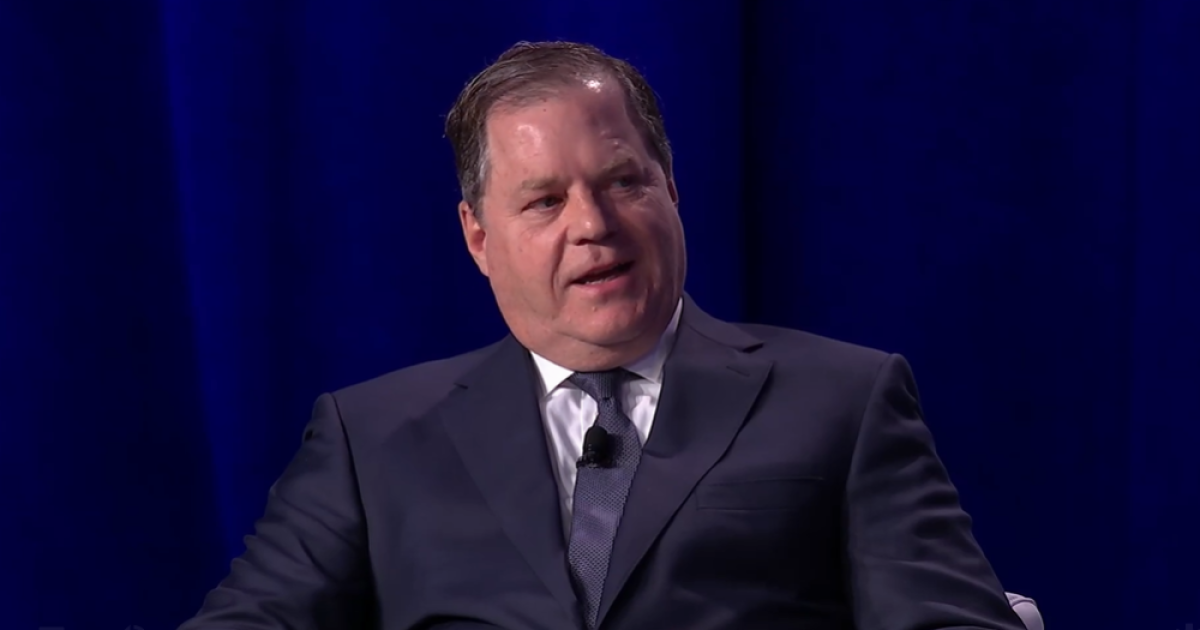
The Public Company Accounting Oversight Board, chairman Demetrios “Jim” Logothetis used both terms during a later discussion at the FEI CFRI conference.
“We are overseeing the accounting firms, and yet we’re way behind as it relates to technology,” he said.” I realize that AI or super intelligence has not had broad usage in the accounting firms yet, but they have big plans, they’re big investments, and we need to match those. What I’m looking for provide to us, and has already started anyway, is an overall plan. That plan needs to not only cover the technology, software and potentially hardware, but more importantly, also to help us identify the resources that we need to, as we modernize the inspection process to make it more technologically supported.”
He noted that PCAOB inspectors have mostly been using Excel spreadsheets and Word documents to do most of their inspection work. In the future, he plans to work with accounting firms to make the process more efficient and effective by downloading information from them and leveraging whatever technologies are out there.
However, like Hohl, he has concerns about relying too much on AI or SI.
“I would say the audit committee, particularly nowadays, needs to be very focused and diligent, asking questions about the use of AI, both from the registrant but also from the accounting firms,” said Logothetis. There’s a lot of discussion about AI. There’s a lot of expectations about AI. There’s a lot of commitments about AI. But at the end of the day, we need to be very focused and understand what all of that means. What does it mean for the scope of the audit? What does it mean in terms of fees and commitments? And I worry a little bit that we’re getting ahead of ourselves, getting excited about what AI can do. But we need to crawl a little bit before we run. I think that if there’s risks out in this issue, there’s risk because of technology, the size of these organizations, new emerging issues and technologies, and we all have to be on the same page. And us as regulators, we need to clearly understand where the accounting firms are, what is it that they’re doing, and how we can be helpful. By always, always make sure in that context that there’s a human in the loop. We’re improving technology, but let’s make sure that we’re not anticipating effectiveness or getting to conclusions just because it’s AI or because of technology, without us doing the proper vetting.”
Accounting Today asked about whether he sees a chance for the PCAOB to revive some of the projects it shelved last year before he became chairman, such as
“Let me say that when those projects were deliberated, I was more or less out of the profession,” he responded. “I was retired and trying to play golf, so I didn’t pay much attention. But now that I’m back at the PCAOB, I realize that both of them are very important to certain stakeholders, and both of them perhaps are also controversial. From the input that we have received, my sense is that we will be addressing both, but we will be addressing it, in my view anyway, from a kind of a clean slate, looking at the pros and cons and looking at the issues from a fresh pair of eyes, my own, but also the stakeholders. I don’t want to prejudge anything. I don’t want to jump ahead, but I think suffice it to say that they will be on our radar screen, and we will look at them and address them as appropriate.”
Introductory bullet points created by AI with editorial review.