Advisors Face Talent Gap Amid $124 Trillion Wealth Shift
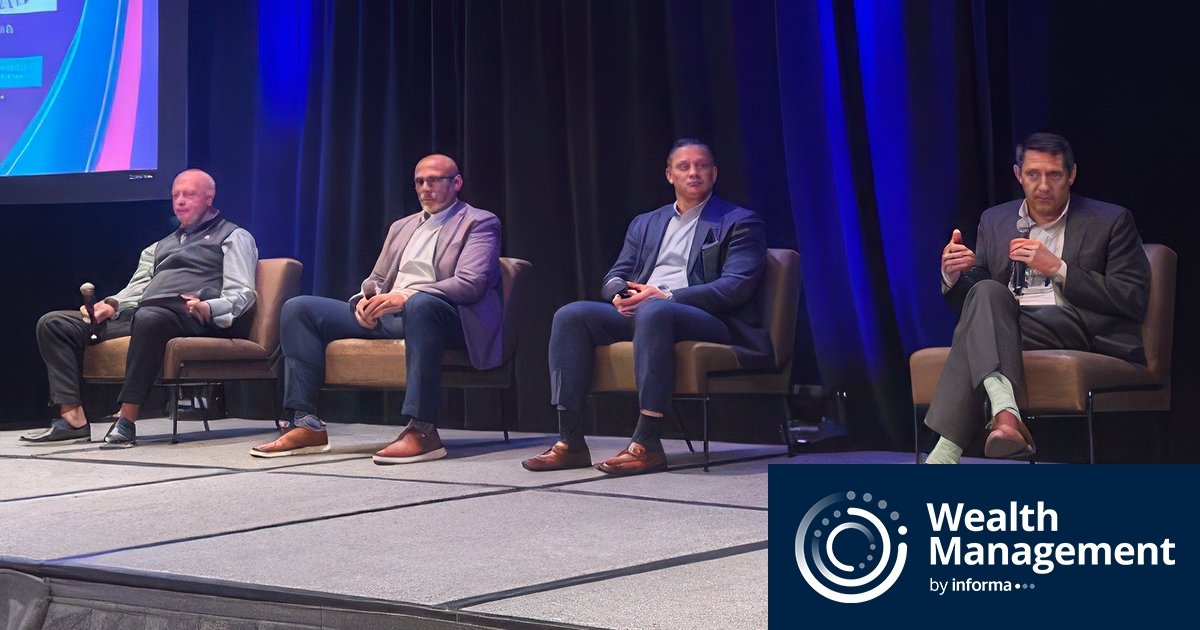
A panel of senior wealth management executives gathered at RIA Edge Austin this week to address what they described as an existential challenge facing the advisory industry: a looming talent shortage that threatens to undercut their ability, over the next 25 years, to capture the estimated $124 trillion that will pass on to younger clients in the great generational wealth transfer.
Adding to the problem, roughly one-third of financial advisors are expected to retire within the next decade, according to Cerulli Research, and those advisors oversee about $14.5 trillion in assets. Nearly one-third of those retiring advisors have no succession plan in place, putting some $4 trillion in assets “up for grabs,” according to Jeff Gonyo, head of wealth management at Steward Partners.
The lack of a succession strategy, the Gonyo warned, threatens not just the continuity of client service but also erodes firm valuation and prospects for future success.
“If you don’t have that succession attached to it, if you’re not growing into it, then that business value is going to continue to go lower and lower and lower,” said Gonyo.
Gonyo also flagged a stark investment gap: the average RIA owner spends less than 1% of annual revenue on growth initiatives, while top-decile-performing firms invest only between 2.5% and 3.7%.
“AI is not going to fix this,” Gonyo said. “We need people.”
Another panelist estimated that only about 20% of the firms they work with have a defined and funded growth strategy to attract both next-gen investors and advisors.
“A lot of the firms that we work with and support would say that they have a strategy, but really, it’s just like, how do I solve for an emergency when somebody retires?” said Jason Borek, chief growth officer at Pinnacle Group. “The idea is to have somebody who owns it within the organization. Not a hole that’s plugged into a sinking ship, but a proactive engagement.”
A few panelists described formal programs their firms have built to recruit and retain younger talent. Gonyo spoke about an approach that includes a dedicated unit to serve mass-affluent clients, those who don’t yet have the level of assets that would require the firm’s full suite of services, but likely will in the future.
That program, Steward Assist, is designed both as a business capacity solution and as a training ground for future advisors, according to Gonyo.
“We need a model that’s going to be able to capture the bottom 15% to 25% currently of all of those books that are succeeding out or retiring now,” he said. “They probably don’t need the same service level that the $5 million client needs. But we still believe that a person has to be the touchpoint.”
Gonyo said that out of the $62 billion Steward manages, about $1 billion is in that program, with expectations that it will grow to $10 billion over the next five to seven years.
Jamie Frasier, the chief growth officer at Moors & Cabot Investments, described his firm’s six-year internal pathway that allows top-performing support staff and junior employees to transition into full advisor roles, often partnered with a senior advisor nearing retirement. That provides a pathway for a retiring advisor to hand over existing clients, and having a younger advisor partner can help attract next-gen clients, a demographic many retiring advisors aren’t actively pursuing.
But what makes the program unique is that it doesn’t lock those employees into a single career path. “What we wanted to focus on was the failure rate,” he said, citing industry statistics suggesting that more than half of financial advisor trainees don’t complete training programs. Moors & Cabot has built in an “off ramp” for those employees who discover the advisor role isn’t the right fit.
“We’re $10 billion in assets under management. I don’t have the time and capacity, or quite frankly, the money, to go out and hire 1,000 people and hope that 50 of them make it,” he said.
“I don’t want to be in a situation where I’ve got to shuffle really good employees out of my organization,” Frasier said. “I’m hoping they all become wildly successful financial advisors. The reality of it is that they won’t. And I want to make sure that those people still have a home at the firm, even if it’s not in an advisory capacity.
Closing the session, panelists agreed that framing the advisor role around purpose and impact—rather than compensation alone—is critical to attracting younger talent. “They want to know that they’re making a difference in the world,” said Borek. “I just think we haven’t sold it very well.”
It’s also critical to the future health of an existing RIA.
“One of my favorite sayings is, ‘What if we train people and they leave?” said Frasier. “The bigger issue is, what if we don’t train them and they stay?”