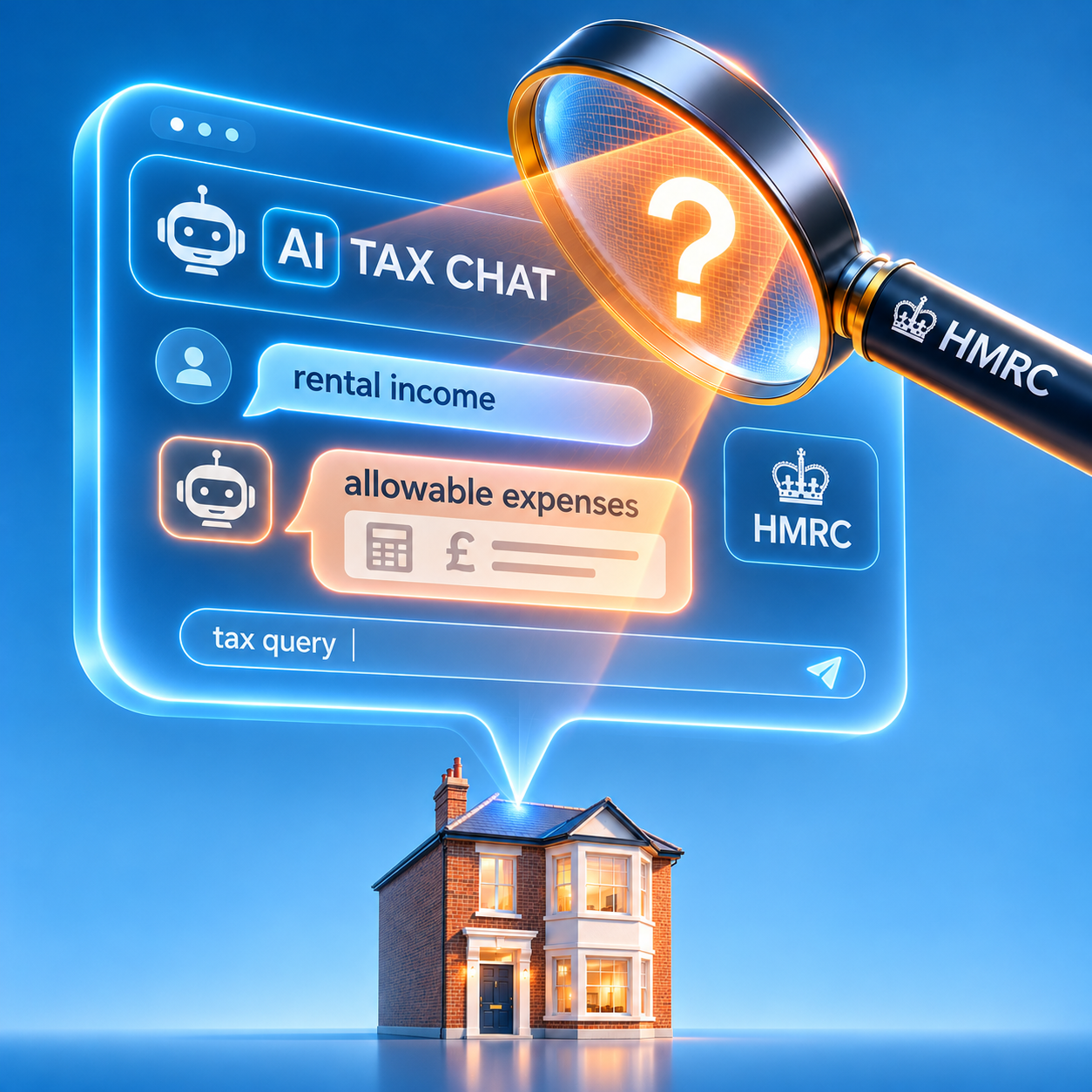
Could HMRC ask to see a landlord’s AI tax chats?
4:01 PM, 13th November 2026, 35 minutes ago
A proposal to update HMRC’s information powers has prompted headlines suggesting that the tax authority could demand taxpayers’ ChatGPT histories.
That wording is alarming, but it gives a misleading impression of the proposal.
The government has published draft legislation for Finance Bill 2026–27 that would update how HMRC’s existing information and inspection powers apply to digital records. The changes have not yet become law. The government says they would take effect from Royal Assent to the Bill. (HMRC’s policy paper; Budget tax legislation overview)
The proposal is relevant to landlords because rental accounts and tax calculations are increasingly prepared or stored using bookkeeping software, spreadsheets, cloud services and automated tools. Some landlords may also use AI to organise figures, explore a calculation or prepare a first draft of an explanation.
The important question is not simply whether someone has used AI. It is whether information held in a digital system is relevant to a tax check and can lawfully be required by HMRC.
What is changing?
HMRC’s existing powers under Schedule 36 of the Finance Act 2008 allow it to issue information notices requiring information or documents that are reasonably required to check a taxpayer’s position. The rules also allow notices to be issued to third parties where information about an identified taxpayer is reasonably required.
The draft legislation would update section 114 of the same Act, which supports those information powers where records are held electronically. It would refer to digital “information” and a “relevant thing”, reflecting the fact that information may sit within software, cloud services or automated systems rather than in a paper file or conventional computer record. The proposed wording can be read in the draft legislation.
HMRC says this could include information showing how a relevant tax figure was produced. For example, a digital system might hold the source figures, adjustments and steps behind a rental-income calculation. In some circumstances, an AI-generated working paper or a prompt used to produce that calculation could also be relevant. (HMRC’s explanation of the proposal)
That does not mean every conversation with an AI chatbot automatically becomes a tax record. A private discussion about a property sale, a family matter or a general tax question would not become relevant to an enquiry merely because it took place in the same account as a tax-related conversation. The request must still have a lawful basis and meet the statutory test.
Does this give HMRC access to ChatGPT or other AI accounts?
The proposal does not create a general power for HMRC to browse a person’s AI account.
HMRC’s own policy paper says section 114 is a supporting provision, not a new standalone information power. The underlying Schedule 36 requirements would continue to apply, including that the information sought must be reasonably required for the relevant tax purpose.
HMRC has also said that the proposal is not about routinely going through everyone’s use of large language models. Its stated position is that it can only request information where it already has a lawful basis to do so. (HMRC’s explanation of the proposal)
Third-party providers could be asked for relevant information in some cases. But HMRC’s policy paper says it would approach a third party only when an approach to the taxpayer has failed. That is narrower than a general right to obtain all users’ histories directly from AI companies.
What safeguards and penalties apply?
The existing Schedule 36 framework includes safeguards. A taxpayer may generally appeal a taxpayer notice or a requirement within it, subject to exceptions such as statutory records or a notice approved by a tribunal. A third party receiving a notice may appeal where complying would be unduly onerous. HMRC explains information notices and appeal rights in its CC/FS2 factsheet.
The alert also refers to a £300 penalty for failing to comply and a penalty of up to £3,000 for inaccuracies. Those figures are not new penalties introduced by this proposal. They already appear in Schedule 36: the standard penalty for failure to comply is £300, while a penalty of up to £3,000 may apply to each inaccuracy in a response where the statutory conditions are met. See paragraph 39 and paragraph 40A of the Act.
That is different from being penalised simply because an AI tool made an error. The £3,000 penalty relates to inaccurate information provided in response to an information notice, in specified circumstances.
What should landlords do?
Landlords who use AI or digital bookkeeping tools should treat them as aids to their record-keeping, not as a substitute for checking the figures. Keep the underlying evidence for rental income, expenses and other tax entries, and make sure the figures ultimately reported are supported by source records.
It is also sensible to think before entering sensitive information into a public AI tool. That is a practical privacy precaution, regardless of the proposed HMRC changes. The legal position on privilege and AI is still developing; using a chatbot does not itself create legal professional privilege, and the effect of AI use on communications connected with legal advice can depend on the circumstances. The Law Society notes that there is not yet clear case law directly addressing legal professional privilege and AI use in legal practice. (Law Society guidance; legal professional privilege guide)
The proposal is a reminder that digital records can include more than the final number on a tax return. If an AI tool or automated process forms part of how a landlord arrives at a figure, the working behind that figure may matter if HMRC makes a properly grounded request.
For now, the proposal is still draft legislation. The suggestion that HMRC can routinely inspect ordinary taxpayers’ chatbot histories goes further than the published rules and HMRC’s explanation support.