Winners and Losers: How the Next 12 Months Will Separate the Field
The coming year will reward preparation and punish complacency.
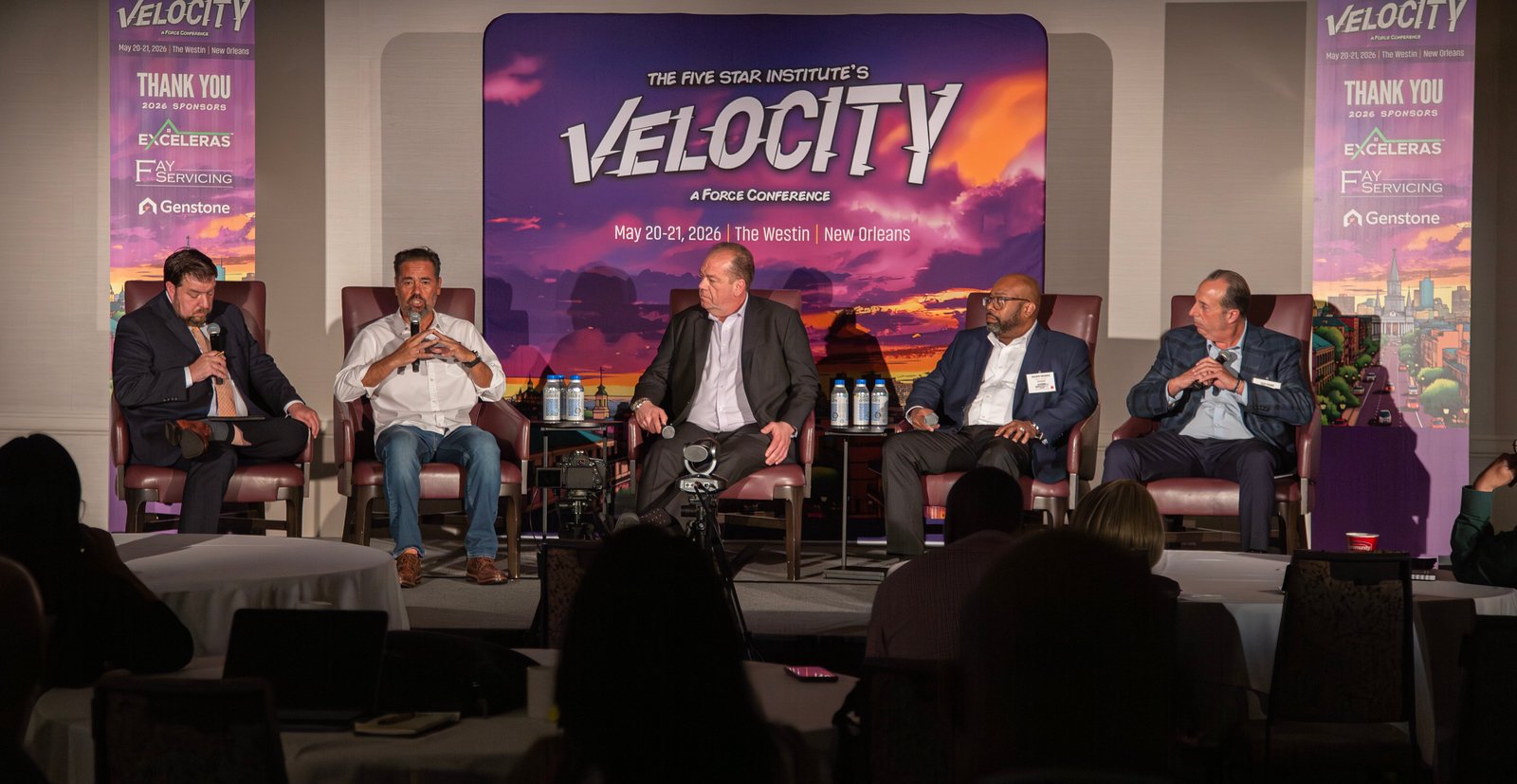
That was the message from panelists during the “Winners and Losers: How the Next 12 Months Will Separate the Field” panel, part of this year’s Velocity conference in New Orleans. The “Winners and Losers” session examined the inventory trends, market signals, and operational shifts that will determine who moves ahead and who falls behind in the year to come.
Attendees learned how to position their companies so that they are prepared for what is coming, rather than constantly reacting to it when it arrives.
Mark Rebert, REO Agent at Berkshire Hathaway HomeServices Homesale Realty, served as the panel’s moderator. Speakers included Louis Amaya, CEO of PEMCO Capital Management; Bill Bymel, Founder of First Lien Capital; Shlomo Sahadeo, SVP of Default at Renovo Financial; and Todd Yovino, Founder/Owner of Island Advantage Realty.
Balanced Commercial Loans and Business-Purpose Loans
Rebert opened the session with a question.
“When you hear the phrase, ‘the next 12 months will separate the field,’ what does that mean from where you sit?”
Bymel jumped in first, wondering, “How are we as managers and real estate brokers and investors utilizing AI in a smart way that is making our own people more productive?” He touted the moves into small, balanced commercial and business-purpose loans on residential properties.
“Those are the two big areas of growth for our industry in the next 12 months,” he said.
Amaya noted that he is “always looking for deal flow. Any off-market trade, any mutually beneficial arrangement that I have with my agents—giving them work; them showing me deals. Those are the winners for me.”
Industry Has Been Slow
Asked if he was tracking any metrics that indicate a shift that he wasn’t tracking 12 months ago, Amaya replied, “The industry’s been relatively slow for the last year and a half, except for the HECM auctions. We’re really digging into our agent network and identifying those agents that can provide that value back as far as listings. We’re looking for off-market trades, weird trades that we would normally never see.”
Sahadeo was asked what he would need to see in the data before saying the market has shifted.
Sahadeo said, “It’s more about silent distress. When we deal with borrowers on the portfolio management side, you’re going to see or hear about the liquidity issues first and/or their lack of operational capacity. A lot of people got fat during the post-COVID boom period, when you could hide behind equity. You can’t do that now. A lot of people are exposed.”
COVID Moratoriums Have Ended, Releasing Inventory
“The inventory’s growing, and there are different reasons for it,” Yovino said. “There are also the COVID moratoriums that were just relaxed. So, that inventory’s going to start to come through.”
Yovino added that “as the political climate changes, so does the behavior of the buyers. … If you’re a single-family purchaser … if you’re looking to deploy capital to buy and hold and rent, people are moving their money elsewhere, because there’s an uncomfortable environment right now, which is shifting.”
He added that conditions seem to be reversing from traditional norms in some ways.
“It was always suburbia that got clobbered, and the metropolitan area traditionally held strong. We’re seeing that flip-flop now where the metropolitan area is feeling a lot of pressure, and a lot of it’s because people are concerned with increased timelines for evictions,” he said. “There are so many different components.”
Things Are Going to Look a Lot Different
Amaya said that things have fundamentally changed.
“What we are talking about is probably an a historical type of metrics and ideas,” he explained. “It’s going to look a lot different as far as the types of defaults, where the defaults are going to be, where their pressure points are going to be, and where the economic pain’s going to be.”
Amaya added that he thinks that individuals who have been in the industry for a long time tend “to go back to our standard metrics, standard methodologies. Three or four years from now, it’s going to be completely different.”
Asked how he would re-envision the process, Amaya explained, “The industry’s been overbuilt. We have a lot of professionals who are out there doing work that they don’t need to be doing. We’re overtasked. A large portion of it needs to be eliminated. We need to keep the main thing, and that’s delivering results.”
Large Urban Multifamily Space Has the Most Risk
When asked about what the biggest risk is that no one is currently pricing in, Sahadeo had a quick reply.
“I think it’s the urban multifamily space, especially in our major metropolitan areas. It’s really tough out there. New York: any building that’s six units and up, you have huge problems. Chicago is what is separated by a certain line. Large multifamily on the south side, I have operators just walking away; that’s how bad it is,” Sahadeo said.
Sahadeo speculated that many investors got into the multifamily space because they thought they could just be passive investors.
“But if you’re not on the ground, if you’re not there operating your property and making sure that your tenants aren’t going crazy and tearing up your building, you’re going to lose it, and you’re going to lose it quick,” said Sahadeo.