Midterms usher in trio of Midwest Democratic trifectas

Bloomberg News
The midterm elections ushered in Democratic trifectas in three Midwest states that previously had divided government: Michigan, Minnesota and Wisconsin.
Processing Content
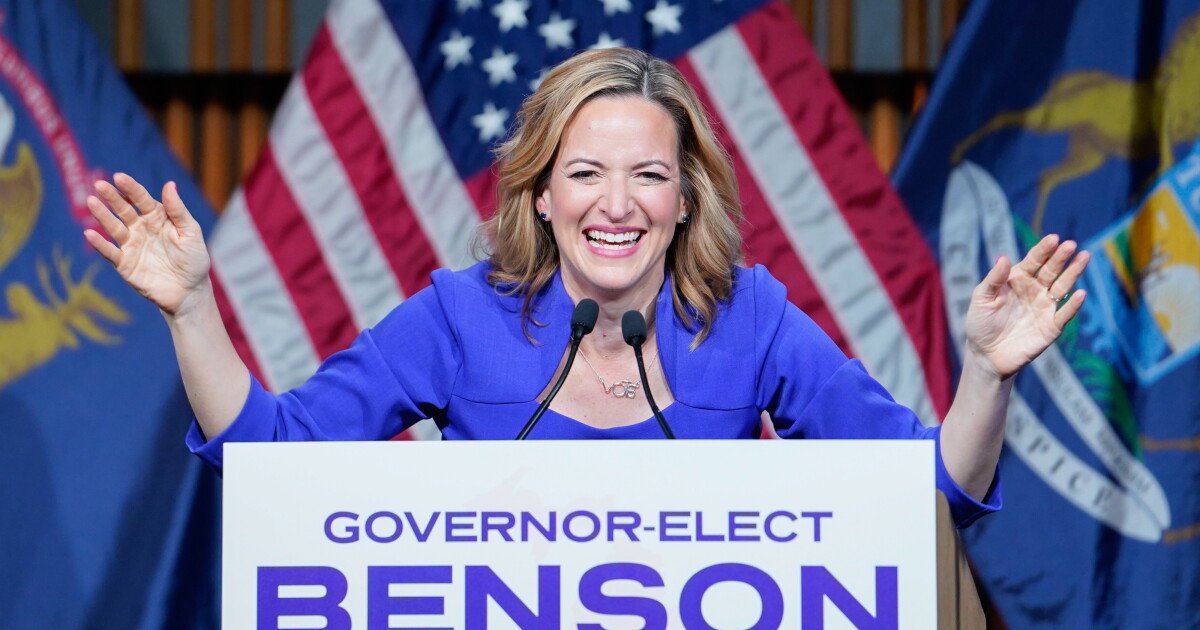
In Michigan, Secretary of State Jocelyn Benson won the governor’s mansion, keeping it in Democratic hands, and Democrats flipped control of the state House, winning 63 seats to Republicans’ 47, and retained control of the state Senate, where they will hold 23 seats to Republicans’ 15, according to the
Governor-elect Benson will likely lay out her governing priorities in her state of the state address in January, but she’s already laid out detailed plans “having to do with costs and affordability in Michigan,” said Craig Thiel, research director of the Citizens Research Council of Michigan, a public affairs research nonprofit.
On the campaign trail, Benson spoke often about the costs of raising a family, “so we’re thinking childcare. We’re thinking paying utility bills, heating bills, costs having to do with insurance in the state,” Thiel said, noting Benson will be inheriting impacts of H.R. 1, the Trump administration’s budget bill, some of which phase in starting in January, including Medicaid and Supplemental Nutrition Assistance Program changes.
“What that means (is you) end up with more people showing up in emergency rooms, more uncompensated care, a less healthy population,” he said. “She’s probably going to be taking a look at how she can mitigate some of those impacts.”
Another headwind: state budget uncertainty. The current year’s budget is balanced, but “the uncertainty with where the economy is going, that could throw a wrench into the budget.”
As for the issues motivating Michiganders at the polls, Thiel said “the public animosity towards data centers definitely played out in elections here.”
In statewide races, he said, “the victors (were) taking sides against data center expansions, whether or not they’re temporary moratoriums or flat-out rejections.”
Benson staked out positions “on certain guardrails that she’d like to put in place, dealing with water, air, noise, land use that probably have to be established and meet her criteria,” Thiel said. “So it seems like things are on pause with the expansion of data centers here in the state.”
Benson will probably maintain outgoing Gov. Gretchen Whitmer’s education policies, including her K-12 education funding levels, he said.
Another big campaign issue was a possible state gas tax pause, which Thiel said could be problematic.
“The challenge there is, we’re in the process of repairing our infrastructure so we can get ahead of it,” he said. “We implemented in 2025 a new road funding package. So anything that takes funding away from that will delay the state from getting to the point where we’re repairing roads as quickly as they’re falling apart.”
Wisconsin Democrats retained control of the governor’s mansion with a win by David Crowley, the Milwaukee County executive. And they flipped control of both chambers of the state legislature, which had essentially been under Republican control since 2010.
“In a state this close, nobody gets to govern alone,” Crowley said in his
Affordability was “the number one, two and three” issue among Wisconsin voters this year, said Jason Stein, president of the Wisconsin Policy Forum.
“From a fiscal standpoint, the state’s in pretty good shape… despite the national economic picture being, you might say mixed,” he said.
“But maybe the one caveat to that is that a lot of groups that have historically seen the Democrats as their allies or avatars… have been waiting a long time for Democrats to control the legislature,” he said. “It’s still going to be challenging, even with a relatively favorable fiscal situation, to meet the demand. People are going to want to put a lot of potatoes in the bag, and the bag is only so big.”
Some issues that have come up publicly include changing the amount of revenue shared with local governments; increasing state transit aid; increasing school funding; legalizing recreational marijuana; repealing
Crowley and his colleagues in the legislature will also face the effects of H.R. 1 kicking in.
Wisconsin is one of 10 states that have stayed out of Medicaid expansion under the Affordable Care Act.
But “I think it’s unlikely we would just expand Medicaid, because we have a statewide hospital tax now of 6% of net patient revenue, and you’d have to dial that down to 3.5% if you fully expanded Medicaid,” Stein said.
“That would be a big revenue hit, not just to the state but to hospitals,” he said. “The state has taken that hospital tax money, run it through the Medicaid funding formula, gotten federal matching dollars, and ended up returning more funding to the hospitals than they were taxed for originally.”
Another change that could lead to bond issuance by local municipal water utilities would be shifts in
Data centers also got a lot of attention in Wisconsin. The state’s sales and use tax exemption for the projects could now be on the table, he said.
“The governor-elect made more critical comments about data centers as the campaign wore on,” he said. Crowley wasn’t “among the top critics of data centers, but doesn’t mean he might not sign a bill that that changed that, if that were to come out of the legislature,” he said.
Overall, these election results are “very significant” for Wisconsin, Stein said. “The last time the Democrats had control of everything was in the two-year period from January 2009 to January 2011. Other than that, the last time Democrats would have had control of everything would have been maybe back in the 1980s.”
In Minnesota, Democrat Amy Klobuchar won the gubernatorial race, keeping it in Democratic-Farmer-Labor party hands, and the DFL flipped control of the state House, winning both it and the state Senate by comfortable margins: 77-57 in the House and 39-28 in the Senate.
“The DLCC and Minnesota DFL have secured a decisive victory in one of the nation’s most competitive state legislatures by winning a Democratic trifecta,” the Democratic Legislative Campaign Committee said
The DFL party’s
In the lead-up to the election, DFL House caucus leader Zack Stephenson told
“We want to ban surveillance pricing, go after price gouging… Really just do everything we can to address this affordability crisis that middle class and working people are facing in Minnesota,” Stephenson said then.
The last time control of the state legislature changed hands was in 2024, when the DFL lost its trifecta. The legislature wound up with an evenly divided House and a Senate barely controlled by the DFL with a one-seat margin.