Prediction Markets Are Arriving in Your Investing App, and That Makes Us Nervous
Around this time every year, we conduct NerdWallet’s annual broker review process. We assess what’s changed in the industry, discuss which brokerage features matter most (and which ones now matter less), and finally, we do the work by opening accounts to test them.
Prediction markets, which have made their way into some of the most popular investing apps, came up more than we expected in testing this year.
At first, we decided to simply collect information on who does and doesn’t offer access to them, without intending to reward or penalize a broker either way. It would be a neutral presentation of facts, not something that would factor into how we scored a broker.
But one afternoon, all together in the office, we confronted an uncomfortable question: “Do prediction markets, and such easy access to them within an investment app, go against NerdWallet’s editorial house views?”
After careful consideration, we all agreed: they do.
So we started to configure our 2027 rubric with a firmer stance against this trendy feature, penalizing brokers that actively market sports and entertainment event contracts, and whose prediction markets come with few, if any, guardrails.
We’ve distilled our discussion down to three main points:
-
There aren’t enough guardrails.
-
These products are being marketed alongside investments.
-
We fear they could be discouraging long-term investing.
The first reason: There aren’t enough guardrails
Let’s start here: Many aspects of trading could be seen as gambling-adjacent. Options, futures, highly leveraged single-day equity bets and even crypto can all easily fall into the “highly speculative” category. So why are we picking on prediction markets in particular?
In our view, a key differentiator is a much lower barrier to entry with few in-app guardrails in place.
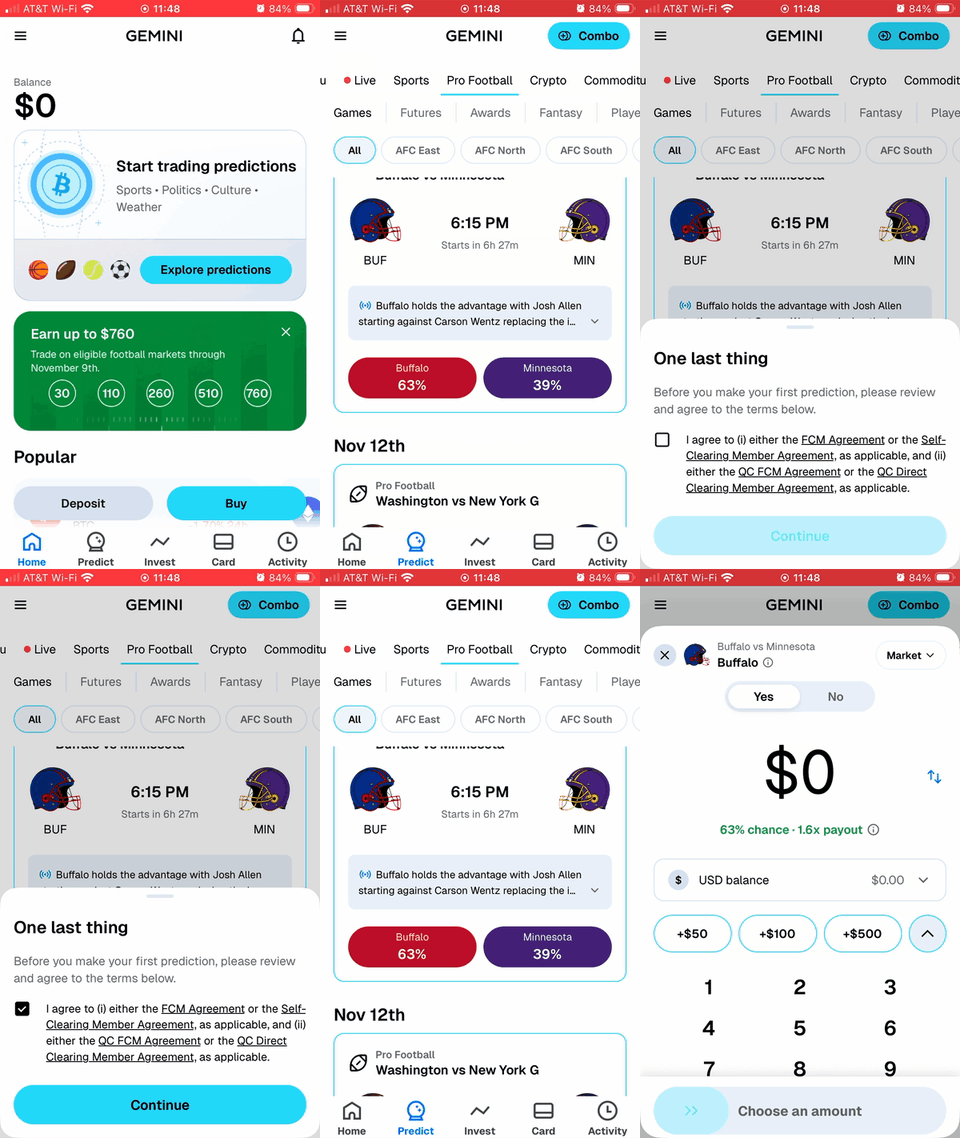
Most of the products we mentioned above require some level of fluency — and at times even permission from the broker — to dabble in. To trade options, for example, you need to answer questions about your investing proficiency, your finances and more. And even after approval, the terminology required to trade can be so intimidating that the language itself can become an indirect deterrent.
Event contracts, which form the backbone of prediction markets, are largely presented in the vernacular, and our testing showed approval to trade them is completed with a few taps from the home screen. Moreover, their content is often unrelated to finance — according to a May 2026 report by the Pew Research Center, around 80% of volume on the prediction market platform Kalshi was for sports events
[1]
.
Answering a binary question (yes/no; this/that), posed in everyday language about a familiar topic — something like, “Will the Knicks beat the Spurs on Sunday?” — can be far less daunting than figuring out what an options chain is or understanding forex pairs.
In other words, what makes prediction markets accessible to a wider audience is also what makes them problematic, especially when housed within an investing account. Which brings us to our next point.
The second reason: These products are being marketed alongside investments
On the platforms that feature them, we found that prediction markets almost always appear alongside stock and ETF trading. We think this is a mistake. What has made these mobile-first investing apps so good for so long (making it easy to move, manage and invest money through a beautiful interface) is what’s now making us nervous.
For example, most investing platforms let users do any number of smart things with idle cash. They could open an Individual Retirement Account (IRA), a custodial account or a robo-managed portfolio all through a single app. But now, they can dip into that same pot of money to bet on whether Beyoncé or Alicia Keys will play the Super Bowl halftime show.