ETF split FAQs: Why fund houses are splitting units and how investors benefit
Exchange-traded funds (ETFs) offer investors a way to build diversified portfolios with the flexibility of buying and selling them like shares. However, as ETF unit prices rise, it becomes harder for people with limited budgets to invest because they must buy at least one unit.
To address this, some mutual fund houses have conducted ETF splits to reduce the price per unit.
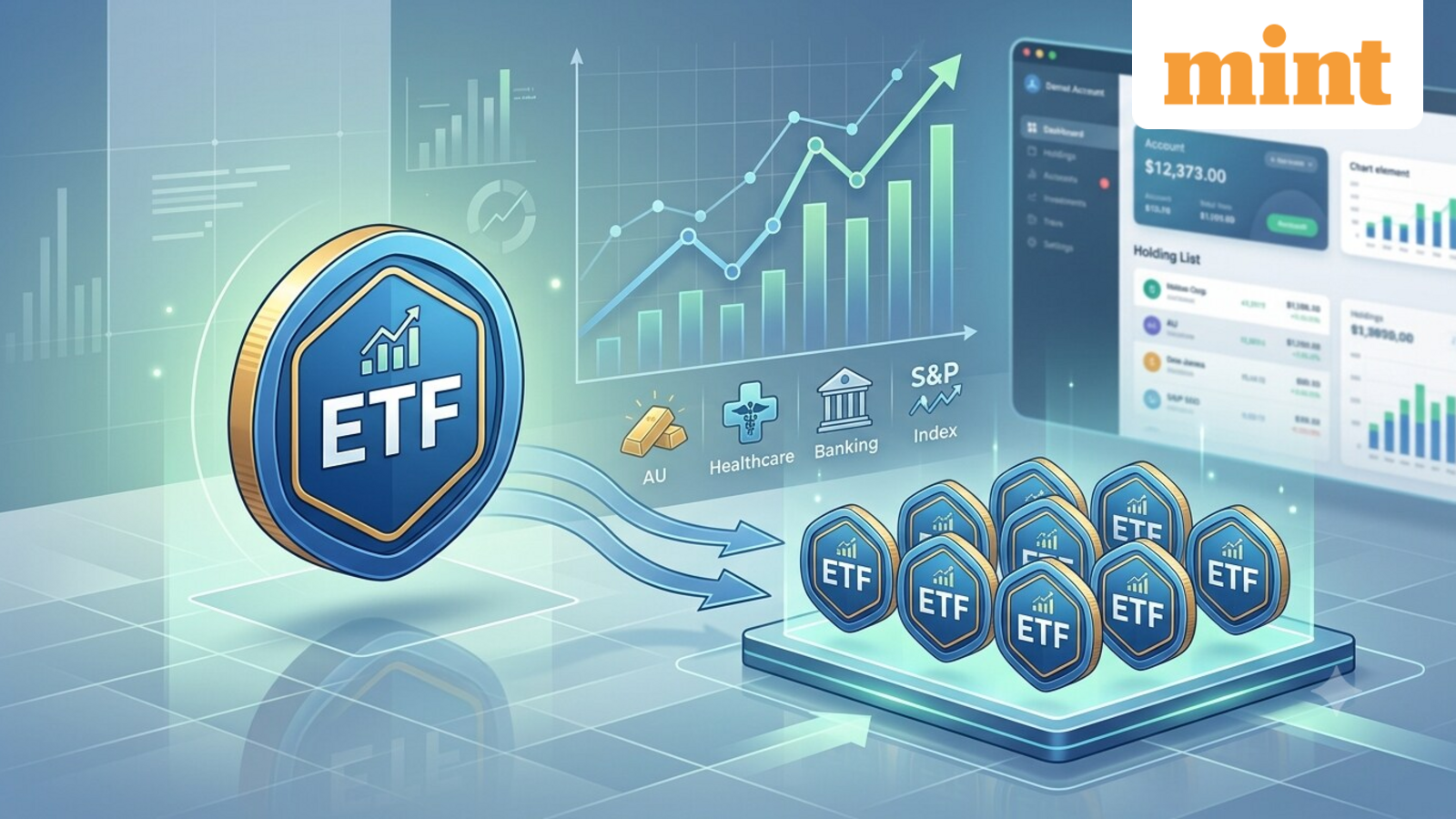
A split reduces the per-unit price of an ETF and increases the number of units an investor owns, while the total value of the investment remains the same.
What is an ETF split?
Think of an ETF split like exchanging one ₹500 note for five ₹100 notes. The number of notes increases, but the total value remains ₹500. The same principle applies to ETFs.
Suppose you own one ETF unit worth ₹1,000. After a 10:1 split, you will receive 10 ETF units, each worth around ₹100. As the number of units increases, your total investment remains ₹1,000.
In short, only the unit price and the number of units change. The value of your investment remains the same.
How does an ETF split help investors?
Suppose you want to invest ₹4,000 every month across a gold ETF, a silver ETF, a Nifty ETF and a midcap ETF. If one unit of each ETF costs around ₹2,000, investing in all four may not be possible because ETFs are bought in whole units.
After a split, if the price of each unit falls to around ₹200, you can easily spread investments across multiple ETFs and build a diversified portfolio with a smaller amount.
Most recently, the DSP Nifty Midcap 150 Quality 50 ETF and the DSP Nifty Healthcare ETF underwent a 10:1 split, effective 3 July.
In February 206, Kotak Mutual Fund split its five ETFs, including Bank, Consumption, Silver, Value 20 and Midcap 150 ETF.
Earlier, Kotak Gold ETF, ICICI Prudential Nifty 100 ETF, Nippon India ETF Nifty 50 BeES and Nippon India Gold BeES have also undergone an ETF split.
What do investors need to do?
Nothing. The additional ETF units are automatically credited to your demat account. There is no application or request to submit.
Only investors who own the ETF on or before the record date are eligible for the split. Anyone buying the ETF after that date can purchase the split-adjusted units directly.
Does an ETF split trigger tax liability?
No. An ETF split does not trigger any tax because you are not making any profit at the time of the split.
For example, if you bought 100 ETF units at ₹100 per unit price, your total investment value is ₹10,000.
If the ETF later undergoes a 2:1 split, you will own 200 units instead of 100. Your investment is still worth ₹10,000. The only difference is that each unit is now treated as having been bought for ₹50 instead of ₹100.
When do you need to pay tax?
Tax is payable only when you sell the ETF units, not when the split happens. Suppose you later sell all 200 units at ₹80 per unit.
- Sale value: 200 × ₹80 = ₹16,000
- Total purchase cost: 200 × ₹50 = ₹10,000
- Capital gain: ₹16,000 − ₹10,000 = ₹6,000
Capital gains tax will be calculated on this ₹6,000, depending on whether it qualifies as short-term or long-term capital gains.
If you sell ETF units within 12 months, the gains are taxed as short-term capital gains (STCG) at 20%. If you sell them after 12 months, gains above ₹1.25 lakh in a financial year are taxed as long-term capital gains (LTCG) at 12.5%.
One important point to remember is that the holding period is calculated from the original purchase date, not the date of the ETF split. For example, if you bought an ETF on 1 January 2025, and it underwent a split on 3 July 2026, your holding period will still be counted from 1 January, 2025 to compute capital gains tax.
(Based on DSP Mutual Fund FAQs)
Disclaimer: This is purely for educational/ informational purposes and should not be taken as any sort of investment advice. Always consult a SEBI-registered advisor before making any investment decisions.