Bank CEOs are navigating more uncertainty than ever before

- Key insight: Washington keeps changing the rules while new competitors, technology and divisive politics keep changing the game. As we enter banking’s land of confusion in 2027, CEOs are facing unprecedented uncertainty.
- Forward look: CEOs can’t control Washington, the Fed, Congress or the next pendulum swing. But they can control how they lead through this unparalleled uncertainty.
In 60 years in banking, 50 as a consultant, over 40 teaching finance at Wharton, and over 20 as board member of a high-performing community bank, I’ve seen a lot.
Processing Content
I’ve witnessed runaway inflation, multiple recessions, the S&L crisis, the 2008 financial crisis, and good and bad regulations.
Yet I’ve never seen so many simultaneous regulatory, technology, competitive and political changes, with so little certainty about where banking is headed.
Welcome to banking’s land of confusion.
Adapting from Genesis, the
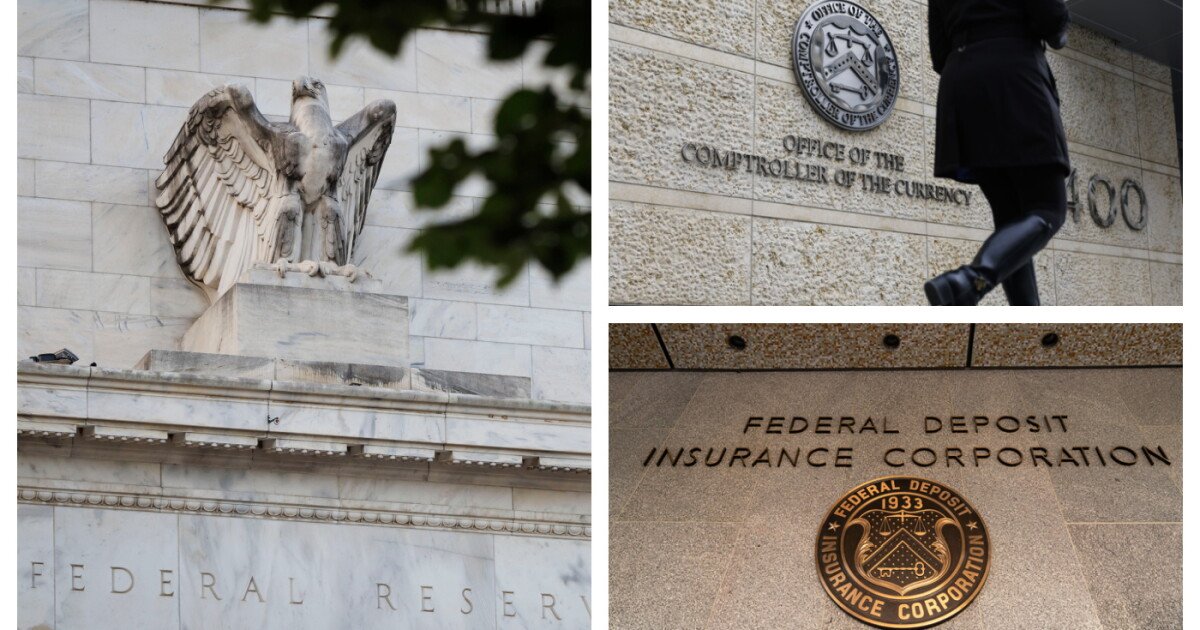
The FDIC and OCC
Will Trump’s aggressive deregulation survive? Will the repopulated Congress demand tougher consumer protection and merger oversight? Will downsized regulators reverse course on reputation risk, debanking, MRAs, BSA/AML, stress tests and Basel III capital standards? What about DEI, ESG, disparate impact and small-business reporting requirements?
CRA is a perfect example of a good banking law poisoned by politics. An OCC and FDIC reform proposal floated during the first Trump administration was rescinded by President Biden, and a friendly Fed got everyone on board for another final rule. For the first time ever, the industry took its three prudential regulators to
Artificial intelligence promises to revolutionize underwriting, fraud detection, compliance and customer service. Yet its black-box decision-making and super-intelligence capabilities raise more questions than answers.
New bank competitors are everywhere. The
Bankers practically need to be geniuses to clarify the GENIUS and CLARITY Acts, stablecoins, tokenized deposits, and open-banking requirements, let alone AI-powered cyberattacks, sophisticated fraud, and data center concerns.
The 2023 regional bank failures demonstrated how billions can disappear within hours, with bank runs on smartphones, not sidewalks. Will Congress rethink deposit insurance limits?
Making matters worse, we’re in an increasingly vocal anti-capitalist, anti-wealth, anti-banking political environment.
Banking’s land of confusion sits in a barbell world, where everything seems to be at one extreme or the other.
Our barbell economy has a handful of billionaires and even a
Our barbell banking system has a handful of Godzilla banks dominating thousands of community banks. Big banks are becoming bigger and small banks are becoming history.
Read more:
Our barbell political world has most voters on the extreme left or right with a silent minority in the middle.
Bankers always operated under regulatory, competitive, technology, and political uncertainties, but today’s converging quantity and quality is unique.
What does
Washington may determine the rules of banking, but CEOs determine how successfully their institutions compete, serve their communities and reward their shareholders.
Here’s my 10-step CEO playbook in banking’s land of confusion.
First is KYC1, know your customers. Not just their banking habits, but what matters to their families, businesses and financial needs. The least expensive source of business is existing customers with accounts at local and online competitors. Handshakes trump clicks.
Second is KYC2, know your competition. Study like
Third is KYC3, know your community. Your home page must prominently proclaim your community commitment, even if you don’t have an outstanding CRA rating. Ratings will be examined closely in 2027, CRA’s golden anniversary. Document account closures to avoid debanking charges.
Fourth, keep regulators updated so they’re never surprised by bad news. Monitor regulatory proposals and prepare alternative compliance strategies. Consider former regulators for management and/or board positions.
Fifth, share with shareholders. Update them on everything, good and bad. Be prepared for questions on AI, digital competitors, cybersecurity and capital requirements. I’ve yet to hear a shareholder make a “TMI” complaint.
Sixth, “It’s the deposits stupid!” Protect core deposits and identify uninsured and rate-sensitive balances, including possible stablecoin flight. Treat brokered deposits, ideal for maturity matching, as your second tier of core money. Stress test rapid withdrawals and verify Fed or Federal Home Loan bank emergency funding. Fine-tune your branch network by closing problem branches and opening new ones, ideally in prime locations. Consider buying a well-located closed branch but without deposits, since customers are loyal to locations not banks.
Seventh, let your board earn its compensation. Add expertise in AI/technology. Require in-person attendance, at least quarterly.
Eighth, embrace technology by hiring a chief AI or technology officer who can explain stablecoins, tokenization, and the GENIUS Act. Consider fintech partnerships, require human oversight of AI decisions, and test cybersecurity/fraud response and third-party risk.
Ninth, hire the best experts, not the least expensive or most familiar ones. Smart bankers hire the smartest accountants, attorneys, techies and consultants. Take advantage of industry associations by visiting Washington and engage your congressional representatives and regulators.
Tenth, don’t delay on M&A. Forget Wall Street’s “acquire or be acquired” mantra. Be selective. Focus on strategic acquisitions offering profitable new product lines, attractive markets, or key personnel. Every CEO has a short list of M&A targets that should be executed before the regulatory pendulum could swing even further back in 2028.
CEOs can’t control Washington, the Fed, Congress or the next pendulum swing. But they can control how they lead through this unparalleled uncertainty.
The winners in 2027 won’t necessarily be the biggest banks or those with the fanciest technology. They’ll be banks whose CEOs recognize banking’s land of confusion as an opportunity for decisive leadership, while competitors remain paralyzed by uncertainty.