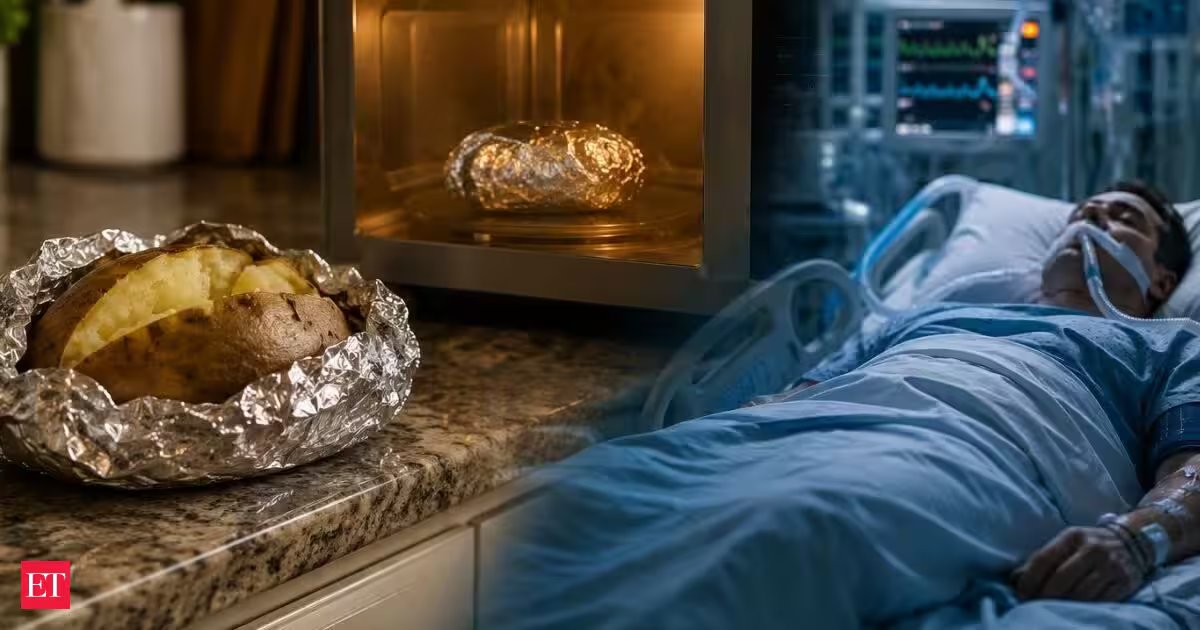
He baked potato in aluminium foil, and ate it next morning after microwaving. Hours later, he was paralysed, doctor explains why
The Case That Started It All
According to Dr. Bordoloi, the incident echoes a case she encountered during her first year of residency. A man baked a potato, wrapped it in foil, and left it on the kitchen counter overnight. The next day, he simply reheated it in the microwave and ate it, a habit repeated in several kitchens every single day.
Also Read: What is a “Dystopian Nightmare”? The psychology behind the viral trend
But within hours, his vision began to double. By midnight, paralysis had swept down from his head, shutting down his muscles one by one. He could barely breathe. He was rushed to the ICU in a fight for his life.
Not Your Everyday Food Poisoning
Most people associate spoiled food with an upset stomach, nausea, vomiting, diarrhoea. Dr. Bordoloi points out that none of these classic symptoms showed up in this case, and that is precisely what makes it so dangerous.

The culprit, she explains, is not ordinary bacterial contamination but a far rarer and more sinister organism: Clostridium botulinum, the bacterium responsible for botulism, a severe, potentially fatal form of nerve poisoning.
How a Kitchen Staple Becomes a Biological Trap
Potatoes grow underground, in soil that can naturally harbour spores of C. botulinum. On their own, these spores are harmless. The danger begins when the potato is wrapped in foil and left at room temperature.Dr. Bordoloi warns that this combination is especially risky in India’s warm, humid climate. The foil wrapping creates a sealed micro-environment with zero oxygen, trapped moisture, and warmth — effectively a perfect incubator. Inside this pocket, dormant spores can “wake up” and multiply, releasing one of the most potent nerve toxins known to science, all while the potato sits unassumingly on the counter overnight.
Why didn’t bacteria die even after heating? The Microwave Myth
A natural question follows: didn’t reheating the potato in the microwave kill the bacteria? Dr. Bordoloi addresses this misconception directly. While the botulinum toxin is indeed sensitive to heat, destroying it requires actively boiling the food for a full 10 minutes.
A quick two-minute microwave zap, he explains, only warms food unevenly and never reaches a high enough temperature for long enough to neutralise the toxin. In other words, the very step people assume makes leftovers “safe” does almost nothing to stop botulism.
A Grueling, Uncertain Recovery
Dr. Bordoloi does not soften the outlook once paralysis sets in. Patients, he says, can spend weeks to months on a ventilator in the ICU while damaged nerves slowly regenerate, a process she describes as grueling and terrifying, with no guarantee of a smooth recovery. All of it, she stresses, over a piece of leftover potato.
The Simple Fix, According to the Doctor
The good news is that prevention is straightforward. Dr. Bordoloi’s advice is simple and non-negotiable:
- Never leave a foil-wrapped baked potato sitting out on the kitchen counter, even overnight.
- Remove the foil immediately after baking.
- Refrigerate the potato promptly if not eaten right away.
As she puts it, a habit as small as changing where, and how, you store a leftover potato could be the difference between a normal meal and a medical emergency.
(This article is based on a social media post. Readers experiencing symptoms such as double vision, muscle weakness, or difficulty breathing after eating should seek emergency medical care immediately.)