Southwest voters face a bevy of tax and spending measures

Bloomberg News
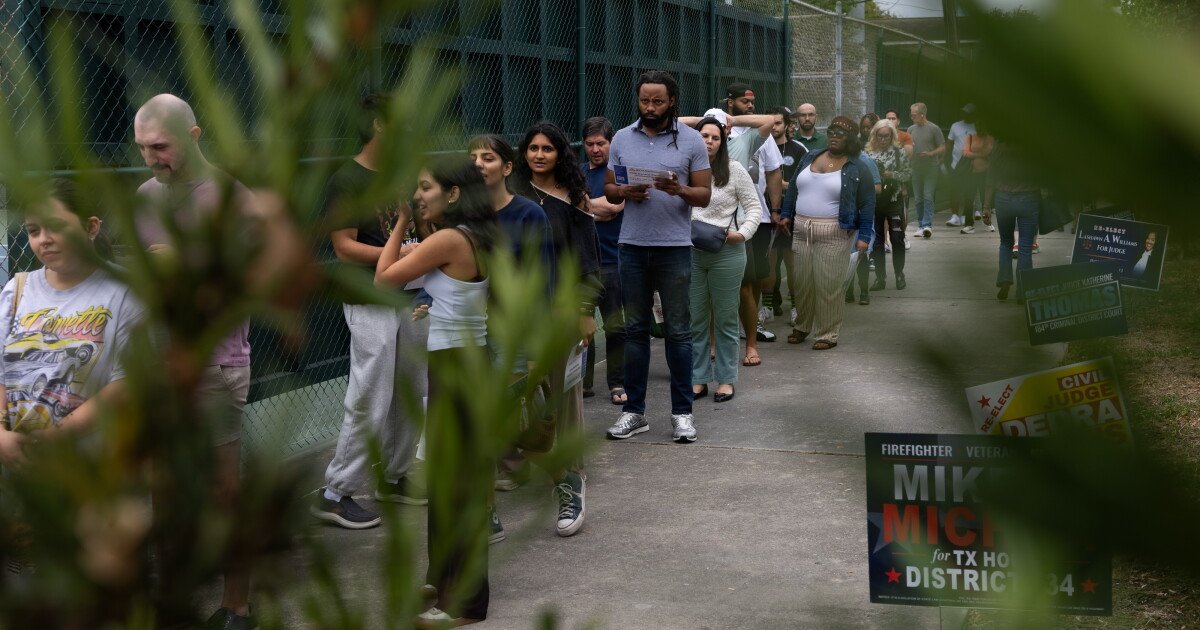
In addition to billions of dollars of bonds, elections in several Southwest states on Tuesday will decide whether to impose, raise, or cap taxes, with some measures tied to future debt.
Processing Content
Colorado has two competing tax measures — Constitutional Amendment 87, which would replace the state’s flat 4.4% personal and corporate income tax rates with graduated rates ranging from 3.7% to 8.4%, and Proposition 136, which would statutorily cap income tax rates at 4.4%.
The constitutional amendment would increase the state’s income tax revenue by an estimated $2 billion in its first full year with the money allocated to K-12 education, health care, and early childhood care and education through a Colorado’s Future Account, according to
If both pass, the measure with the most votes would prevail on conflicting provisions, according to the Tax Foundation.
“This means that if both passed with Proposition 136 receiving more votes, graduated rate taxation would be permitted, but the top rate could not exceed 4.4 percent,” foundation Senior Fellow Jared Walczak said
Colorado’s K-12 public schools would also get a financial boost under Proposition NN,
The money would be made available by raising the state’s Taxpayer Bill of Rights limit, which sets the amount of revenue the state can collect each year with the excess refunded to taxpayers.
Also in Colorado, the
The rail district was created by a 2021 state law that authorized it to levy taxes through ballot measures, issue bonds, and enter into public-private partnerships to provide intercity passenger train service initially from Fort Collins through Denver and south to Pueblo. Longer-term plans would connect Colorado to New Mexico and Wyoming.
The town of Winter Park, Colorado, has ballot measures to create a regional transportation authority and authorize the issuance of $120 million of revenue bonds to finance
Arizona school spending
Arizona’s Republican-controlled legislature put Proposition 320 on the ballot to require certain school districts to spend at least 60% of their operating budgets on direct instructional expenses or face a reduction in state funding.
The measure would apply to an estimated 94 of the state’s 207 school systems, which have at least 7,500 students and are in the state’s three most populous counties, according to a
“It’s going to be really a challenge for districts to get to 60%, especially when most districts are below that number, some pretty significantly,” said Chuck Essigs, government relations director at the Arizona Association of School Business Officials, noting spending on things such as counselors, some special education services, and classroom maintenance and utilities are not included under “a very narrow definition” of instructional expenses.
Non-complying districts would face a reduction in their per pupil allocations from the state’s Classroom Site Fund, which totals about $800 million annually, he added.
The measure has support from the conservative Goldwater Institute,
The measure would cap what districts could spend on roles like administration, finance, clerks, nurses, librarians, social workers and other non-classroom roles, the Goldwater Institute says
Opponents, like Save Our Schools Arizona, say it would lead to cuts to school programs and teacher pay.
A measure pushed by public school backers to rein in the state’s costly universal private school voucher program was
Arizona ballots also include two tax-related measures. Proposition 141 is a constitutional amendment to prohibit the state and local governments from taxing or levying a fee based on vehicle miles traveled. Proposition 316 would require voter approval for imposing or increasing local sales taxes on groceries, while also capping the tax rate at 2%.
Assessment caps on Oklahoma ballots
In Oklahoma, a legislatively referred constitutional amendment
It would slow future property tax increases, but also revenue growth for schools and local governments, which may have to raise millage rates to make payments on voter-approved bonds, according to the nonpartisan
An initiative to phase out homeowner property taxes over three years was removed from the ballot in October after the state Supreme Court
Voters in Oklahoma County
The county already sold $260 million of
Water, tax measures in Texas
In Corpus Christi, where a water supply crisis that led to bond rating downgrades and negative outlooks
If passed, the measure is estimated to result in loss of about $6 million in annual revenue supporting debt the city issued through the Texas Water Development Board and a water rate hike would be required in 2029 to offset the loss, according to
A controversial Inner Harbor seawater desalination project is indirectly on the ballot. All nine Corpus Christi city council member seats, including the mayor’s, are up for election with 24 candidates against the project and 18 in favor, according to a local
The current council has waffled on this key long-term water supply project. The indecisiveness raised the ire of the Texas governor’s office and left the city
Plano voters will decide on
Elsewhere
Arkansas voters
The districts would be used by cities and counties to spur housing, retail, and other projects and use incremental increases in property or sales taxes within the district to pay off bonds.
Constitutional Amendment B
Data center prohibitions are on the ballot in three Kansas cities – El Dorado, Emporia, and Ottawa, according to Ballotpedia.