In Midterm Toss-Up States, Housing Affordability Is a Key Issue
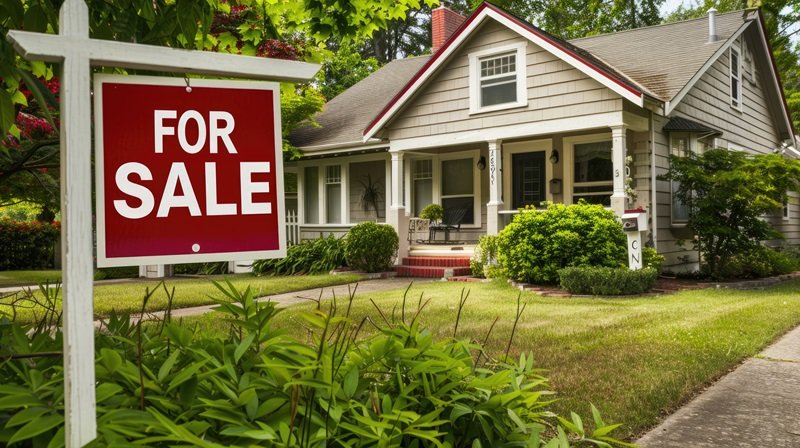
Housing affordability weighs heavily on many voters’ minds as they head to the polls Tuesday for the 2026 midterm elections.
A recent Pew Research Center poll found that 66% of Americans are “very concerned” about housing costs, Realtor.com reported. And this past July, CNBC’s All-America Economic Survey found that housing affordability is the top concern for Gen Z voters and men aged 18 to 44. More than 54 million Americans voted early, NBC reported.
That’s likely because Americans are spending more on housing than in recent memory, Realtor.com noted.
A 2024 study from Harvard University’s Joint Center for Housing Studies found that nearly half of all Americans—49%—spend more than the recommended 30% of their income on housing.
Ahead of the 2026 midterms, Realtor.com examined the housing issues animating voters in the four states that Decision Desk HQ has deemed Senate race toss-ups, with no clear leader in the polls: Maine, Iowa, Ohio, and Texas.
Realtor.com said the goal was to understand better how housing issues are animating voters and what residents hope lawmakers will do once elected.
Several common themes emerged across those states: People feel owning a home has become increasingly out of reach. They worry about people on the lowest end of the economic spectrum. They are also skeptical that an election will really change much.
Maine’s Voters are a Mix
Realtor.com noted that in the race for Maine’s Senate seat, Democrat Troy Jackson is narrowly favored to defeat longtime incumbent Susan Collins, a Republican. Both agree that private equity investment in residential properties was a major problem in the state, though they don’t necessarily agree on how to solve it.
Jackson criticized Collins for voting against an amendment from Sen. Maggie Hassan (D-NH) that would support building 7 million new homes and expanding affordable housing opportunities. Collins has criticized Jackson for claiming two homes as primary residences for tax benefits.
The National Low Income Housing Coalition estimates that Maine has a shortage of 20,000 rental homes for extremely low-income residents.
Wages in the state also haven’t kept up with housing costs, Realtor.com noted. At the state minimum wage of $15.10 an hour, a worker must put in 67 hours a week to afford a typical one-bedroom apartment at a fair market price of $1,323 a month, according to NLIHC.
Ohioans Want Affordable, ‘Attainable’ Housing
On Tuesday, Republican incumbent John Husted faces Democrat challenger Sherrod Brown in the Ohio race for U.S. Senate. Brown, a former Senator, narrowly leads in the polls, according to Decision Desk.
Realtor.com noted that Husted’s campaign has stressed increasing the housing supply, cutting federal regulations, and enabling private investment rather than direct government funding. Brown favors lowering housing costs, expanding inventory, and protecting affordable housing.
Marcus Roth, Communications Director of the Coalition on Homelessness and Housing in Ohio, said he sees the housing crisis in the state as a multipronged problem, one that’s no longer just an issue for low-income Americans.
“The housing crisis is really reaching higher into the middle class,” Roth says. “Elected officials themselves now have their, like, 20- and 30-year-old children living with them. They’re seeing it up close where [their children] can’t afford to buy a place and are struggling to find a new place to rent. And so I think that has really helped to raise awareness.”
Around 1.3 million Ohioans—around 9% of the state’s population—spend over half their income on housing and are considered severely housing cost-burdened, Realtor.com noted.
The state also faces a severe affordable housing shortage. According to COHHIO, there are 37 units of affordable housing for every 100 extremely low-income renter households.
“Leaders and candidates are generally more interested in homeownership and trying to help the middle class because, essentially, middle-class voters are more likely to vote and they have more political power,” Roth said. “But the folks at the bottom of the scale are the ones who are really facing the crisis. It is a real shame when somebody can’t afford to buy a home anymore, but folks who are working those lower-wage jobs can’t afford their apartment, and they’re at constant risk of eviction and homelessness. That’s the real crisis.”
Iowa: It’s High Property Taxes
This election cycle, voters in the Iowa Senate race are choosing between Republican Ashley Hinson and Democrat Josh Turek, both running to replace retiring Republican Sen. Joni Ernst. Hinson holds a slight lead over Turek ahead of Tuesday’s election.
Hinson’s housing platform focuses on expanding homeownership tax incentives and restricting large institutional investors. Turek supports banning private equity from buying single-family homes, increasing support for first-time homebuyers, and simplifying federal and local permitting for new construction projects.
Unlike several other toss-up states, Iowa doesn’t face the huge housing deficits that other states do, Realtor.com reported. It faces a shortage of around 8,000 homes but is expected to close it by 2028.
Texas Voters Face Housing Affordability Crunch
In Texas, Decision Desk puts Democrat James Talarico slightly ahead of Republican Ken Paxton in a hotly contested race for the Senate seat currently occupied by Republican John Cornyn.
Realtor.com noted that Talarico has run on support for modular and factory-built homes and favors increased restrictions on institutional investors in single-family homes, as well as zoning reform and stronger corporate landlord regulation.
Paxton supports increased first- and second-homebuyer deductions, corporate restrictions on single-family home purchases, and cutting the red tape around new builds.
A sense of feeling “stuck” is common, said Favianna Orriols, statewide Advocacy Director for Texas Housers, a low-income housing information service that primarily works with renter populations in the state.
“We’re of the position that if you look at the affordable housing bills passed in the last legislative session, there was a push by the governor and the lieutenant governor to address housing affordability,” she says. “And they did so in a way that was almost exclusively through land use deregulation.”
But she notes that the “barriers that are facing the hardest-hit renters are much more complex than land use regulation. It includes insurance, property taxes, operating costs, incomes. … The prices of homes have greatly outpaced incomes.”
In the Rio Grande Valley, where Orriols is from, the population is overwhelmingly Hispanic, and “there is this culture down there of, you know, homeownership equals the American dream,” she says.