Congress presses FHLBs on housing focus amid accusations of mission drift
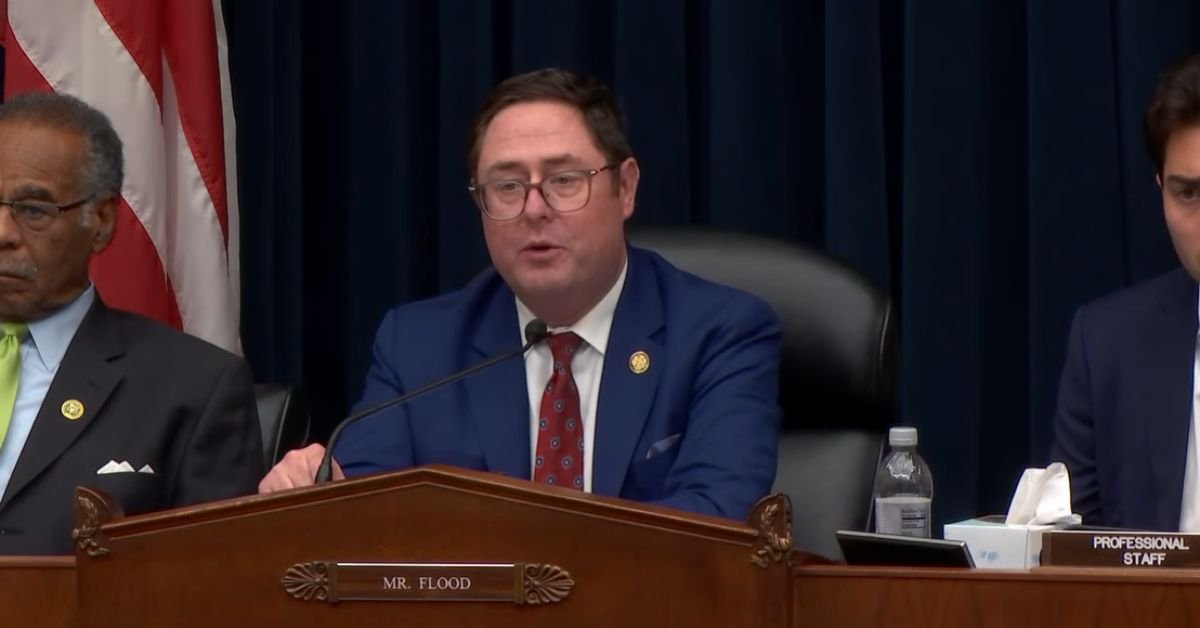
At the first congressional oversight hearing to examine the Federal Home Loan Bank (FHLB) system in 15 years, lawmakers on the House Subcommittee on Housing and Insurance wanted to better understand why a Depression-era banking system designed to safeguard access to mortgage credit wasn’t doing more to advance that mission.
That nearly century-old system of 11 regional banks — structured as federally chartered cooperatives that are privately owned and capitalized by member institutions like commercial banks, credit unions, insurance companies and community development financial institutions — has had to commit 10% of profits to affordable housing objectives since it was last reformed in 1990.
“Help me understand,” said Rep. Sam Liccardo, D-Calif., “why we shouldn’t as Congress simply say, ‘Hey, the threshold should be minimum 25% contribution of net earnings of the Federal Home Loans Banks nationally to the Affordable Housing Program.’”

Liccardo cited concern seeing chief executives of FHLBs earnings salaries six times larger than CEOs of the Federal Reserve’s regional banks, despite having fewer employees to manage and smaller mandates to enforce.
Ryan Donovan, president and CEO of the Council of Federal Home Loan Banks, one of four experts testifying before the House panel Tuesday, said that a lower statutory minimum actually enables FHLBs that are voluntarily exceeding those minimums to release tailored funds more rapidly than through the proscribed framework.
“The Affordable Housing Program that’s run by FHFA is subject to 13 different regulations and six different advisory bulletins,” explained Donovan. “It’s highly cumbersome, it’s difficult to apply for, so much so that the Home Loan Bank of San Francisco used targeted funds to help train the Nevada housing authorities on how to apply for it.”
Regulated by the Federal Housing Finance Agency (FHFA) that also oversees Fannie Mae and Freddie Mac, the FHLB system was established by Congress in 1932 to expand liquidity for savings and loan associations, the primary source of mortgage credit at the time. The FHLB system is a government-sponsored enterprise and therefore, like Fannie and Freddie, its contracts carry an implicit government guarantee.
The approximately 6,500 member institutions, whose purchase of FHLB stock allows them to borrow from the system and receive dividends, are spread across geographic districts headquartered in Atlanta, Boston, Chicago, Cincinnati, Dallas, Indianapolis, New York, Pittsburgh and San Francisco, as well as Des Moines, Iowa, and Topeka, Kan.
FHLBs extend short-term financing to member institutions through advances financed with debt that the banks issue via their jointly owned and operated Office of Finance. The advances are collateralized by members’ originations — such as residential mortgages, agricultural loans and small business loans — pledged against the subsidized FHLB loans.
Critics of FHLB activity since the 2008 financial crisis observed a withdrawal from the banks’ traditional housing mission to instead extend more liquidity to larger financial firms, representing a departure from the FHLBs’ traditional focus on mortgage liquidity channeled through small and community banking institutions.
“Their predominant activity is providing implicitly government-backed funding to large banks and large insurance companies and doing far less than they could or should to help the very challenging framework that people are facing who are trying to buy affordable homes,” said Kathryn Judge, a law professor at Columbia University, who testified Tuesday.
An investigation by Bloomberg in 2023 found that more that about 42% of FHLB members had not originated a mortgage in the previous five-year period. Consumer Federation of America researchers reviewing 2025 FHLB financials found that 50% of advances went to commercial banks, while 26% went to insurance companies, up from 22% in 2024.
The number of insurance company members has increased from under 300 in 2013 to more than 600 as of 2025. From 2015 to 2025, the 3% of FHLB members holding more than $10 billion in assets did roughly three-quarters of all FHLB borrowing, government estimates show, underscoring the lack of funds reaching smaller members.
“I would say, from a member’s perspective, for a member-owned cooperative, I believe the FHLBank [system] is doing its mission because we are providing affordable housing programs and we’re doing housing finance,” stated Barry Lockard, president and CEO of Nebraska-based Cornhusker Bank, testifying on behalf of the Federal Home Loan Bank of Topeka.
The regional banking crisis in 2023 also came under scrutiny during Tuesday’s oversight hearing concerning the FHLBs’ function as countercyclical liquidity providers positioned to extend liquidity in emergency situations to members when private liquidity evaporates.
That crisis culminated in the failures of First Republic Bank, Silicon Valley Bank and Signature Bank, which were the second-, third- and fourth-largest bank collapses in U.S. history by assets. All three banks secured substantial FHLB advances prior to their failure, which required pledging at-risk collateral and increased those borrowings significantly as runs on each banks’ deposits accelerated and liquidity pressures mounted.
Government Accountability Office (GAO) estimates show Silicon Valley Bank advances rose from $20 billion to $30 billion prior to its March 10, 2023, failure. Signature Bank’s advances increased from $8.2 billion to $11.2 billion before its collapse two days after Silicon Valley Bank failed, while First Republic Bank’s advances spiked to $28.1 billion from $19.4 billion before its May 1, 2023, failure.
Rep. Ritchie Torres, D-N.Y., asked GAO Director Jill Naamane whether the FHLBs should be supervised by regulators more powerful than the FHFA, such as the Federal Reserve Board or the Federal Deposit Insurance Corp.
“We haven’t really looked at the extent of oversight that FHFA does of the Federal Home Loan Bank system,” replied Naamane. The FHFA is subject to congressional oversight, including by the House Financial Services Committee.
Rep. William Timmons, R-S.C., identified FHLB efforts at its Dallas and Chicago branches to adopt modernized credit score models ahead of the FHFA’s formal adoption of VantageScore 4.0 in April for Fannie Mae and Freddie Mac mortgage loan underwriting. The VantageScore model is an alternative to the longstanding Classic FICO score.
“As enterprises begin accepting mortgages that use modern credit score models approved by the FHFA,” asked Timmons, “how important is it for member institutions to have reasonably consistent access across Federal Home Loan Bank districts to liquidity backed by those otherwise eligible mortgages?”
“I know that many of the [FHLB] banks are looking at the VantageScore scoring model,” replied Donovan, the Council of Federal Home Loan Banks leader, “and I’m also aware that banks and credit unions, mortgage originators across the country, are also looking at that. So, we’re taking steps in the right direction, but it’s critically important for there to be options.”